The Balekane ba Botswana Beauty Contest in Gaborone brought together a remarkable group of Botswana women who share a unique connection to the country’s history. All the contestants were born in 1966, the same year Botswana gained independence on 30 September. Their shared birth year gives the competition a powerful symbolic meaning because they are part of a generation often described as Botswana’s “independence babies.” At the contest, the women celebrated much more than physical beauty by highlighting their life journeys, achievements, resilience, friendships and contributions to Botswana over several decades. The event provided a platform for these women to celebrate their identities while reflecting on a lifetime that has unfolded alongside the development of independent Botswana.
The Balekane ba Botswana Beauty Contest placed the experiences of women born in 1966 at the centre of its celebration. The contestants belong to a generation that has lived through decades of social, cultural and economic change in Botswana. Their personal stories form part of the broader story of a nation that entered independence in 1966 and has developed through successive generations. The contest offered an opportunity to recognise the value of those individual journeys and the experiences accumulated over the years. It also demonstrated that beauty can be celebrated alongside confidence, character, achievement and meaningful participation in society.
The connection between the contestants and Botswana’s independence made the event particularly significant. Botswana became independent from British colonial rule on 30 September 1966, meaning the contestants were born during the same historic year. Their lives have therefore developed alongside the independent nation they call home. As “independence babies,” they represent a generation whose personal milestones have unfolded during Botswana’s post-independence era. The contest turned that shared historical connection into a celebration of age, identity, friendship and national belonging.
The contestants showcased several qualities throughout the Balekane ba Botswana Beauty Contest, including beauty, confidence, cultural identity, talent and leadership. Community involvement was also part of the broader focus, recognising the importance of contributions that extend beyond the individual. These qualities provided a wider definition of what a beauty contest can represent for mature women. The event created space for contestants to demonstrate their personalities, experiences and accomplishments while celebrating their connection to Botswana. It also offered an opportunity to challenge narrow perceptions of beauty by presenting confidence, resilience and community participation as important aspects of a woman’s story.
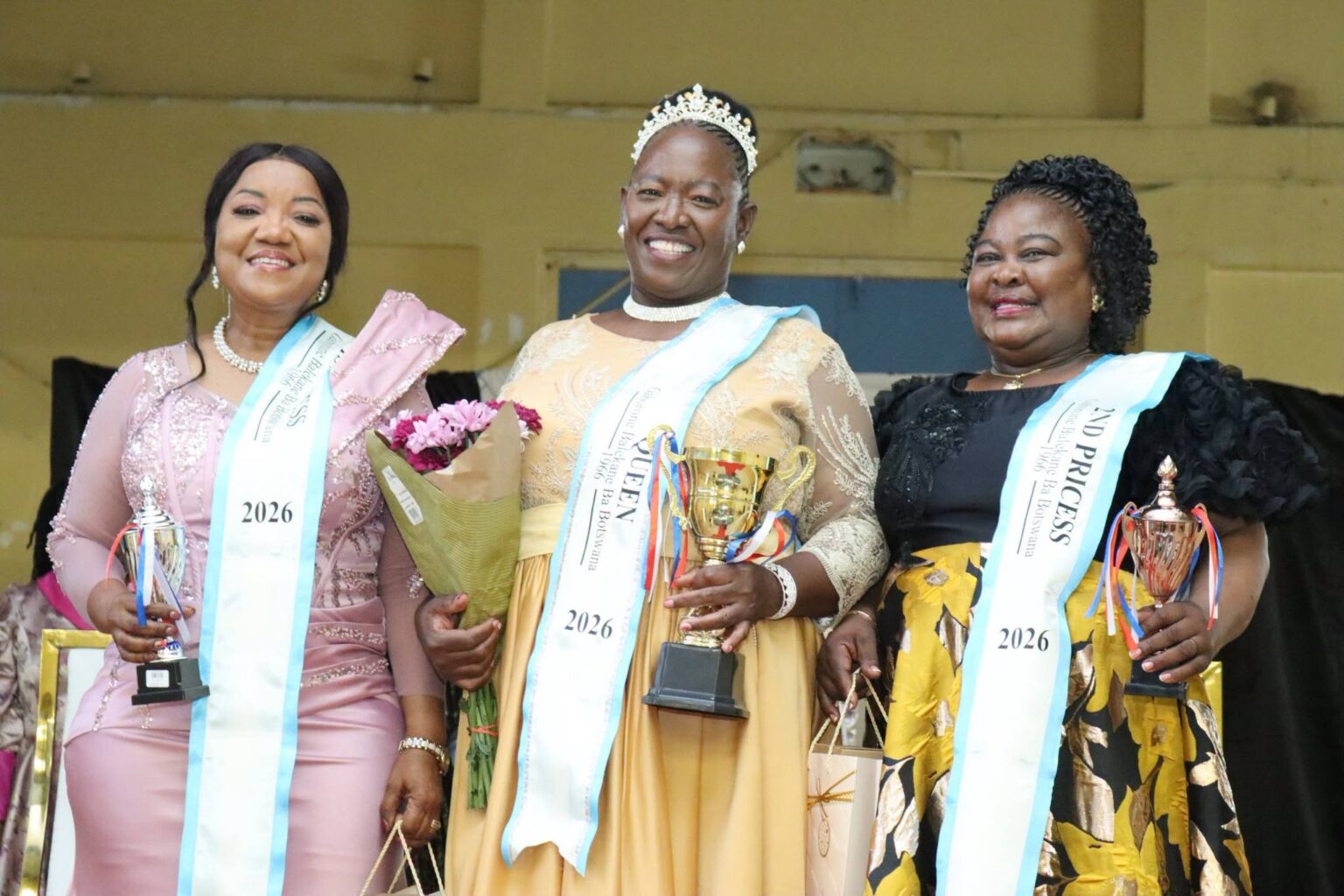
Kgalalelo Moshoboro was crowned Queen of the Balekane ba Botswana Beauty Contest. Her achievement placed her at the centre of a celebration that recognised the shared experiences of Botswana women born in 1966. Constance Tlhagwane was named First Princess, while Vinolia Bico Tshegisi received the title of Second Princess. The three crowned contestants represented the successful participants in a competition built around a distinctive generational identity. Their recognition formed part of an event that celebrated both individual achievement and the collective journey of the contestants.
The significance of the contest extends beyond the titles awarded on the day. For women born in 1966, the event provided a chance to reflect on decades of personal experiences and the contribution they have made to their families, communities and country. Their journeys have taken place across a period of substantial change in Botswana. Celebrating those journeys gives greater visibility to the experiences of women who have reached an important stage of life with stories, skills and memories shaped by the country’s development. The Balekane ba Botswana Beauty Contest therefore served as a celebration of lived experience as much as it did a beauty competition.
Friendship was another important element of the event. Bringing together women who share the same birth year creates a natural connection based on a common generational experience. The contestants were able to celebrate their similarities while also recognising the different paths each woman has taken throughout her life. A competition can create winners and titles, but an event built around shared history can also strengthen relationships and create a sense of community among participants. The emphasis on friendship adds a personal dimension to the celebration and reinforces the idea that the contestants’ journeys are part of a broader collective experience.
Cultural identity also featured prominently in the celebration. Beauty contests can provide participants with an opportunity to express aspects of their heritage through appearance, talent, confidence and public presentation. For the Balekane ba Botswana Beauty Contest, cultural identity formed part of a wider celebration of what it means to be a Botswana woman from the independence generation. The event brought personal expression together with national identity in a setting that recognised both individual uniqueness and shared history. This combination helped make the contest relevant not only as an entertainment event but also as a celebration of Botswana’s social and cultural identity.
The story of the “independence babies” offers a distinctive way to look at Botswana’s history through the experiences of ordinary citizens. National history is often discussed through political milestones, institutions and major events, but it is also reflected in the lives of people who have experienced those changes firsthand. The contestants born in 1966 have spent their lives in an independent Botswana and have witnessed the country change across successive decades. Their experiences provide a human perspective on the passage of time since independence. By celebrating these women, the contest also recognised the value of personal stories in understanding the country’s journey.
The Balekane ba Botswana Beauty Contest in Gaborone ultimately brought together beauty, confidence, culture, talent, leadership and community involvement within a celebration of a special generation. Kgalalelo Moshoboro was crowned Queen, with Constance Tlhagwane as First Princess and Vinolia Bico Tshegisi as Second Princess. More broadly, the event honoured women born in 1966 and recognised the significance of their shared connection to Botswana’s independence. Their journeys represent decades of personal growth, resilience, friendship and contribution within an independent nation. As Botswana continues to celebrate its history and identity, the “independence babies” offer a powerful reminder that the story of the country is also the story of the generations who have grown alongside it.