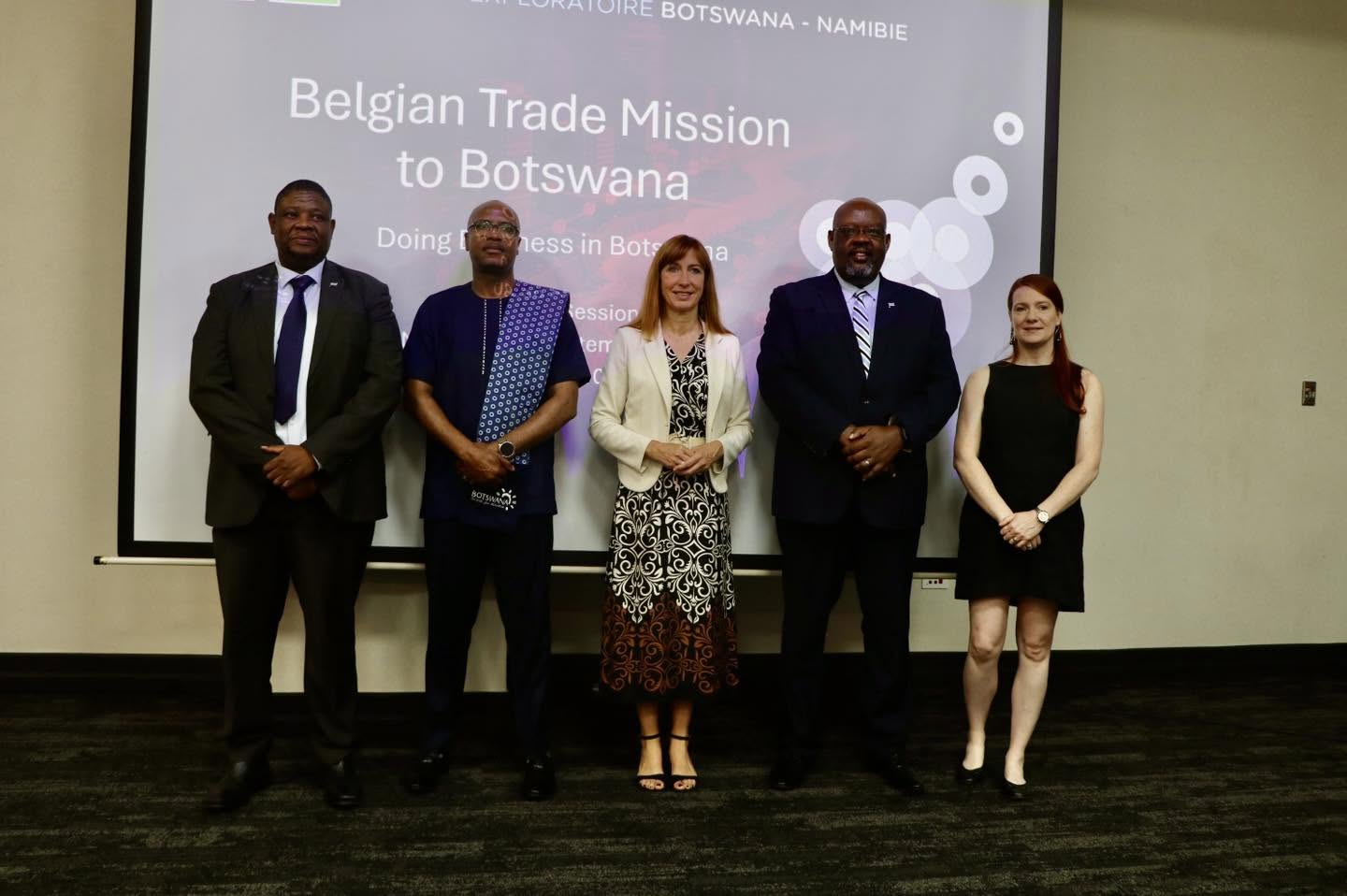
Botswana strengthened its international business ties from 28 to 29 September 2026 as the Botswana Investment and Trade Centre, together with the Embassy of Botswana in Belgium and the Wallonia Export and Investment Agency, hosted a delegation of 16 Belgian companies. The visiting businesses came to explore investment, trade and partnership opportunities across several important sectors of the Botswana economy. Their areas of interest included water, healthcare, information and communications technology, agribusiness, energy and light industry manufacturing. The two-day programme provided Belgian companies with an opportunity to understand Botswana’s business environment while meeting organisations and companies operating in the country. The visit also highlighted efforts to attract international investment that can contribute to economic diversification and create stronger commercial links between Botswana and Belgium.
The programme began with a welcome address by the Permanent Secretary in the Ministry of Trade and Entrepreneurship, Mr Joel Duke Ramaphoi, at Protea Hotel by Marriott Masa. His participation demonstrated the importance attached to strengthening international commercial relationships and encouraging new investment into Botswana. The opening session provided an opportunity to welcome the Belgian delegation and establish the broader objectives of the programme. For visiting companies, direct engagement with government representatives can provide useful context about Botswana’s economic priorities and investment environment. It also creates a starting point for discussions about how foreign businesses can contribute to sectors identified as important for national development.
Following the welcome session, the Botswana Investment and Trade Centre presented Doing Business with Botswana to the Belgian delegation. The presentation highlighted opportunities for Belgian companies to invest in Botswana, establish local partnerships and gain access to the Botswana market. Such engagement allows potential investors to better understand the commercial environment before making decisions about specific projects or partnerships. It also gives Botswana an opportunity to present its investment priorities directly to companies that have expertise and capabilities in targeted industries. Providing clear information to prospective investors is an important part of developing international business relationships.
The business matchmaking programme formed a central part of the two-day engagement. Belgian companies were connected with stakeholders from Botswana’s public and private sectors to explore potential partnerships and areas of collaboration. Business matchmaking allows companies to move beyond general presentations and discuss specific commercial interests with potential partners. These conversations can help businesses identify areas where their products, services, technology or expertise may address local needs. The meetings also create opportunities for Botswana-based companies and institutions to establish relationships with international businesses that may become longer-term partners.
The diversity of the Belgian delegation reflected the range of opportunities being explored in Botswana. Companies involved in water, healthcare, ICT, agribusiness, energy and light manufacturing brought different areas of expertise to the programme. These sectors also connect with broader economic priorities such as infrastructure development, technology adoption, food production, energy security and industrial development. International companies with specialised knowledge can potentially contribute technology, investment and technical capabilities to these areas. At the same time, Botswana-based businesses can provide local knowledge, market access and partnerships that help international companies understand and operate within the domestic market.
Water was one of the sectors given practical attention during the visit. Companies from the Belgian delegation involved in the water sector visited the Mmamashia Water Treatment Plant to gain insight into Botswana’s technology-driven water infrastructure. The visit allowed the companies to see part of the country’s water treatment operations and better understand the environment in which potential technologies or services could be applied. It also created an opportunity to explore possible synergies between Belgian expertise and Botswana’s water infrastructure needs. Direct site visits can be valuable for potential investors because they provide a clearer understanding of existing systems and the practical challenges that future partnerships may need to address.
The Mmamashia visit also demonstrated the importance of combining business discussions with practical exposure to Botswana’s infrastructure. A presentation can explain investment opportunities, but visiting an operating facility allows potential partners to observe infrastructure and technology in context. For water companies, this can help inform discussions about possible areas of cooperation and future commercial opportunities. The visit also gave Botswana an opportunity to demonstrate the capabilities and systems already in use within its water sector. Such exchanges can help establish more informed conversations between international businesses and local institutions.
The second day of the programme focused attention on Botswana’s mining sector through a Mining Roundtable. Mining remains an important part of Botswana’s economy, making technological development in the sector a significant area for potential investment and cooperation. The roundtable explored opportunities for Belgian companies to introduce cleaner, safer and more efficient technologies into Botswana’s mining industry. Discussions around technology can cover different aspects of mining operations, including efficiency, safety and environmental performance. The engagement therefore created a platform for Belgian companies to present areas of expertise that could potentially support the continued development of Botswana’s mining sector.
The focus on cleaner mining technologies is particularly relevant as mining companies and governments continue to consider ways of improving environmental performance while maintaining productive operations. Technologies that can improve efficiency may also help companies manage resources more effectively and reduce operational challenges. Safety-focused solutions can contribute to better working conditions within mining operations when appropriately implemented. The roundtable provided a space for companies and stakeholders to explore these possibilities in relation to Botswana’s specific mining environment. Any future projects would depend on individual business assessments, technical requirements and agreements between the relevant partners.
The visit also highlighted the role of ICT in Botswana’s investment landscape. Digital technology has applications across almost every major sector, including healthcare, agriculture, water management, mining and manufacturing. Belgian companies with expertise in ICT can potentially explore opportunities to support digital transformation and improve the delivery of services. Technology partnerships can also help businesses and institutions develop more efficient systems for managing information, operations and communication. The inclusion of ICT companies in the delegation therefore reflects the broad range of commercial possibilities being considered through the engagement.
Healthcare was another important sector represented by the Belgian delegation. International cooperation in healthcare can involve technology, equipment, services, skills and other areas that support the development of health systems. Belgian companies exploring Botswana can assess opportunities based on the country’s specific needs and existing infrastructure. Engagement between international businesses and local stakeholders can help identify areas where commercial expertise may complement national development priorities. The delegation’s presence therefore created an opportunity to discuss potential cooperation while giving Belgian companies a better understanding of the Botswana market.
Agribusiness and energy also featured among the sectors represented by the visiting companies. Agribusiness has potential connections to food production, processing, technology and supply chains, while energy is important to the wider functioning of households, businesses and industries. International partnerships in these areas can bring together technical expertise and investment with local market knowledge and opportunities. The presence of companies from these sectors allowed the programme to explore a broader range of possible investment and trade relationships. Such diversification is relevant to Botswana’s efforts to strengthen economic activity beyond a narrow group of traditional industries.
Light industry manufacturing added another dimension to the delegation’s interests. Developing manufacturing capacity can support value addition, supply chains and local production while creating opportunities for businesses to serve domestic and regional markets. International companies can contribute specialised knowledge, technology and investment, while local partners can provide insight into the operating environment and available commercial networks. Discussions between Belgian manufacturers and Botswana stakeholders can therefore help identify potential areas for cooperation. The business matchmaking programme provided a practical setting for these conversations to begin.
The involvement of the Embassy of Botswana in Belgium and AWEX was also important to the organisation of the delegation. International business engagement often requires coordination between investment promotion agencies, diplomatic missions and private companies. Bringing these organisations together can make it easier for companies to identify relevant contacts and understand opportunities in a foreign market. The collaboration also demonstrates the value of institutional partnerships in supporting trade and investment promotion. For Botswana, such cooperation can help expand its network of potential investors and strengthen commercial relationships with Belgian businesses.
The two-day programme illustrates how investment promotion can combine information sharing, direct business meetings and practical site visits. The delegation first received information about doing business in Botswana before engaging with public and private-sector stakeholders through business matchmaking. It then explored specific opportunities in the mining and water sectors through the roundtable and treatment plant visit. This structure gave companies different ways to assess Botswana’s investment environment and identify areas that could support future cooperation. It also allowed Botswana institutions and businesses to communicate their needs and capabilities directly to prospective international partners.
For Botswana, attracting international companies is closely linked to the broader objective of expanding investment and strengthening trade. International investment can introduce capital, technology, expertise and access to wider business networks. However, individual investments require detailed commercial assessment and agreements between investors and local partners before they can become operational projects. The Belgian delegation’s visit should therefore be understood as an opportunity to explore potential partnerships rather than evidence that specific investments have already been secured. The value of the programme lies in creating connections that can develop into practical business relationships over time.
The engagement between Botswana and Belgian companies also reflects the importance of building relationships before commercial agreements are concluded. International business decisions often require companies to understand regulations, infrastructure, market conditions, potential partners and sector-specific opportunities. Meetings with government agencies and private businesses can help prospective investors gather the information needed for those decisions. Site visits can add another layer of understanding by allowing companies to examine facilities and operations directly. Continued engagement after the delegation leaves Botswana will be important if the initial discussions are to develop into concrete projects.
The Belgian business delegation’s visit to Botswana from 28 to 29 September 2026 provided a platform for companies to explore opportunities across water, healthcare, ICT, agribusiness, energy, mining and manufacturing. The programme combined government engagement, investment presentations, business matchmaking, a mining roundtable and a visit to the Mmamashia Water Treatment Plant. These activities gave the visiting companies opportunities to examine Botswana’s business environment and discuss potential areas of cooperation with local stakeholders. The initiative also demonstrated the role of the Botswana Investment and Trade Centre in connecting international businesses with opportunities in the country. As these relationships develop, the focus will now be on turning promising discussions into practical partnerships that can support investment, trade and broader economic development in Botswana.