
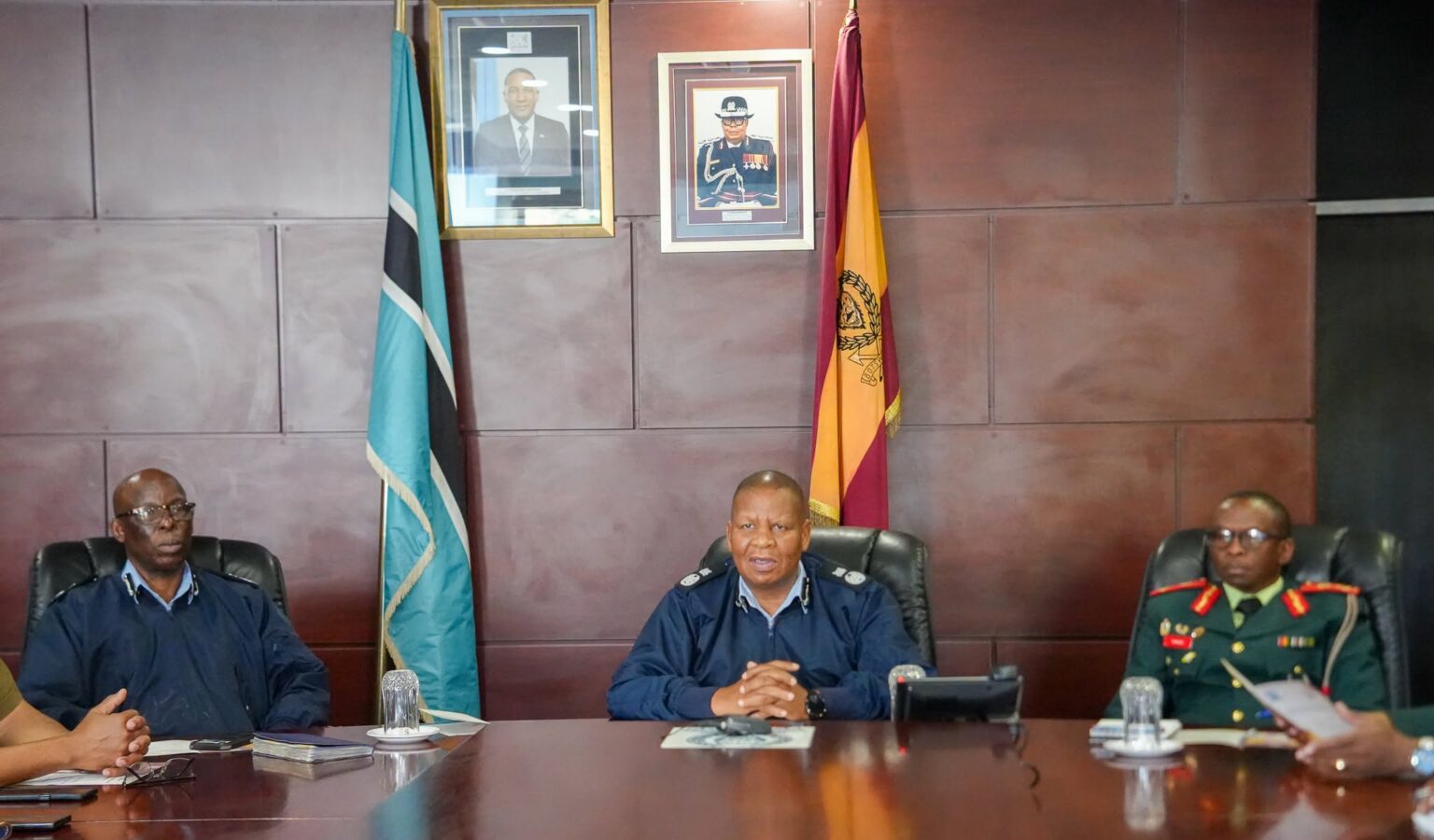
The Botswana Police Service (BPS) hosted a delegation of newly promoted senior officers from the Botswana Defence Force (BDF) at Police Headquarters in Gaborone on 10 September 2026. The high-level engagement brought together officers holding the ranks of Brigadier and Colonel as part of ongoing efforts to strengthen cooperation between the country’s two major security institutions. The meeting focused on the importance of understanding shared responsibilities and improving operational synergy between the BPS and BDF. It also provided an opportunity for newly promoted BDF officers to gain a deeper understanding of the police service and its role within Botswana’s broader national security framework. The engagement highlighted the importance of strong institutional relationships in supporting the protection of Botswana and its people.
Welcoming the delegation, Acting Commissioner of Police Katlholo Mosimanegape congratulated the officers on their recent promotions and welcomed them to Police Headquarters. He emphasised that their new leadership responsibilities come with the need for a clear understanding of the collaborative roles played by the BPS and BDF. Senior officers from both institutions have important responsibilities that can require coordinated action, particularly when national security and public safety concerns involve multiple agencies. Regular engagement between leadership structures can help strengthen communication and ensure that both organisations understand how their respective mandates complement one another. Mosimanegape therefore stressed the importance of building strong professional relationships as the newly promoted officers take on greater responsibilities.
The Acting Commissioner noted that the BPS and BDF share a mutual responsibility and common mandate to protect Botswana and its people. While the two institutions have distinct functions, their responsibilities can intersect in areas that require coordinated national security efforts. Strategic partnerships can help ensure that both organisations are prepared to respond effectively when circumstances require cooperation. Mosimanegape emphasised that regular engagement should remain an important part of advancing Botswana’s national security agenda. Such cooperation can also strengthen institutional understanding and help senior officers identify areas where joint planning and coordination can improve operational effectiveness.
The visit was also significant because it brought together a new generation of senior BDF leadership with the leadership and structures of the BPS. Brigadier Dr Steven Thaga, who led the BDF delegation, expressed his appreciation for the warm reception extended to the officers. He described the visit as an important opportunity for the newly promoted leaders to gain deeper insight into the inner workings of the police service. Understanding how another security institution operates can help senior officers develop a clearer picture of its capabilities, responsibilities and operational processes. This knowledge can prove valuable when the two organisations need to coordinate their efforts in support of national security and public safety.
Brigadier Dr Thaga also noted that the engagement further strengthens the historical relationship between the BDF and BPS. The relationship between the two institutions is important because both contribute to Botswana’s broader security environment while operating under different mandates. Sustaining this relationship requires continued communication at leadership level as well as practical cooperation between personnel. High-level engagements such as this one can create opportunities for officers to exchange experiences and develop a stronger understanding of each institution. This can support greater trust and coordination when joint responsibilities arise.
An important part of the meeting involved a briefing by Senior Assistant Commissioner of Police Neo Maimela, Director of the Strategy Development and Performance Monitoring Branch. She briefed the BDF delegation on the transformation and structural progression taking place within the Botswana Police Service. The briefing provided insight into how the organisation is adapting its structures and strategic direction to respond to changing policing requirements. Institutional transformation requires clear objectives, effective performance monitoring and alignment between organisational structures and national priorities. Sharing information about these developments also gave the visiting officers a better understanding of the direction in which the BPS is moving.
Senior Assistant Commissioner Maimela informed the delegation that the BPS has recently launched its fifth Corporate Development Strategy, known as CDS V. The strategy serves as a guiding blueprint for the organisation and reflects key government objectives, public expectations and international policing standards. A corporate strategy provides an important framework for setting priorities, directing resources and measuring progress across an organisation. For a national law enforcement agency, it also needs to respond to changing security challenges and the expectations of the communities it serves. CDS V therefore represents an important step in shaping the future direction of the BPS and strengthening its ability to deliver effective policing services.
Maimela explained that the strategy has been developed with a focus on aligning the police service with government priorities, public expectations and international standards. This approach recognises that modern policing requires institutions to remain responsive to the needs of communities while maintaining professional standards. Public expectations of law enforcement continue to evolve as communities seek effective crime prevention, professional service and accountable institutions. International policing standards can also provide useful benchmarks for improving practices, organisational performance and service delivery. Bringing these different considerations together can help the BPS build a strategic framework that supports both national priorities and modern policing requirements.
At the centre of CDS V is a vision to build a modern and proactive law enforcement agency of repute. The vision reflects an ambition for the BPS to strengthen its ability to anticipate challenges rather than simply respond to incidents after they occur. A modern police service also requires effective leadership, capable personnel, appropriate systems and continued organisational development. Proactive policing can support efforts to prevent crime, improve public safety and strengthen relationships between law enforcement and communities. The vision outlined by Maimela therefore provides a clear indication of the organisation’s intention to continue evolving in response to Botswana’s changing security environment.
The meeting between the BPS and BDF comes at a time when strong cooperation between security institutions remains important to Botswana’s national security agenda. The promotion of senior officers creates an opportunity to strengthen leadership relationships and ensure that those entrusted with greater responsibilities understand the roles of their counterparts. The discussions at Police Headquarters also demonstrated the value of sharing information about institutional strategies and transformation programmes. Continued engagements between the two organisations can support better coordination, stronger professional relationships and a clearer understanding of shared responsibilities. As both institutions continue to develop, maintaining this strategic partnership will remain important for protecting Botswana and supporting the safety and security of its people.