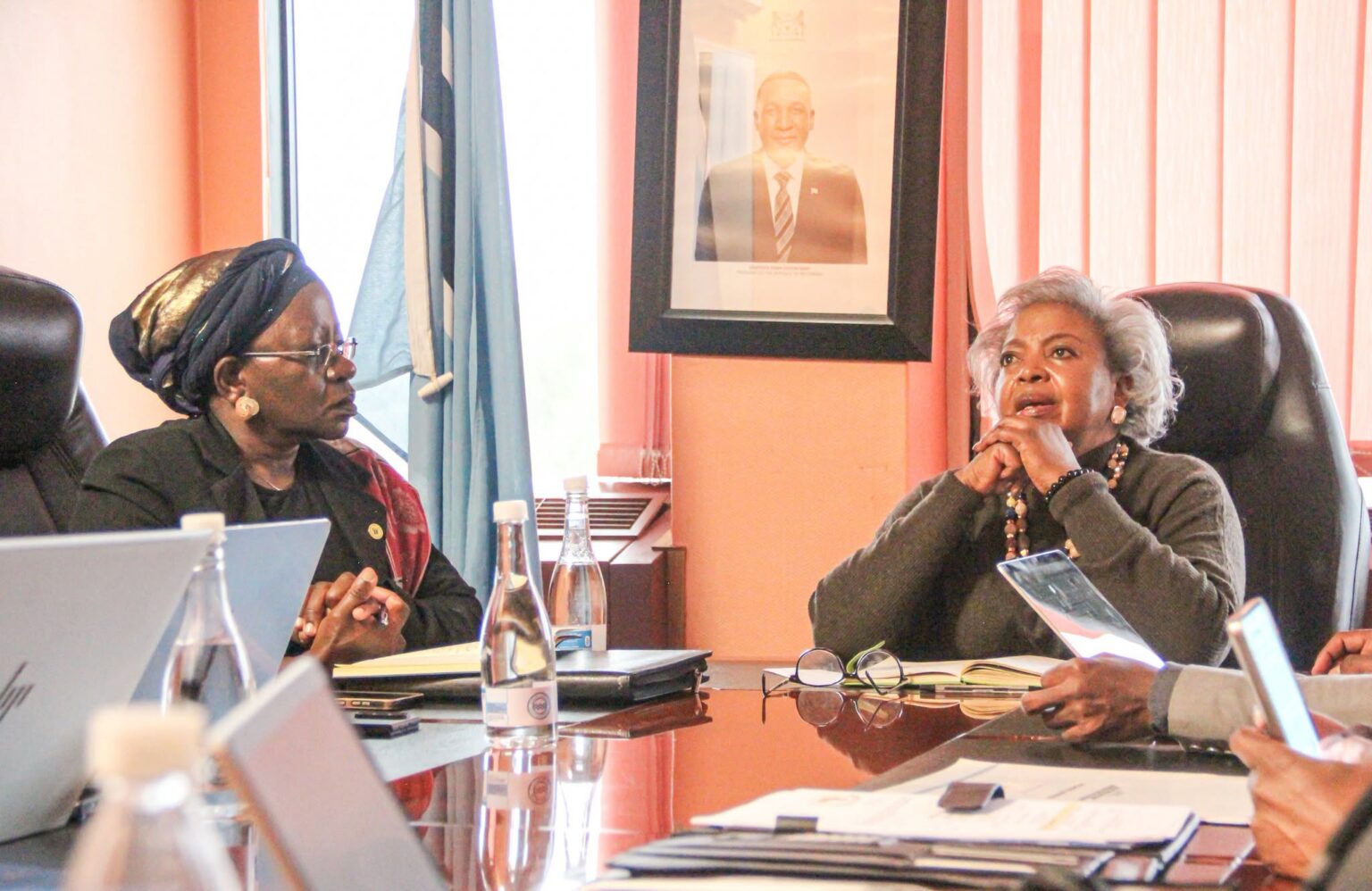
Botswana is strengthening its efforts to protect children as the country reviews its child protection framework and considers the possibility of hosting the Girls’ Summit next year. An African Union (AU) Commission delegation recently visited Botswana as part of a Monitoring and Assessment on Child Protection and Girls’ Summit Preparation Mission. The delegation was led by AU Commissioner for Health, Humanitarian Affairs and Social Development, Ms Amma Twum-Amoah. The mission provided an opportunity to assess Botswana’s progress in protecting children while engaging government and other stakeholders on priorities that require continued attention. It also placed renewed focus on the importance of creating safe, supportive and family-centred environments where children can grow and develop.
The delegation paid a courtesy call on the Permanent Secretary in the Ministry of Child Welfare and Basic Education, Ms Mmamiki Kamanakao, as part of its engagements in Botswana. The visit formed part of the broader assessment process aimed at understanding the country’s progress in strengthening child protection systems. It also allowed the AU Commission to engage directly with government on the possibility of Botswana hosting the Girls’ Summit in the coming year. Such engagements are important because major child-focused initiatives require strong cooperation between governments, regional institutions and communities. They also create an opportunity to identify practical measures that can improve the protection and wellbeing of children and girls.
The mission had two central objectives that were closely connected to Botswana’s broader child protection priorities. The first was to assess progress made by the country in addressing child protection issues and strengthening systems designed to support children in need of care and protection. The second was to discuss the potential hosting of the Girls’ Summit and assess the country’s preparedness to support such an important regional platform. The summit would provide an opportunity to bring attention to issues affecting girls while encouraging dialogue around their rights, safety, education and development. The AU delegation’s presence therefore combined monitoring responsibilities with preparations for a potential event that could place girls’ rights and protection at the centre of regional discussions.
Ms Kamanakao highlighted that the AU mission arrived at an important stage in Botswana’s child protection efforts because the country is currently reviewing its Children’s Act. The review provides an opportunity to examine existing legislation and policies and determine whether they adequately respond to the needs and rights of children. Strong child protection laws are essential because they establish the responsibilities of government institutions, families and other stakeholders in preventing abuse, neglect and exploitation. They also provide a legal foundation for interventions when children require care and protection. The ongoing review can therefore contribute to a stronger and more responsive child protection framework if it reflects the experiences of children, families and communities.
One of the key issues highlighted during the discussions was the importance of family-based care. The Permanent Secretary emphasised that every child has the right to grow up in a family environment, reinforcing the need to consider family care as an important part of child protection planning. Family-based care can provide children with stability, emotional support and a sense of belonging, particularly when compared with long-term institutional care. However, ensuring that children remain in safe family environments requires appropriate support for parents, caregivers and extended families. Effective child protection systems must therefore address risks within families while also providing suitable alternatives when children cannot safely remain with their biological parents.
The discussions also considered children in need of care and protection and the role of foster care in responding to their needs. Children may require alternative care for different reasons, including circumstances where their home environment does not provide adequate safety or support. Foster care can offer temporary or longer-term family-based support while authorities work to determine the most appropriate care arrangement for each child. A strong foster care system requires suitable caregivers, proper screening, ongoing supervision and access to support services. It also requires child protection professionals to ensure that decisions remain focused on the best interests, safety and wellbeing of each child.
The AU delegation did not limit its assessment to discussions with government officials. During the mission, the delegation also engaged with children through a children consultation forum, creating an important opportunity for young people to contribute their views to the consultation process. Including children in discussions about child protection is significant because policies and programmes affect them directly. Their experiences can reveal challenges that may not always be visible through administrative assessments or discussions among adults. Listening to children can therefore help policymakers understand what makes them feel safe, what risks they face and what forms of support they consider most effective.
Traditional leaders were also included in the engagements conducted during the mission. Their involvement recognises the important role that traditional leadership structures can play in communities, particularly when addressing social issues affecting children and families. Traditional leaders can help strengthen awareness of child protection responsibilities and support community-level efforts to prevent harmful practices and respond to concerns affecting children. Their participation can also help connect national child protection policies with realities at community level. Collaboration between government institutions, traditional leadership, families and communities is essential for building child protection systems that work beyond legislation and reach children in their everyday environments.
The consultations allowed the AU delegation to assess the progress Botswana has made in strengthening its child protection systems while identifying areas that may require further attention. Effective child protection depends on more than laws and policies. It also requires capable institutions, trained professionals, accessible services, reliable reporting mechanisms and cooperation between different stakeholders. Regular monitoring can help identify gaps in implementation and determine whether policies are producing meaningful improvements in the lives of children. The engagement process also gives stakeholders an opportunity to share practical experiences that can inform future interventions and policy decisions.
The potential hosting of the Girls’ Summit adds another important dimension to the mission. A summit focused on girls can provide a platform for governments, young people, civil society organisations and other stakeholders to discuss challenges affecting girls and identify measures to advance their rights and opportunities. Issues such as protection from violence, access to education, participation in decision-making and access to support services can form part of broader discussions around girls’ development. Hosting such an event would also require strong coordination and preparation to ensure that the voices of girls remain central to the process. The AU’s engagement with Botswana therefore provides an opportunity to assess both the country’s child protection progress and its capacity to contribute to a major regional initiative.
Botswana’s review of its Children’s Act, combined with the AU assessment and stakeholder consultations, creates an important opportunity to strengthen the country’s approach to child protection. The focus on family-based care, foster care and children in need of protection highlights the need for systems that respond to individual circumstances while keeping children’s best interests at the centre. The participation of government officials, children and traditional leaders also demonstrates the value of inclusive consultations when shaping policies that affect young people. Continued collaboration between Botswana and the AU can help build on existing progress while addressing gaps identified during the mission. The discussions around the Girls’ Summit further reinforce the importance of keeping child protection and the rights of girls high on the regional development agenda.