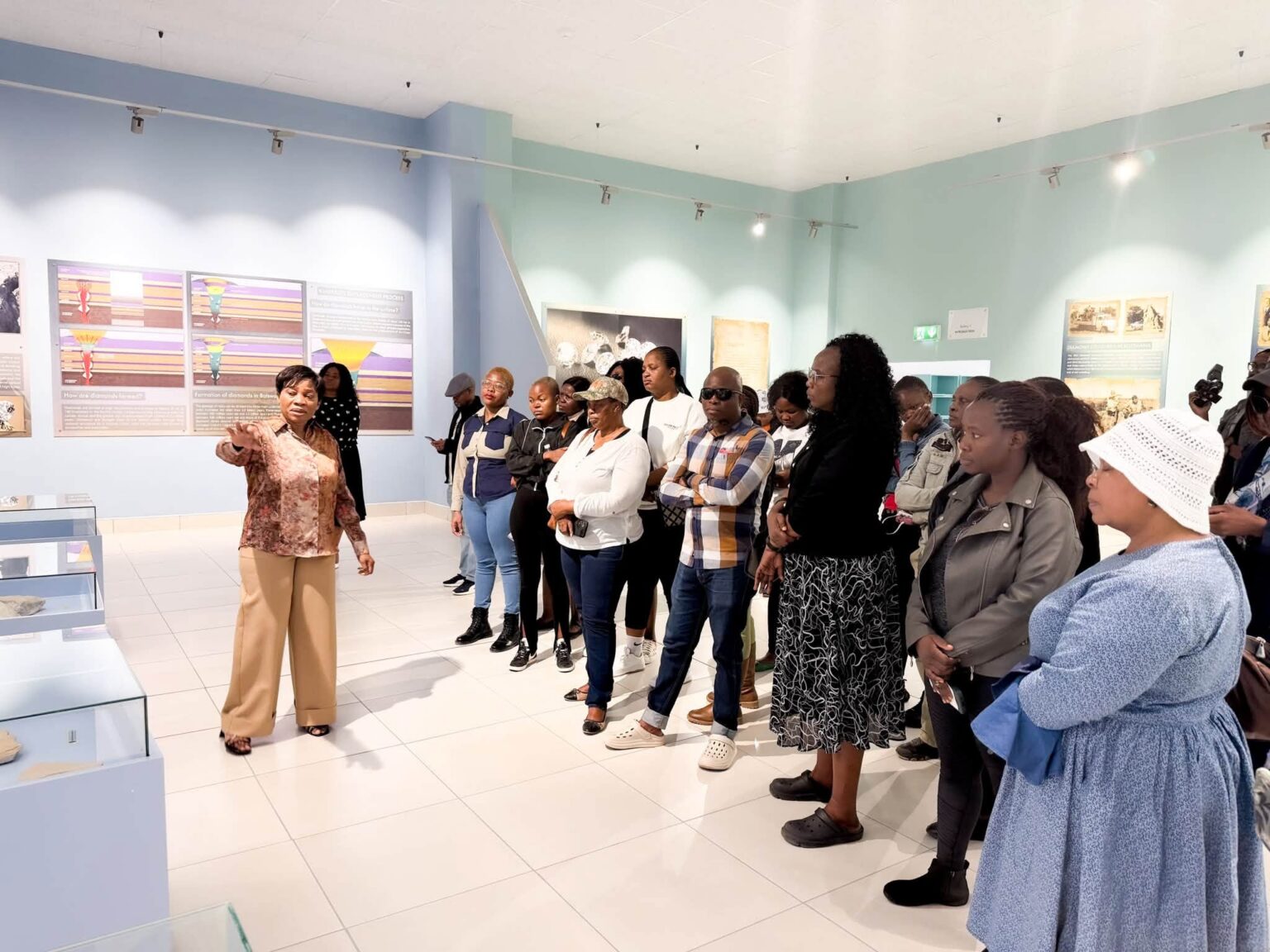
EntreprenHER beneficiaries from the Bobirwa and Boteti regions brought their three-day training and mentorship programme to a meaningful close with a visit to Orapa Mine yesterday morning. The tour gave the women an opportunity to see one of the key operations behind Botswana’s diamond industry while reflecting on the role that mineral wealth can play in supporting communities and economic development. For the women entrepreneurs, the visit connected the lessons they had gained during the programme with a broader picture of how investment can create opportunities for people and businesses. It also offered a practical reminder that successful enterprises require planning, discipline and a clear understanding of how resources can create lasting value. The mine tour therefore served as more than a closing activity, giving participants an experience that reinforced many of the principles discussed during their training.
The visit allowed the beneficiaries to better appreciate where Botswana’s diamonds come from and the scale of the operations involved in the country’s mining industry. Seeing the mine firsthand helped connect the country’s mineral resources with the programmes and opportunities that are designed to benefit Batswana. As funders of the EntreprenHER programme, De Beers Group and partners such as Debswana have invested in supporting women beyond basic business training. Their involvement is helping women entrepreneurs develop knowledge, confidence and practical skills that can strengthen their ability to establish and grow sustainable businesses. For the beneficiaries, seeing the mining operation provided a clearer understanding of how value generated from Botswana’s resources can contribute to investment in people, communities and enterprises.
The experience also gave the women an opportunity to reflect on the connection between natural resources and entrepreneurship. Botswana’s diamond industry has played an important role in the country’s economic development, while initiatives such as EntreprenHER focus on ensuring that people can access opportunities that strengthen their participation in the economy. The women were able to see the scale of the systems, people and processes required to operate a major mining operation. That experience provided a useful perspective for entrepreneurs who are building businesses on a much smaller scale. It demonstrated that whether an organisation is large or small, sustainable growth depends on having a clear purpose, strong systems and people who understand their responsibilities.
The mine tour also carried an important lesson about the foundations required for sustainable business growth. Mining operations depend on careful planning, structured processes, teamwork and long-term decision-making to manage complex activities and resources. Entrepreneurs face different challenges, but they also need strong foundations if they want their businesses to survive and grow. Building a sustainable enterprise requires discipline, accountability and resilience, particularly when market conditions change or unexpected challenges arise. Growth rarely happens instantly, and business owners need to remain focused on improving their systems while identifying opportunities for expansion. The lessons from the mine therefore gave the beneficiaries a practical way to think about the importance of building businesses that can operate effectively over the long term.
The programme has also encouraged the women to see themselves as active contributors to Botswana’s wider development story. Through their businesses, entrepreneurs can create employment opportunities, support their families and provide products and services that meet needs within their communities. Small and growing enterprises can also contribute to local economic activity by purchasing from other businesses and keeping income circulating within communities. This makes supporting women entrepreneurs important not only for individual business owners but also for the communities and households connected to their enterprises. The beneficiaries were therefore reminded that the businesses they are building have the potential to create value that extends beyond their own immediate interests.
Over the three days of training and mentorship, the participants explored important aspects of business resilience and sustainable growth. They learned about the challenges associated with scaling a business and considered how stronger systems can help enterprises manage growth more effectively. Discussions around delegation, repeatability and healthy profit margins highlighted the importance of creating businesses that do not depend entirely on the owner handling every task. Entrepreneurs need to understand their numbers, establish processes and delegate responsibilities appropriately as their operations expand. The mine visit helped reinforce these lessons by giving the women a real-world example of how large-scale operations rely on systems, coordination and careful resource management.
The focus on delegation and repeatability is particularly relevant for entrepreneurs who want to move from operating a small business to building an enterprise capable of sustained growth. When business owners try to manage every responsibility themselves, growth can become difficult and the quality of service can suffer. Clear processes can help ensure that important tasks are completed consistently, even when different people are responsible for carrying them out. Healthy profit margins are equally important because revenue alone does not guarantee that a business is financially sustainable. By understanding these principles, the beneficiaries can make more informed decisions as they strengthen their businesses after completing the programme.
The support provided through EntreprenHER also highlights the value of combining training with mentorship and practical exposure. Business knowledge can give entrepreneurs useful tools, but confidence and practical understanding are also important when applying those tools in real situations. Mentorship can help business owners identify weaknesses, make better decisions and remain focused on long-term objectives. Exposure to established operations such as Orapa Mine can also broaden the way entrepreneurs think about systems, productivity and resource management. Together, these elements can help participants move from learning business concepts to applying them in ways that improve the performance of their enterprises.
For the beneficiaries from Bobirwa and Boteti, the conclusion of the programme marks the start of a new stage rather than the end of their entrepreneurial journey. They leave with new business knowledge, greater confidence and a stronger appreciation of the investment being made in their success. The responsibility now lies with each entrepreneur to apply the lessons learned, strengthen her systems and make decisions that support sustainable growth. The skills gained during the programme can become more valuable when they are translated into daily business practices and measurable improvements. The experience at Orapa Mine has given the women an additional perspective on what can be achieved through planning, teamwork, responsible resource management and a long-term vision.
The closing mine tour ultimately brought together the central lessons of the EntreprenHER programme in a practical and memorable way. It showed the beneficiaries the scale of an industry that generates value from Botswana’s natural resources while encouraging them to think about how they can create lasting value through their own enterprises. The programme has equipped the women with tools to build resilience, improve their systems, manage growth and pursue healthier businesses. Their next challenge is to turn those lessons into action and continue developing enterprises that support their families, create opportunities and contribute to their communities. With continued commitment and application of the knowledge gained, the women from Bobirwa and Boteti can use this opportunity as a foundation for businesses capable of creating value for years to come.