
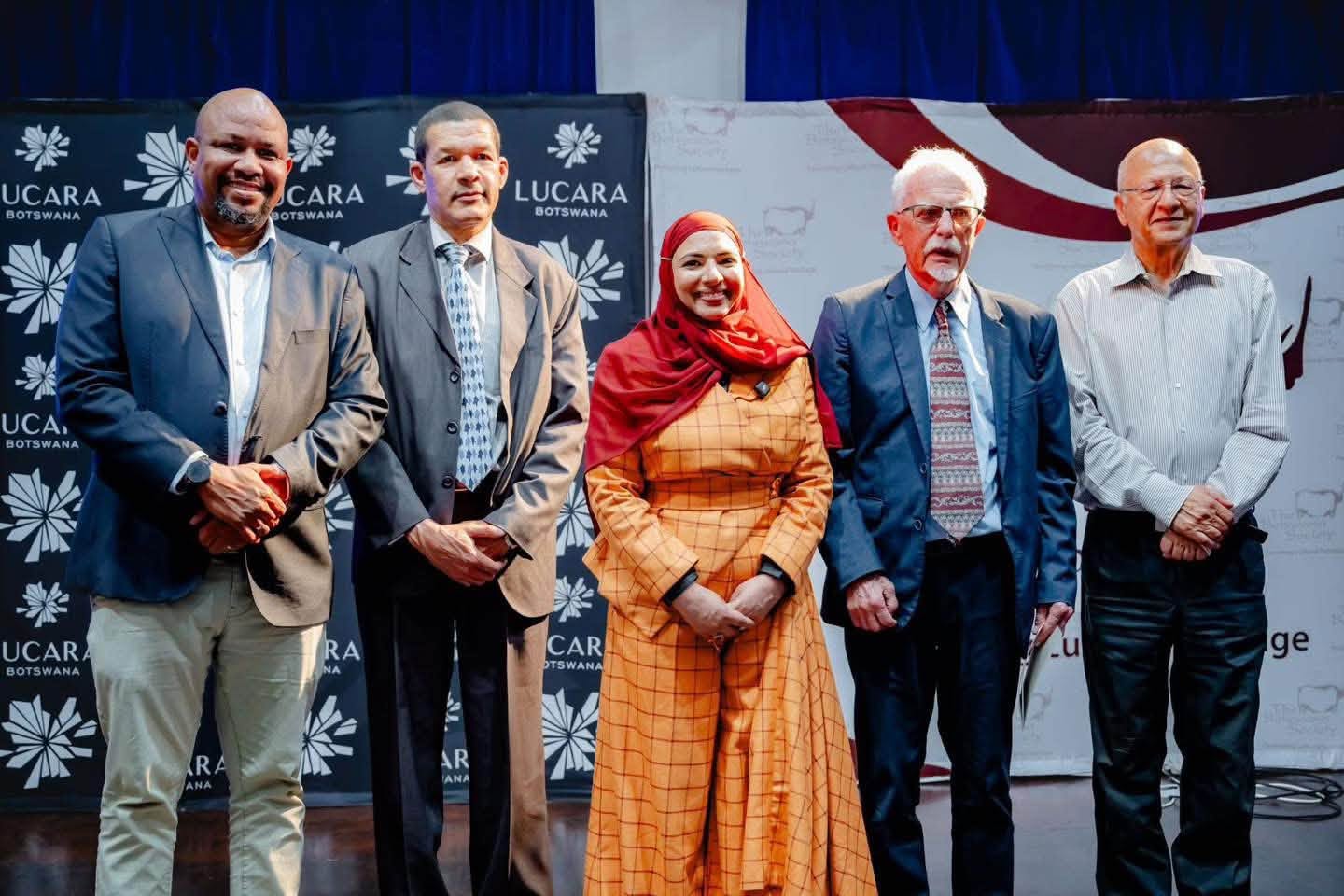
Lucara Botswana is positioning itself as more than a traditional diamond mining company, with a growing focus on local value creation, provenance, community development and greater participation in Botswana’s diamond value chain. Managing Director Naseem Banu Lahri outlined this broader vision while speaking at the Botswana Society’s “Ko Isong Tswa Ka Tsone” evening, held as part of Botswana’s 60th Independence celebrations. Her remarks traced Lucara Botswana’s development from its establishment in 2007 to its emergence as an important player in the country’s diamond industry. The company’s journey has included major diamond discoveries, investment in technology and efforts to expand its activities beyond the extraction of rough stones. Lahri’s central message was that Botswana’s diamonds can create greater economic, cultural and social value when the story and benefits associated with those resources extend beyond the mine.
Lucara Botswana’s story gained significant momentum with the discovery of the AK6 deposit in 2010, which later became the Karowe Mine. The discovery established the foundation for a mining operation that would become known for recovering exceptionally large diamonds. The potential of the resource became particularly clear in 2013, when the company recovered a 232-carat diamond. The discovery highlighted both the quality of the Karowe asset and the technical challenge involved in recovering large diamonds without damaging them during the mining process. It also reinforced the importance of developing and adopting technology suited to the unique characteristics of the deposit.
Lucara responded by investing in XRT sorting technology, which became operational at the mine in 2015 following an investment of approximately US$50 million. XRT technology uses X-ray transmission to identify and separate diamonds from waste material, making it particularly relevant to the recovery of large and valuable stones. Its introduction at Karowe formed an important part of Lucara’s efforts to improve the recovery of exceptional-size diamonds. The technology contributed to the company’s reputation for recovering some of the most significant diamonds found in the modern diamond industry. This technological investment also demonstrated how innovation can influence the economic potential of a mineral resource by improving the ability to recover high-value stones intact.
The exceptional diamonds recovered at Karowe have helped place Lucara Botswana on the international diamond map, but Lahri’s presentation focused on a broader question of what Botswana can gain from its diamond resources. She emphasised that the value of diamonds should not be measured only through mining revenues or the sale of rough stones. Instead, Lucara is seeking to increase the country’s participation in activities connected to the wider diamond value chain. This includes efforts involving provenance, diamond polishing, jewellery and fashion, alongside initiatives that support communities outside the mining operation. The approach reflects an ambition to connect Botswana’s natural resources with a wider set of economic and cultural opportunities.
One area Lahri highlighted was Lucara Botswana’s investment in agriculture and local community initiatives. The company has supported farming activities focused on supplying fresh produce and eggs to communities, while also establishing an abattoir intended to support local farmers. These initiatives broaden the company’s economic footprint beyond diamond extraction and create opportunities for local participation in other sectors. Agriculture can also provide communities with additional economic activity and market opportunities that are separate from mining. For Lucara, these investments form part of a wider approach to community development and the creation of benefits that can extend beyond the life and immediate operations of a mine.
Lucara has also placed increasing emphasis on diamond provenance, particularly through its decision to begin selling diamonds with provenance in 2019. Provenance allows a diamond to be traced through its journey from recovery at the mine through the value chain. This provides information about the origin of a stone and creates an opportunity to connect the physical diamond with the country where it was discovered. Lahri argued that this approach gives Botswana diamonds an identity that extends beyond their status as luxury products. By linking diamonds to their origin, Lucara can present them as products connected to Botswana’s people, culture, landscapes and national story.
The idea of provenance is particularly important as consumers and luxury markets increasingly place attention on the origins and stories associated with products. For Botswana, the ability to identify diamonds as originating from the country provides an opportunity to strengthen the connection between the resource and its national identity. Lahri captured this philosophy with the statement, “We sell the story and not the diamond.” The phrase reflects Lucara Botswana’s focus on using provenance and storytelling to give its diamonds a distinct identity in international markets. It also represents the company’s broader effort to show that the value of Botswana diamonds can include cultural and national significance alongside their financial value.
Lucara’s strategy also includes greater involvement in downstream activities such as diamond polishing, jewellery and fashion. These areas sit further along the diamond value chain and can generate additional economic activity beyond the extraction and initial sale of rough diamonds. Lahri said the company is pursuing partnerships and arrangements that increase Botswana’s participation in this part of the industry. She also highlighted arrangements designed to provide Botswana with a share of the value generated from polished diamonds. Such initiatives are important to the broader discussion about beneficiation, because processing and manufacturing can create opportunities for skills development, employment, business growth and additional economic value within the country.
The focus on downstream participation reflects a wider ambition to ensure that Botswana captures more value from its natural resources. Diamond mining creates economic activity through production, employment, taxation and other contributions, but the broader diamond industry includes cutting, polishing, jewellery manufacturing, retail and marketing. Greater participation in these activities can create additional links between the mining sector and other parts of the economy. For Botswana, this creates an opportunity to develop capabilities that are connected to diamonds while also supporting industries such as design, fashion, manufacturing and creative services. Lucara’s approach therefore seeks to connect mining with a wider economic ecosystem rather than treating the mine as the final point of value creation.
The company has also used international platforms to promote Botswana through its diamonds and partnerships with Botswana personalities. Lahri pointed to examples involving designers, athletes and beauty representatives as ways of taking the country’s diamond story to global audiences. These platforms can connect Botswana’s natural resources with national culture and contemporary identity. They also provide opportunities to present the country through people and creative work rather than relying solely on conventional mining or luxury marketing. The strategy reflects Lucara’s belief that Botswana diamonds can serve as a vehicle for telling a broader national story in international markets.
The recent Miss World Botswana journey provided another example of this approach during the country’s 60th Independence celebrations. Ruth Thomas wore a gown featuring 60 natural Botswana diamonds, linking the jewellery and fashion presentation directly to the national milestone. The initiative brought together Botswana’s diamond resources, fashion and national identity in a single public platform. It also demonstrated how diamonds can be incorporated into cultural and international storytelling beyond traditional jewellery advertising. Such initiatives form part of the broader effort to associate Botswana diamonds with the country’s people, achievements and identity.
Lucara Botswana’s development also comes at a time when Botswana continues to consider how its diamond resources can support long-term economic development. Diamonds have played a major role in the country’s economic history, making the question of how their value is created and distributed particularly significant. Lucara’s emphasis on local participation, provenance and downstream activities adds another dimension to that discussion. The company’s approach does not abandon mining, but seeks to connect mining with activities that can create additional value within Botswana. This includes community initiatives, agricultural investments, technology, partnerships and efforts to increase local participation in the diamond value chain.
As Lucara Botswana marks 15 years of impact, Lahri has positioned the company’s next phase around sustainable mining, community development and deeper participation in the diamond value chain. The company’s history, from the discovery of the AK6 deposit to the development of Karowe and the adoption of XRT sorting technology, demonstrates the importance of innovation in its mining operations. Its more recent focus on provenance, agriculture, polishing, jewellery and fashion shows an effort to broaden the economic and social impact associated with Botswana’s diamonds. The central idea is that the country can gain value not only by extracting exceptional diamonds but also by building a stronger connection between those diamonds and Botswana’s people, businesses and identity. Lucara Botswana’s evolving strategy therefore places the diamond at the centre of a much larger story, one that seeks to retain more value in the country while presenting Botswana diamonds to the world with a clear sense of origin and purpose.