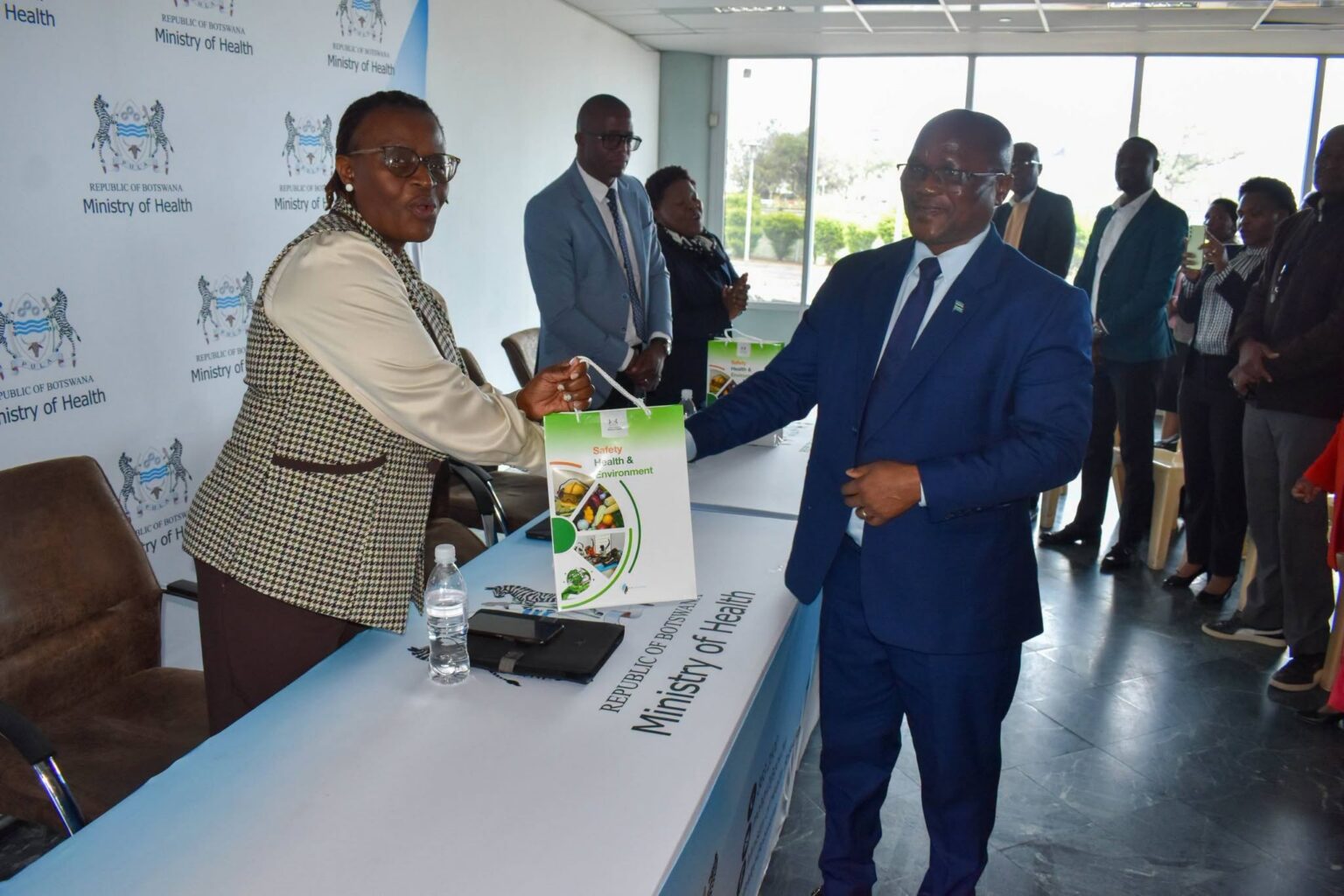
Yesterday marked a powerful moment of unity as health workers, faith leaders and community partners gathered under the September Month of Prayer initiative with a special focus on praying for healing, protection and the elimination of Gender-Based Violence (GBV). The gathering brought together people from different areas of society around a shared concern that continues to affect individuals, families and communities. The initiative highlighted the important role that health workers play in protecting not only physical health but also human dignity and wellbeing. It also created an opportunity for participants to reflect on the devastating impact of GBV and the need for stronger collective action. Through prayer, reflection and calls for responsibility, the event placed compassion, protection and the preservation of life at the centre of the discussion.
Delivering the welcome remarks, Director of Nursing and Midwifery Services Mr. Rejoice Sankoloba reminded attendees that behind every health statistic is a human life. His message reinforced the importance of viewing patients and survivors as people with individual experiences, needs and rights rather than simply as numbers in reports. He emphasised the daily responsibility carried by health workers who provide care, support vulnerable people and work to protect dignity during some of the most difficult moments in a person’s life. “Through our work every day, we preserve lives and protect human dignity,” he said. The statement captured the wider purpose of the September Month of Prayer initiative, which seeks to connect the work of healthcare professionals with a broader commitment to healing, protection and community wellbeing.
The gathering also placed strong emphasis on the need to address Gender-Based Violence through education and prevention, particularly among young people. Ms. Lorato Moalusi from the Centre for GBV Prevention and Empowerment at Ba Isago University highlighted the urgent need to engage the youth while strengthening moral ethics within communities. She pointed out that GBV can take physical, sexual and emotional forms, with each having serious consequences for individuals and families. The effects can extend far beyond the immediate incident, affecting mental wellbeing, relationships, family stability and community life. Her message highlighted the importance of teaching young people about respect, healthy relationships, personal responsibility and the consequences of violence before harmful attitudes and behaviours become deeply established.
The discussion around GBV also demonstrated why prevention cannot be left to one institution or sector. Health facilities often become places where survivors seek medical attention, emotional support and guidance after experiencing violence. However, healthcare services alone cannot address the social attitudes, harmful behaviours and circumstances that contribute to GBV. Families, schools, religious organisations, community leaders, government institutions and civil society all have roles to play in creating environments where violence is rejected and survivors receive support. Strong prevention efforts must therefore combine education, early intervention, accessible support services and clear accountability for perpetrators.
Pastor Tsaone Makula from the Assemblies of God brought a strong spiritual message to the gathering as he preached from John 10:1 to 10 under the theme “Let There Be Life.” His message focused on the image of the Good Shepherd, who knows His sheep by name, calls them and leads them towards life. He contrasted this with the thief described in the passage, who comes to steal, kill and destroy. By connecting the scripture to the reality of GBV, Pastor Makula emphasised that violence undermines the value and dignity of human life and has no place in homes or communities.
Pastor Makula further declared that because Christ gives life in abundance, people are called to speak out against GBV and work towards restoring dignity. This message placed responsibility on individuals and communities to refuse silence when violence occurs. Speaking out can help challenge attitudes that allow abuse to remain hidden while also encouraging survivors to seek assistance and support. Religious communities can play an important role in this process by promoting respect, accountability and compassion while ensuring that spiritual teachings never become a reason to excuse abuse. The call to “Let There Be Life” therefore carried both a spiritual and social message, encouraging communities to protect life and reject actions that cause harm.
The Director for Health Services Monitoring Evaluation Quality Assurance, Ms Judith Nawa, reinforced the need for collective action by stating that “GBV affects us all.” Her message recognised that the consequences of gender-based violence do not stop with the survivor or the immediate family. GBV can place pressure on healthcare services, affect children and households, weaken community relationships and contribute to wider social and economic challenges. Nawa called for continued compassion and joint commitment as a nation to create lasting change. Her remarks underscored the importance of sustained action rather than treating GBV prevention as a once-off campaign or discussion.
The September Month of Prayer initiative therefore served as more than a religious gathering. It provided a platform for health workers, faith leaders and partners to reflect on the value of life while confronting one of the serious challenges facing communities. Prayer can provide comfort, hope and spiritual strength, but the messages delivered during the gathering also pointed to the need for practical action. This includes supporting survivors, educating young people, strengthening prevention programmes, encouraging reporting and ensuring that communities reject violence in all its forms. The combination of compassion, faith, professional healthcare support and community responsibility can help create stronger systems of protection.
The event also highlighted the connection between healthcare and the broader fight against GBV. Health workers often encounter the consequences of violence directly and can provide an important point of support for people experiencing abuse. Their role requires sensitivity, confidentiality, compassion and an understanding of the different forms that GBV can take. At the same time, healthcare professionals need the support of other institutions so that survivors can access appropriate social, legal and psychological services when necessary. A coordinated response can help ensure that people affected by violence are not left to navigate complex systems on their own.
The messages shared during the gathering ultimately returned to one central principle, the protection of life and human dignity. From Sankoloba’s reminder that every statistic represents a person, to Moalusi’s call for youth engagement, Pastor Makula’s message of abundant life and Nawa’s call for collective action, the event presented GBV as an issue that demands a united response. Eliminating GBV requires communities to challenge harmful behaviour, protect vulnerable people and create spaces where survivors can seek help without fear or shame. It also requires individuals to understand that preventing violence is a shared responsibility rather than an issue that belongs only to government, healthcare workers or law enforcement. As the September Month of Prayer initiative continues, its call for healing, protection and an end to GBV provides an important reminder that preserving life requires both compassion and action.