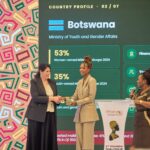

The Ministry of Youth and Gender Affairs in Botswana, working with key stakeholders from multiple organizations, convened a strategic meeting at UNICEF to review and refine the Youth Development Fund remodeling process. The engagement focused on strengthening the future structure of the Youth Development Fund to improve impact and sustainability. This process is taking place within the broader development agenda of Botswana, where youth empowerment remains a national priority. Participants included technical experts, policy advisors, and development partners working together on evidence based reform. The meeting was designed to ensure that all voices contributed to shaping a stronger and more efficient funding model for youth development.
The primary focus of the session was the refinement of three proposed Youth Development Fund options, each designed with different structural and financial implications. Ministry of Youth and Gender Affairs led discussions that were grounded in detailed analysis and performance data. Stakeholders examined the strengths and weaknesses of each option to understand the trade-offs involved in implementation. The goal was to ensure that every participant had a clear understanding of the evidence supporting each design path. The Youth Development Fund was assessed in terms of reach, efficiency, governance structure, and long term sustainability. This approach allowed decision makers to compare models in a structured and transparent way. The process emphasized clarity, accountability, and shared understanding.
Further discussions focused on identifying feasibility constraints and potential risks associated with each remodeling option. Participants assessed operational challenges that could affect implementation within the Botswana context, including institutional capacity and resource availability. They also evaluated non negotiable requirements needed for each option to succeed at scale. Special attention was given to governance structures, with emphasis on ownership clarity and accountability mechanisms. Co financing expectations were also explored to determine how different stakeholders would contribute to funding and long term sustainability. Benchmarking insights from comparable funds in other regions were reviewed to strengthen decision making. Ten year financial projections were used to assess long term viability and fiscal impact across all proposed models. The evidence driven approach ensured that decisions were grounded in realistic assumptions and measurable outcomes.
A key outcome of the engagement was the push toward consensus on a preferred design and strategic direction for the Youth Development Fund. Stakeholders worked to align on a unified governance framework that clearly defines ownership and decision making authority. The discussions highlighted the importance of shared responsibility among all partners involved in the reform process. The meeting also reinforced the need for a collective position supported by all participating institutions, including UNICEF and national government structures. This alignment is intended to reduce fragmentation and improve delivery efficiency in youth development programming. The collaborative model is expected to support stronger coordination and better use of resources. It also aims to improve transparency and trust across implementing partners.
Ultimately, the remodeling process seeks to deliver a clear and agreed upon Youth Development Fund model that fits the socio economic realities of Botswana. The final decision will be based on evidence, financial sustainability, and practical implementation capacity. By consolidating data, stakeholder input, and long term projections, the process aims to produce a robust and scalable funding framework. The outcome is expected to strengthen youth empowerment programs and improve access to economic opportunities for young people. The structured review process reflects a shift toward more results driven public sector planning. It also demonstrates a commitment to inclusive decision making and long term development impact.