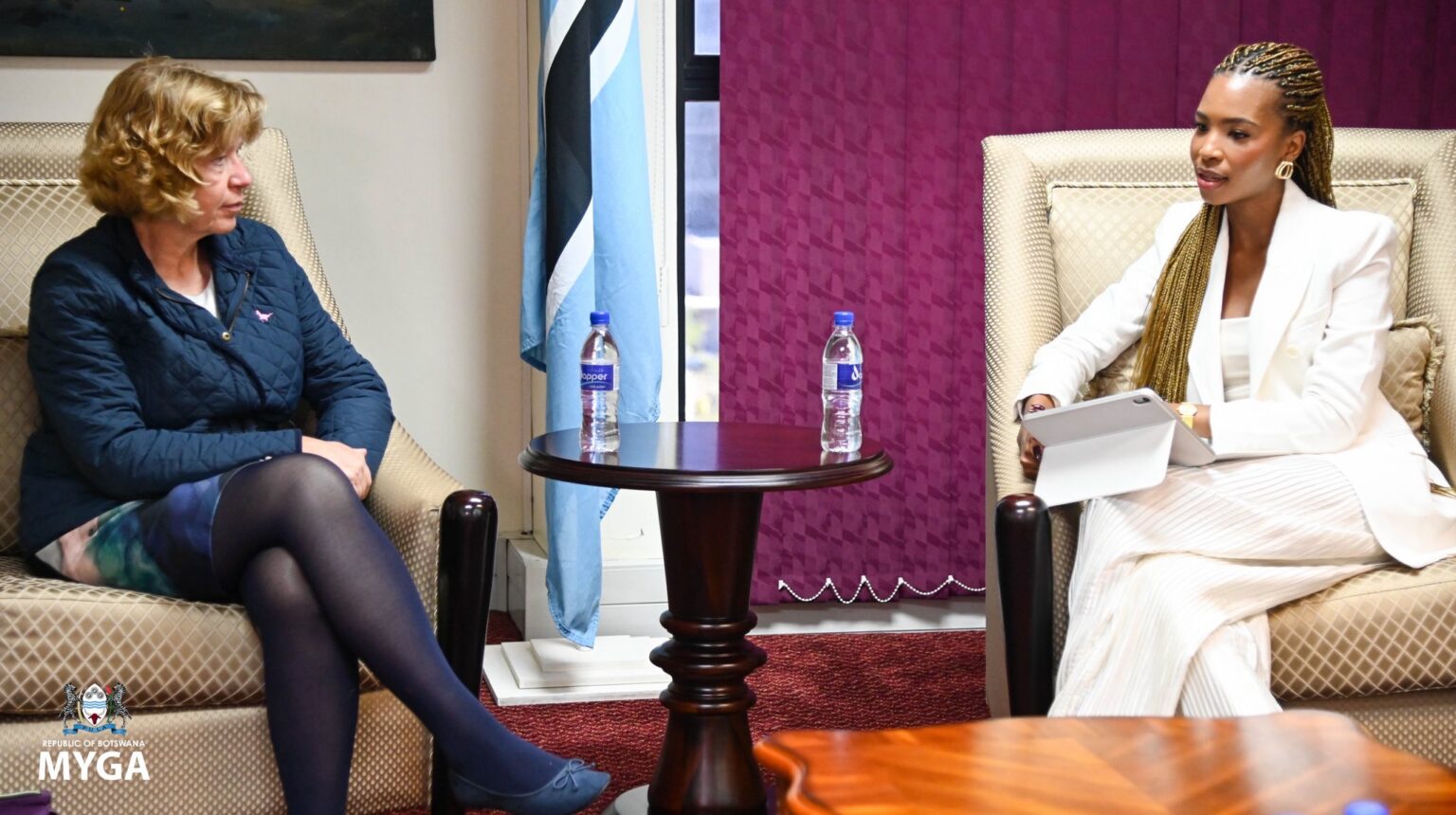
Botswana is continuing to strengthen international partnerships aimed at improving opportunities for young people and advancing gender equality across the country. This commitment was highlighted when Lesego Chombo held a courtesy call with Gabriela Bennemann yesterday morning. The meeting focused on enhancing bilateral cooperation between Botswana and Germany in areas linked to youth empowerment, gender development and economic inclusion. Both leaders discussed the importance of creating sustainable programmes that can improve livelihoods, strengthen institutions and support long term economic growth. The engagement also reflected Botswana’s broader efforts to build strategic international relationships that can contribute to national development goals.
During the discussions, Hon. Lesego Chombo emphasized the Ministry of Youth and Gender Affairs’ responsibility to mainstream youth and gender issues across every sector of society. She explained that youth development and gender equality cannot be treated as isolated issues because they affect economic growth, education, employment, healthcare and social stability. The Minister highlighted several institutional reforms currently underway within the ministry to improve efficiency and increase the impact of government programmes. Among the key initiatives discussed were the ongoing restructuring and reengineering of programmes such as the Youth Development Fund and the Botswana National Service Programme. These reforms are intended to ensure that young people have fair and equitable access to employment opportunities, land allocation and enterprise development support.
The Minister further explained that Botswana is placing increasing focus on creating an enabling environment where young entrepreneurs and emerging businesses can thrive. Access to funding, skills development and mentorship remains one of the biggest challenges facing many young people in the country. By reforming existing support systems, the government hopes to create programmes that are more responsive to the changing needs of Botswana’s youth population. Chombo stressed that empowering young people economically is essential in reducing poverty, unemployment and social inequality. She also noted that inclusive economic participation is critical for building stronger communities and achieving sustainable national development.
Another important issue raised during the meeting was the relationship between economic hardship and broader social challenges affecting communities. Hon. Chombo highlighted the growing need to understand the link between economic empowerment, gender based violence, mental health struggles and social instability. She explained that unemployment and financial insecurity can often contribute to emotional distress, family conflict and increased vulnerability among women and young people. According to the Minister, addressing these interconnected challenges requires a coordinated response involving multiple government departments, civil society organizations and private sector stakeholders. She also emphasized the importance of gender responsive budgeting to ensure that public spending supports programmes that directly address the needs of women and youth.
The conversation also explored opportunities for stronger international collaboration in sectors that can create jobs and diversify Botswana’s economy. Ambassador Gabriela Bennemann commended Botswana for its inclusive development agenda and praised the country’s efforts to prioritize youth and gender empowerment. She highlighted potential areas for cooperation between Botswana and Germany, particularly in agriculture, mining and manufacturing. These sectors are viewed as important drivers of economic diversification and employment creation in Botswana. The Ambassador noted that strategic investments and skills development in these industries could help unlock opportunities for young people while strengthening the country’s economic resilience.
Germany also reaffirmed its commitment to supporting Botswana through technical cooperation and institutional partnerships. Ambassador Bennemann emphasized that her government is prepared to work closely with Botswana’s Ministry of Youth and Gender Affairs on several developmental initiatives. Key areas identified for cooperation include technical and vocational education and training, commonly known as TVET, enterprise development and policy support. Technical skills training has become increasingly important in modern economies because industries require workers with practical and specialized abilities. Botswana’s leadership sees TVET as a vital tool for preparing young people for employment while supporting industrial growth and innovation.
Both parties agreed that stronger partnerships involving government institutions, development agencies and the private sector will be necessary to achieve sustainable economic progress. Private sector involvement was identified as especially important because businesses play a direct role in creating jobs, investing in communities and supporting entrepreneurship. The meeting highlighted the growing understanding that public and private collaboration can accelerate economic diversification while improving opportunities for women and youth. Botswana continues to pursue policies aimed at reducing reliance on traditional economic sectors by encouraging innovation and broader industrial development. International cooperation with countries such as Germany is expected to help strengthen these efforts through knowledge sharing, investment and technical expertise.
The courtesy call between Minister Lesego Chombo and Ambassador Gabriela Bennemann demonstrated Botswana’s determination to advance youth empowerment and gender equality through strategic partnerships and institutional reform. The discussions reflected a shared commitment to addressing unemployment, economic inequality, gender based violence and mental health challenges through coordinated and inclusive policies. Botswana’s ongoing reforms to programmes such as the Youth Development Fund and Botswana National Service Programme show the government’s intention to create more effective opportunities for young people across the country. Germany’s willingness to support Botswana through technical cooperation, vocational education and enterprise development further strengthens the relationship between the two nations. As Botswana continues to focus on economic diversification and inclusive growth, partnerships that prioritize youth and gender development are expected to play a major role in shaping the country’s future.