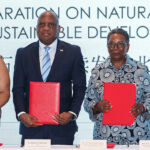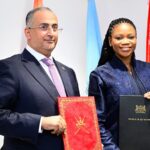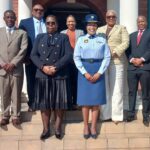
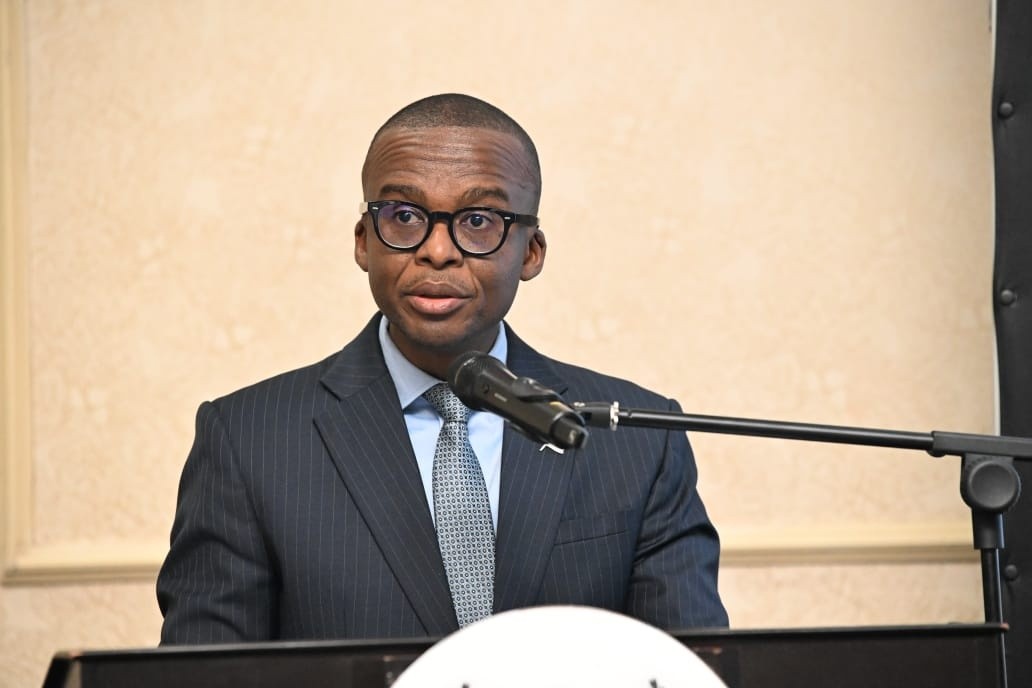
Acting President Ndaba Gaolathe has called for urgent and coordinated action to strengthen Botswana’s systems against terrorism financing and illicit financial flows. His remarks come at a time when governments across Africa are facing increasing pressure to improve financial transparency, tighten anti-money laundering controls and prevent extremist groups from exploiting weak financial systems. Speaking during the UNSCR 1267, 1373 and 1988 Asset Freeze and Standard Operating Procedures Roundtable in Gaborone, Gaolathe stressed that Botswana’s national security and financial stability depend on the country’s ability to effectively implement targeted financial sanctions. He explained that the threat posed by terrorism financing is no longer distant or isolated to conflict zones because criminal networks are becoming more sophisticated and interconnected. The Acting President also highlighted the importance of maintaining Botswana’s strong international standing as a trusted and compliant financial jurisdiction within the global economy.
Gaolathe revealed that Cabinet has already approved the United Nations Targeted Financial Sanctions Bill of 2026, which is expected to be tabled before Parliament soon. The proposed legislation is aimed at strengthening Botswana’s compliance with international anti-terror financing standards and improving the country’s ability to respond quickly to threats linked to terrorism and organized crime. The bill is expected to provide authorities with stronger legal mechanisms to freeze assets connected to individuals or organizations identified under United Nations sanctions frameworks. By improving the legal and operational framework, Botswana hopes to close gaps that may be exploited by criminal syndicates and extremist financiers. The move also demonstrates Botswana’s intention to align itself more closely with global financial governance systems and international security obligations.
The roundtable discussion in Gaborone brought together policymakers, financial experts, law enforcement agencies and international partners to examine the country’s preparedness in dealing with emerging financial crimes. Participants focused on the implementation of United Nations Security Council Resolutions 1267, 1373 and 1988, which are designed to combat terrorism and disrupt the movement of illicit funds. These resolutions provide countries with guidance on freezing assets linked to terrorist organizations, improving cross-border cooperation and strengthening domestic enforcement measures. Botswana’s leadership believes that effective implementation of these measures is critical in preventing the misuse of financial institutions and informal payment channels. Officials at the event also emphasized that financial crimes can damage investor confidence, weaken economic growth and expose countries to international scrutiny if not addressed decisively.
Representatives from international organizations warned that terrorist financing networks are rapidly evolving and taking advantage of both modern technology and weaknesses in traditional financial systems. Jane Ongolo, the Southern Africa Regional Representative for the United Nations Office on Drugs and Crime, cautioned that terrorist financiers continue to exploit both formal and informal financial systems throughout the region. She explained that these networks often move money through unregulated channels, shell companies, cash smuggling operations and digital platforms that are difficult to monitor. Ongolo stressed that regional cooperation is essential because financial crimes often extend beyond national borders and involve multiple jurisdictions. She also encouraged governments in Southern Africa to invest in intelligence sharing, stronger regulatory oversight and improved investigative capacity to stay ahead of increasingly sophisticated criminal operations.
Botswana’s efforts have also received support from the United States government, which continues to work closely with regional partners on counterterrorism and anti-money laundering initiatives. Christopher Gunning reaffirmed Washington’s commitment to supporting Botswana through a United Nations Office on Drugs and Crime programme funded by the United States. He noted that international cooperation remains one of the most effective tools in combating terrorism financing because criminal networks often operate across several countries at once. The United States has been involved in supporting training programmes, technical assistance and institutional development aimed at improving financial crime detection and enforcement capabilities in the region. This partnership reflects growing international recognition of Botswana’s willingness to strengthen its legal and regulatory systems against financial threats.
The issue of illicit financial flows has become increasingly important for African economies because billions of dollars are lost each year through corruption, tax evasion, money laundering and organized crime. These losses weaken public institutions, reduce government revenue and limit resources available for infrastructure, healthcare and education. Botswana has historically maintained a reputation for relatively strong governance and financial management compared to many countries in the region. However, authorities acknowledge that evolving global financial systems require constant adaptation and stronger safeguards to prevent abuse. The new sanctions bill and related reforms are therefore seen as part of a broader strategy to protect Botswana’s economy while reinforcing confidence among international investors and financial institutions.
The growing use of digital transactions and online financial platforms has also created new challenges for regulators and security agencies. Criminal organizations increasingly rely on encrypted technologies, virtual assets and cross-border payment systems to move funds quickly and discreetly. Experts attending the Gaborone roundtable stressed the need for Botswana to modernize its financial intelligence systems and improve coordination between banks, regulators and law enforcement agencies. Enhanced training for investigators and compliance officers was identified as another important area requiring attention. Participants agreed that strong public and private sector cooperation will be essential in identifying suspicious financial activity before it can be used to support terrorism or organized criminal networks.
Botswana’s latest actions signal a strong commitment to strengthening national security while protecting the integrity of its financial system. Acting President Ndaba Gaolathe’s call for urgent action reflects growing awareness that terrorism financing and illicit financial flows pose both economic and security risks that cannot be ignored. The approval of the United Nations Targeted Financial Sanctions Bill of 2026 marks an important step toward improving compliance with international standards and enhancing Botswana’s legal framework. Support from international partners such as the United Nations Office on Drugs and Crime and the United States government further strengthens the country’s ability to confront these complex threats. As Botswana prepares to introduce the legislation before Parliament, the country is positioning itself to play a stronger role in regional and global efforts to combat terrorism financing and protect financial integrity.