President Duma Boko returned to Botswana yesterday after attending the France–Africa Summit held in Nairobi, where African leaders gathered to discuss economic cooperation, climate resilience, trade partnerships and investment opportunities between African nations and France. His return marked an important moment for Botswana, not only because of the country’s participation in international diplomacy but also because of the solemn national atmosphere surrounding the passing of former President Festus Gontebanye Mogae. Shortly after landing at the airport, President Boko proceeded directly to Parliament to pay his respects to the late statesman, who is currently lying in state. The gesture reflected the significance of Mogae’s contribution to Botswana’s democratic and economic development over several decades. It also highlighted the deep respect that the current administration continues to hold for former national leaders who played a central role in shaping the country’s progress.
The France–Africa Summit in Nairobi attracted several heads of state, diplomats, business leaders and policymakers from across the African continent and Europe. Discussions focused heavily on strengthening trade relations, expanding infrastructure investment and addressing pressing global challenges such as food insecurity, youth unemployment and climate change. Botswana’s participation at the summit demonstrated the country’s ongoing commitment to engaging with international partners while seeking new economic opportunities for its citizens. President Boko’s presence at the gathering also positioned Botswana within broader continental conversations about sustainable growth and regional cooperation. Political analysts noted that the summit provided African leaders with an opportunity to present unified priorities while encouraging stronger partnerships that could accelerate development across the continent.
During the summit, President Boko reportedly engaged in high-level discussions with fellow African leaders and representatives from France regarding economic collaboration and investment potential in Southern Africa. Botswana continues to attract attention for its stable political environment, prudent fiscal management and strong governance systems. These qualities have made the country an important player in regional diplomacy and international economic discussions. Observers believe that Botswana’s participation at global summits such as the one held in Nairobi could help open additional avenues for foreign direct investment and industrial partnerships. The summit also created space for conversations about technology transfer, renewable energy and innovation, which remain key priorities for many African governments seeking long-term economic transformation.
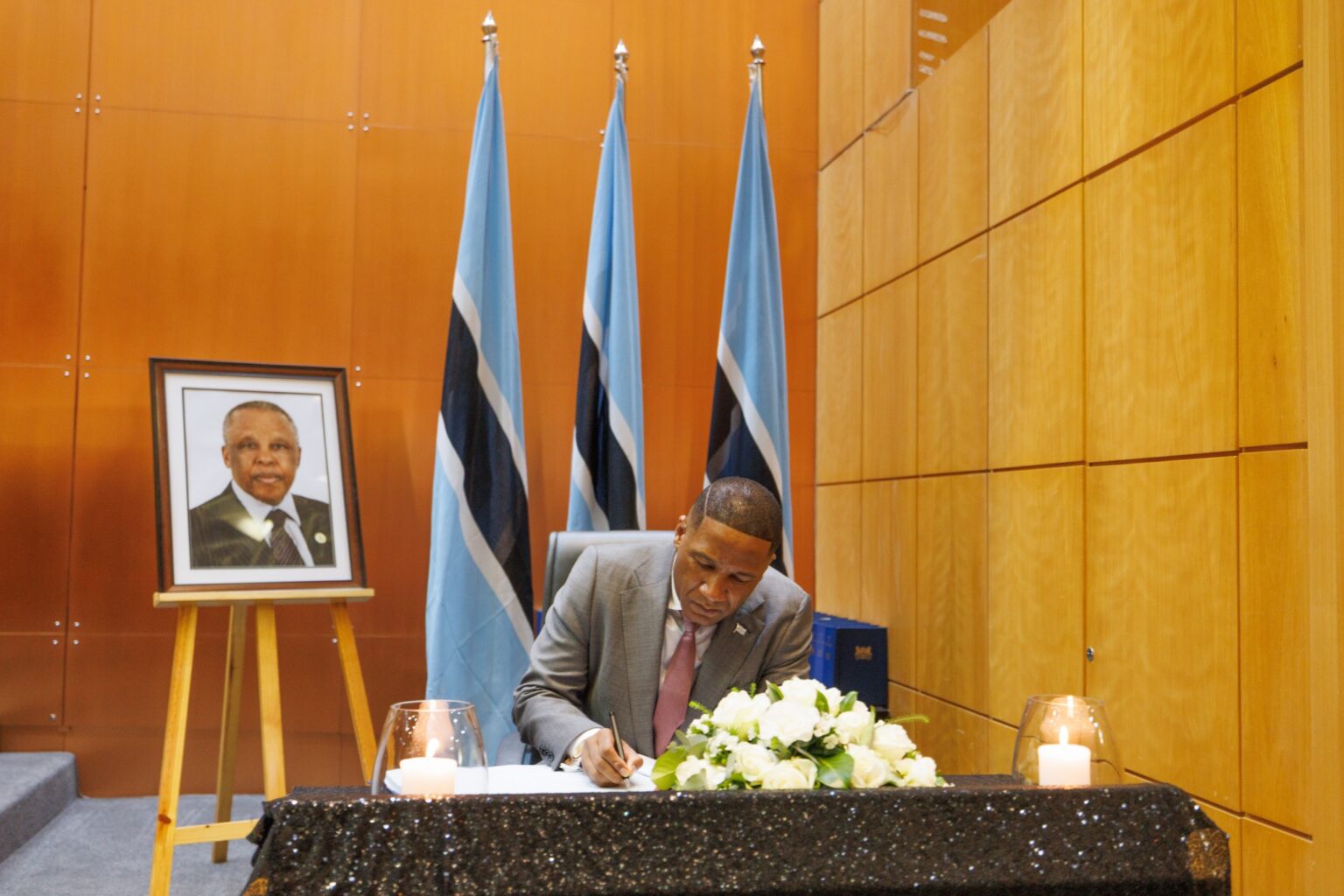
Despite the importance of the summit, attention quickly shifted back home following President Boko’s immediate visit to Parliament after his arrival. The President signed the official book of condolence and stood in tribute to former President Festus Mogae, whose passing has generated mourning across Botswana and beyond. Mogae is widely remembered as one of Botswana’s most respected leaders, credited with strengthening the nation’s economy and maintaining political stability during his presidency. His leadership style earned praise both locally and internationally, particularly for his focus on sound economic management and good governance. Many citizens have continued to visit Parliament to pay their respects, reflecting the profound impact he had on Botswana’s political history and national identity.
The decision by President Boko to go directly from the airport to Parliament carried strong symbolic meaning for many Batswana. It demonstrated the importance of honoring national leaders and preserving the country’s tradition of respect and unity during moments of mourning. Political commentators observed that the move sent a message about continuity in leadership and appreciation for those who laid the foundation for Botswana’s democratic institutions. The atmosphere at Parliament remained emotional as dignitaries, government officials and ordinary citizens gathered to remember Mogae’s life and achievements. Tributes have continued to pour in from across Africa and the international community, with many praising the late former president for his integrity, humility and dedication to public service.
Festus Mogae served as Botswana’s president from 1998 to 2008 and played a major role in steering the country through important economic and health challenges. Under his leadership, Botswana strengthened its international reputation as one of Africa’s most stable democracies. He also became known globally for his efforts in addressing the HIV/AIDS crisis, which affected many countries across Southern Africa during his presidency. His policies and leadership helped Botswana build stronger healthcare responses while maintaining economic discipline during difficult periods. For many citizens, Mogae represented principled leadership and national unity, qualities that continue to shape discussions about governance in Botswana today.
President Boko’s return from the France–Africa Summit therefore combined two significant national moments, one focused on international diplomacy and another centered on remembrance and national reflection. While Botswana continues to engage with global partners to strengthen its economic future, the country is also taking time to honor one of its most influential former leaders. The image of President Boko arriving from an international summit and proceeding directly to pay tribute to Festus Mogae resonated strongly with many citizens. It reflected both the responsibilities of present leadership and the enduring legacy of those who served before. As Botswana mourns the passing of Mogae, the nation also looks ahead with a renewed appreciation for leadership, unity and the values that have helped define the country for decades.