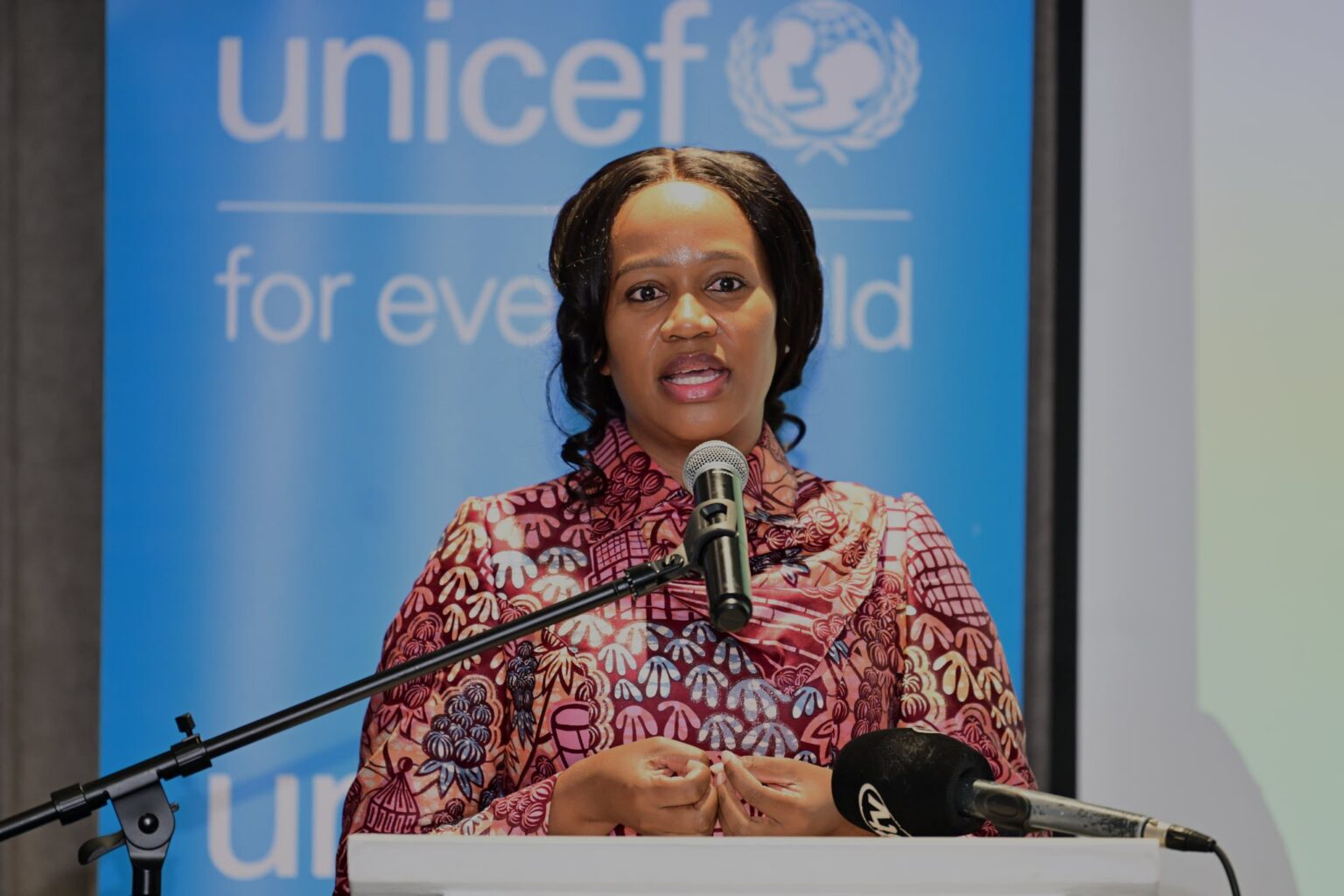
A renewed national conversation on child welfare in Botswana has highlighted the growing importance of collaboration between government, the private sector and civil society in improving the well-being of children. This discussion took centre stage during the bi-annual Private Sector Forum for Child Rights, where stakeholders examined both progress made and persistent gaps affecting children across the country. The engagement focused on practical solutions to strengthen child protection systems, improve access to services and ensure that children grow up in safe and supportive environments. First Lady Kaone Boko emphasized the urgency of coordinated action, noting that children’s needs are becoming more complex and pressing. The forum reinforced a shared understanding that protecting children is not a single sector responsibility but a collective national duty.
The First Lady highlighted the growing role of the private sector as a key partner in advancing child rights and welfare initiatives. She noted that businesses are no longer limited to financial support but are actively investing in impactful projects that directly improve outcomes for children. These initiatives include support for education, health services, nutrition programmes and community-based child protection efforts. The involvement of private sector actors has helped expand the reach of government efforts and introduced new resources and innovation into child-focused programmes. However, she stressed that while progress is evident, it is not yet sufficient to address the full scale of challenges facing children in Botswana.
Despite the positive contributions from private sector partnerships, significant challenges remain that continue to affect children’s well-being. Many children still face issues related to poverty, unequal access to quality education, health disparities and vulnerability to abuse and neglect. These challenges require more than isolated interventions and demand coordinated, long-term and intentional strategies. The First Lady emphasized that safeguarding children’s rights must go beyond policy discussions and translate into measurable action on the ground. She called for stronger systems that can identify at-risk children early and provide timely support before situations escalate.
The discussion also underscored the importance of bold and accelerated efforts to transform the child welfare landscape in Botswana. Stakeholders agreed that fragmented approaches are not enough to create lasting change. Instead, there is a need for integrated programming that brings together government ministries, private companies and community organizations under a unified framework. Increased investment in child protection systems was identified as a key priority, along with stronger monitoring and accountability mechanisms. Participants emphasized that every investment in children represents an investment in the country’s long-term social and economic stability.
The forum reinforced a shared vision of a safer and more inclusive Botswana where every child has the opportunity to reach their full potential. The First Lady emphasized that this vision can only be achieved through collective commitment, policy reform and sustained financial and institutional support. She called for renewed determination to ensure that no child is left behind, regardless of their background or circumstances. The discussions highlighted that meaningful change will require both urgency and consistency in implementation. The forum concluded with a strong message that Botswana’s future depends on how effectively it protects, nurtures and empowers its children today.