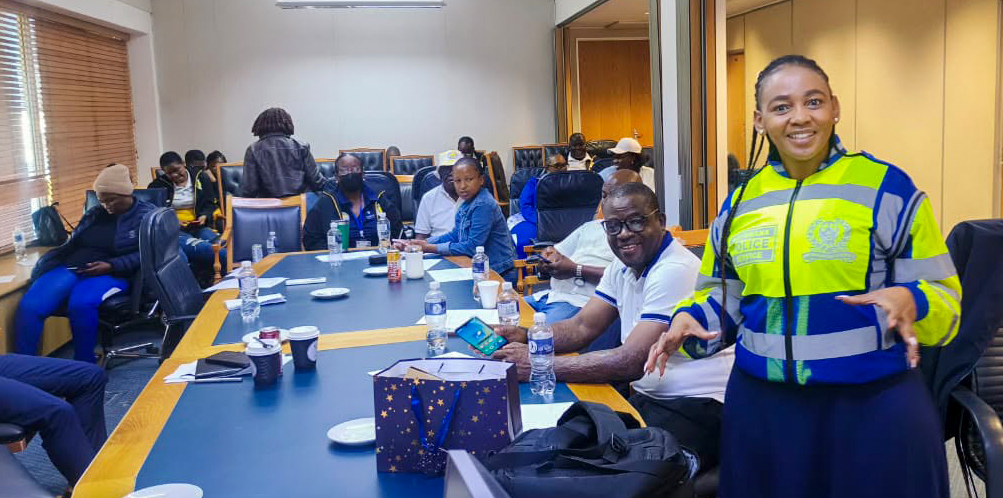
The Botswana Police Service (BPS), through its Gender and Child Protection Branch, continues to play a central role in addressing gender-based violence across the country. On 30/05/2026, the institution facilitated a focused workshop on gender-based violence that was organised by the Central Bank Union. The workshop brought together participants from multiple banking environments and was delivered simultaneously to branches in Gaborone and Francistown. This initiative reflects a growing recognition that gender-based violence is not only a policing concern but also a workplace and community issue that requires coordinated action. The engagement created a structured space for education, dialogue and practical awareness on how different institutions can respond to and prevent abuse.
Botswana Police Service worked closely with Central Bank Union to ensure that the workshop delivered relevant and up-to-date information on gender-based violence trends and responses. Presenters shared insights drawn from the 2024/2025 annual GBV crime analysis, giving participants a clearer picture of the current situation on the ground. The session was designed to be interactive and informative, with emphasis placed on real case trends and reporting patterns. Participants from both Gaborone and Francistown were engaged through coordinated sessions that ensured equal access to the training content. The approach highlighted the importance of reaching multiple regions at the same time to strengthen national awareness efforts.
During the workshop, presenters delivered structured presentations covering key areas that define and shape gender-based violence understanding and response. These included the definition of gender-based violence, legal frameworks that guide intervention, and legislative responses available in Botswana. They also explored offences commonly associated with gender-based violence and identified key indicators that help in early detection of abuse cases. The sessions further emphasized the importance of understanding how these legal and social frameworks work together to protect victims. Participants were encouraged to use this knowledge to improve identification, reporting and support mechanisms within their workplaces and communities.
The Botswana Police Service also highlighted its operational response strategies aimed at improving how gender-based violence cases are handled. Emphasis was placed on professionalism in service delivery, improved response times and the proper handling of sensitive cases. The integration of child-friendly policing concepts was presented as a critical step in ensuring that minors receive appropriate care and protection during investigations. The establishment of victim-friendly spaces at police stations was also discussed as part of broader reforms to improve accessibility and dignity for survivors. However, concerns were raised about the increasing prevalence of technology-facilitated gender-based violence, which continues to evolve and challenge existing response systems.
Presenters also pointed out persistent challenges such as underreporting and delayed reporting of cases, especially those involving children. These challenges were linked to fear, stigma and lack of awareness about available support systems. Participants were urged to take responsibility in reporting incidents of gender-based violence and any matters affecting children without delay. The message emphasized that timely reporting is essential for effective investigation, victim protection and access to justice. The workshop reinforced the importance of collaboration between law enforcement agencies, institutions and communities in building a stronger response to gender-based violence.