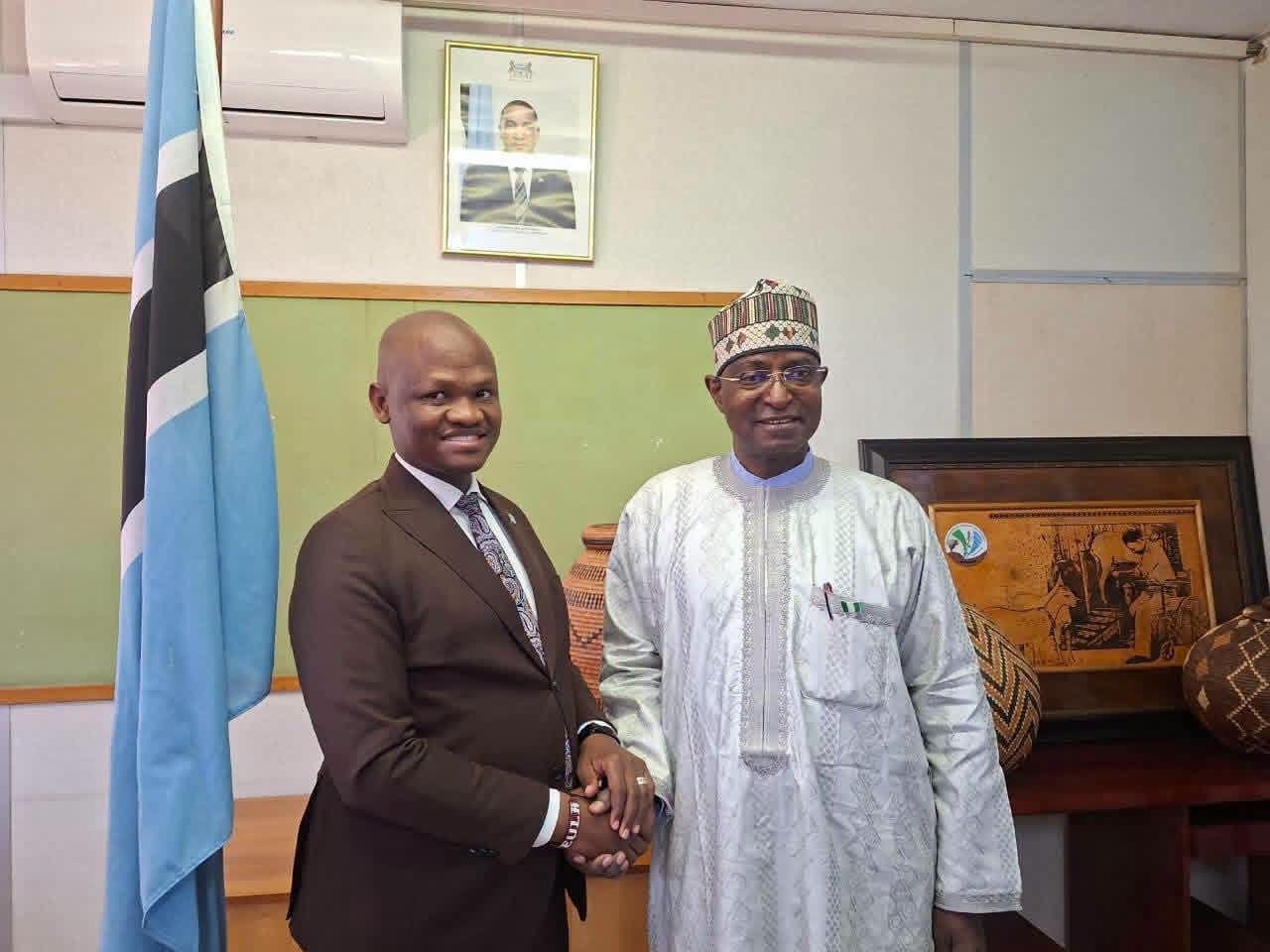
Botswana and Nigeria have taken another important step toward strengthening agricultural cooperation following a high-level bilateral meeting focused on the livestock sector. The Honourable Minister of Lands and Agriculture of Botswana, Dr Edwin G. Dikoloti, welcomed the Honourable Minister of Livestock Development of the Federal Republic of Nigeria, Alhaji Idi Mukhtar Maiha, at the Ministry Headquarters for discussions aimed at expanding collaboration between the two countries. The meeting reflected the shared commitment of both nations to improving livestock production, protecting animal health and creating more sustainable agricultural systems. As livestock continues to play a critical role in food security, rural livelihoods and economic development across Africa, stronger partnerships between countries have become increasingly important. The discussions also highlighted the value of sharing knowledge, technology and expertise to address common challenges facing the livestock industry.
During the bilateral meeting, both ministers explored several areas where Botswana and Nigeria can work together to strengthen the livestock sector. Animal health was one of the key priorities, with both countries recognizing that healthy livestock populations are essential for improving productivity and supporting economic growth. The discussions also focused on developing stronger systems for disease prevention, early detection and rapid response to outbreaks that threaten farmers and national economies. By working together, Botswana and Nigeria hope to improve veterinary services and strengthen institutional cooperation in ways that benefit livestock producers in both countries. Such partnerships create opportunities for exchanging technical expertise and adopting best practices that have proven successful in different agricultural environments.
One of the central topics discussed during the meeting was the control of Foot and Mouth Disease (FMD), one of the most significant livestock diseases affecting cattle and other cloven-hoofed animals. FMD outbreaks can have severe economic consequences by limiting livestock movement, disrupting trade and reducing farmers’ incomes. Botswana has long maintained strict animal health measures to protect its livestock industry, while Nigeria continues to strengthen its disease management systems to support agricultural development. Closer cooperation between the two countries can improve surveillance efforts, enhance laboratory capacity and support the implementation of effective disease control strategies. Sharing knowledge and coordinating responses to animal diseases are essential steps toward reducing the impact of outbreaks across the African continent.
Livestock research and vaccine development also featured prominently during the discussions, reflecting the growing importance of science and innovation in modern agriculture. Investment in research allows countries to develop better disease prevention methods, improve breeding programs and increase livestock productivity. Vaccine development remains a crucial component of animal health, particularly as new disease threats continue to emerge in different regions. Collaborative research initiatives between Botswana and Nigeria could accelerate the development of practical solutions that address the specific needs of African livestock systems. Such cooperation would also strengthen the ability of both countries to respond quickly to future animal health challenges while supporting long-term agricultural sustainability.
Disease surveillance was another major area of focus during the bilateral talks. Effective surveillance systems enable veterinary authorities to detect disease outbreaks early, monitor animal health trends and implement control measures before diseases spread widely. Modern surveillance combines field inspections, laboratory testing and information sharing to provide accurate and timely data for decision-making. Strengthening surveillance systems requires investment in infrastructure, skilled personnel and regional cooperation, particularly because animal diseases do not respect national borders. By enhancing collaboration in this area, Botswana and Nigeria can improve preparedness and contribute to stronger regional biosecurity across Africa.
The ministers also discussed opportunities for value addition within the livestock industry, recognizing that economic growth depends not only on livestock production but also on processing and marketing animal products. Value addition can increase the profitability of livestock farming by transforming raw products into higher-value goods such as processed meat, dairy products, leather and other commercial products. Developing stronger value chains creates employment opportunities, supports rural communities and increases export potential for agricultural products. Botswana and Nigeria both recognize the importance of expanding agro-processing industries to strengthen their economies and improve competitiveness in regional and international markets. Greater cooperation in this area could encourage investment, technology transfer and the sharing of successful business models.
Capacity building formed another important part of the discussions, with both countries acknowledging the need to continuously develop the skills and knowledge of professionals working in the livestock sector. Training programs for veterinarians, researchers, extension officers and livestock farmers can improve productivity while supporting the adoption of modern farming practices. Educational exchanges and technical cooperation can also strengthen institutions responsible for agricultural research, disease control and livestock management. Building human capacity ensures that future challenges can be addressed with greater expertise and innovation. These efforts ultimately contribute to stronger agricultural systems that are more resilient to disease outbreaks, climate pressures and changing market demands.
The bilateral meeting between Dr Edwin G. Dikoloti and Alhaji Idi Mukhtar Maiha represents an important milestone in strengthening agricultural relations between Botswana and Nigeria. By focusing on animal health, Foot and Mouth Disease control, livestock research, vaccine development, disease surveillance, value addition and capacity building, both countries have identified practical areas for meaningful cooperation. The partnership reflects a shared vision of building stronger livestock industries that support food security, economic development and sustainable agriculture across Africa. Continued collaboration will allow both nations to share expertise, strengthen institutional partnerships and develop innovative solutions to common challenges. As Botswana and Nigeria deepen their cooperation, the outcomes of these discussions have the potential to benefit farmers, consumers and the broader agricultural sector for many years to come.