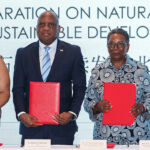

Botswana has taken another important step toward transforming its healthcare system as the government continues efforts to introduce a National Health Insurance framework that will improve access to quality healthcare for all citizens. Yesterday morning, the Acting Permanent Secretary in the Ministry of Health, Dr. Tshepo Machacha, together with the National Health Insurance team led by Senior Consultant Ms. Lydia Andries, met with the Parliamentary Committee on Health and HIV/AIDS to provide a detailed briefing on the National Health Insurance (NHI) Bill. The engagement formed part of the government’s broader stakeholder consultation process aimed at building understanding and support for the proposed legislation. The meeting also demonstrated the Ministry’s commitment to transparency and collaboration as Botswana works toward achieving Universal Health Coverage. The proposed reforms have the potential to reshape healthcare financing by ensuring that citizens receive essential medical services without experiencing severe financial hardship.
The National Health Insurance Bill has been developed to establish a mandatory National Health Insurance Framework that will progressively achieve Universal Health Coverage across Botswana. Universal Health Coverage means ensuring that everyone has access to the health services they need without suffering financial difficulties when seeking treatment. As healthcare costs continue to rise globally, governments are increasingly looking for sustainable financing models that improve access while maintaining quality care. Botswana’s proposed framework seeks to create a more equitable healthcare system where medical services are available to all eligible citizens regardless of their financial circumstances. By introducing a structured insurance system, the country hopes to improve healthcare outcomes while strengthening the long-term sustainability of its health sector.
One of the central objectives of the NHI Bill is to protect households against catastrophic health expenditure and the financial hardships that often accompany serious illness. Medical emergencies and long-term health conditions can place enormous financial pressure on families, particularly when treatment costs become unaffordable. The proposed insurance framework aims to reduce these risks by providing greater financial protection and spreading healthcare costs across the population through a national system. Such an approach can help prevent families from falling into poverty because of unexpected medical expenses while ensuring that patients seek treatment when they need it rather than delaying care due to cost concerns. Strengthening financial protection is considered one of the key pillars of successful Universal Health Coverage around the world.
Another important feature of the proposed legislation is the introduction of a single national purchaser framework designed to improve efficiency, strategic purchasing and accountability in health financing. Under this model, healthcare resources can be managed more effectively, ensuring that available funds are directed toward services that provide the greatest benefit to patients. Strategic purchasing also enables governments to negotiate better value for healthcare services while improving oversight of public spending. Greater accountability in health financing supports responsible management of public resources and helps ensure that investments produce measurable improvements in healthcare delivery. By streamlining purchasing arrangements, Botswana hopes to build a more efficient healthcare financing system that delivers better outcomes for both patients and healthcare providers.
The NHI Bill also places significant emphasis on strengthening governance, transparency and the protection of health funds. The proposed legislation includes provisions for ring fencing health funds, ensuring that financial resources allocated to healthcare are protected and used exclusively for their intended purpose. Robust oversight mechanisms are expected to improve accountability while reducing the risk of financial mismanagement. Strong governance structures are essential for maintaining public confidence in any national insurance scheme, particularly one that will play a critical role in financing healthcare services for millions of people over the coming years. These safeguards are intended to promote responsible financial management while supporting the long-term success of the National Health Insurance framework.
Improving healthcare quality and patient safety is another major priority outlined in the proposed legislation. The Bill seeks to achieve this by introducing accreditation systems, contractual arrangements with healthcare providers and performance-based purchasing mechanisms. Accreditation helps ensure that healthcare facilities meet established quality standards before participating in the insurance program. Performance-based purchasing encourages healthcare providers to deliver high-quality services by linking funding to measurable performance indicators. Together, these measures are expected to strengthen healthcare delivery while creating greater accountability for the quality of patient care across both public and participating healthcare facilities.
The briefing provided to the Parliamentary Committee on Health and HIV/AIDS gave lawmakers an opportunity to better understand the objectives, structure and expected benefits of the National Health Insurance Bill before it enters the legislative process. Parliamentary engagement plays an essential role in ensuring that elected representatives can carefully examine proposed legislation, raise important questions and provide recommendations where necessary. The consultation process also allows government officials to explain how the proposed reforms will address existing challenges within Botswana’s healthcare system. Such discussions contribute to informed decision making while promoting greater public confidence in the legislative process. Continued engagement with key stakeholders remains vital as the Bill progresses toward Parliament.
Stakeholder consultations are an important part of developing legislation that responds to the needs of citizens and healthcare professionals. By engaging with healthcare experts, policymakers, civil society organizations and other interested groups, the Ministry of Health can gather valuable feedback that strengthens the final version of the Bill. Inclusive consultations help identify potential implementation challenges while creating opportunities to improve the proposed framework before it becomes law. This collaborative approach increases the likelihood that the National Health Insurance system will be practical, sustainable and widely supported. Meaningful consultation also reinforces the government’s commitment to developing policies through dialogue and evidence-based decision making.
Once the stakeholder consultation process has been completed, the National Health Insurance Bill will be brought before Parliament for consideration and approval. If enacted, the legislation will mark one of the most significant healthcare reforms in Botswana’s recent history by laying the foundation for a more inclusive, efficient and accountable healthcare financing system. The proposed framework reflects the country’s determination to strengthen Universal Health Coverage, protect households from financial hardship, improve governance and enhance the quality of healthcare services. Yesterday’s briefing to the Parliamentary Committee on Health and HIV/AIDS represents another important milestone in this journey, demonstrating the government’s commitment to building a healthcare system that better serves all citizens. As the legislative process continues, many will be watching closely to see how the National Health Insurance Bill shapes the future of healthcare in Botswana.