The Botswana Police Service (BPS) and the Office of the Receiver have reaffirmed their commitment to strengthening collaboration in advancing Botswana’s asset recovery framework, reinforcing the country’s determination to combat economic and financial crime. The renewed commitment highlights the importance of coordinated efforts in tracing, managing and recovering assets obtained through criminal activities. As financial crimes become increasingly sophisticated, closer cooperation between law enforcement agencies and specialized institutions remains essential for protecting public resources and maintaining confidence in the justice system. The latest engagement between the two institutions reflects Botswana’s continued investment in building a transparent and accountable asset recovery regime. By strengthening institutional partnerships and enhancing professional capabilities, Botswana is positioning itself to respond more effectively to evolving criminal threats while ensuring that crime does not financially benefit offenders.
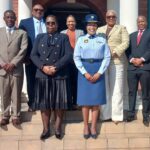
The commitment was reaffirmed during a courtesy call by the Receiver, Mr. Legomela Dittar Molodi, on Commissioner of Police Dinah Marathe at Police Headquarters on 29 July 2026. The meeting provided an opportunity for both leaders to discuss matters of mutual interest relating to asset recovery, financial crime investigations and institutional cooperation. They agreed that stronger collaboration between the Botswana Police Service and the Office of the Receiver would significantly improve the country’s ability to trace, restrain, manage and recover proceeds derived from criminal activities. The discussions reflected a shared understanding that combating financial crime requires coordinated action across multiple government institutions. Both leaders emphasized that effective partnerships are fundamental to achieving lasting results in protecting Botswana’s economy and public finances.
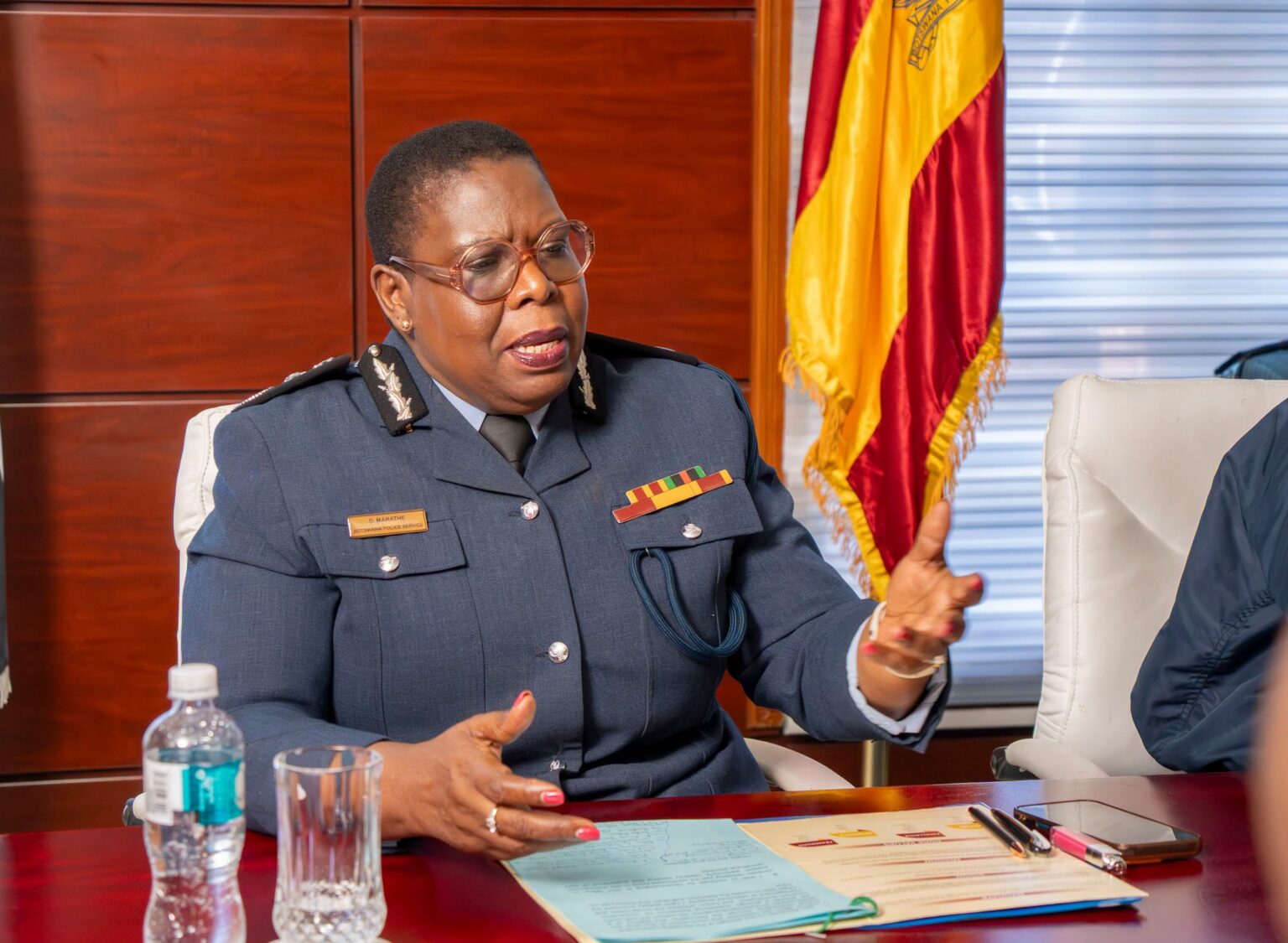
Commissioner Marathe highlighted the value of the longstanding partnership between the Botswana Police Service and the Office of the Receiver, noting that their collaboration has consistently strengthened Botswana’s asset recovery framework. She explained that maintaining accountability, integrity and operational effectiveness requires ongoing cooperation between institutions with complementary responsibilities. According to the Commissioner, continuous information sharing plays a critical role in enabling law enforcement agencies to identify criminal networks, monitor suspicious financial activities and recover illegally acquired assets. She further stressed that joint capacity-building initiatives remain essential as criminal organizations increasingly adopt more sophisticated methods to conceal proceeds of crime. These collaborative efforts help ensure that law enforcement agencies remain responsive and equipped to address the changing landscape of financial and organized crime.
The Commissioner also placed significant emphasis on investing in the professional development of officers across the Botswana Police Service and partner institutions. She noted that strengthening institutional capabilities is essential for enabling officers to effectively fulfill their legal mandates while supporting Botswana’s broader justice system. Continuous training allows investigators and specialists to stay informed about modern investigative techniques, emerging financial crime trends and evolving legal frameworks governing asset recovery. By equipping personnel with the necessary knowledge and technical expertise, institutions become more effective in handling complex financial investigations that often involve multiple jurisdictions and sophisticated criminal networks. These investments ultimately contribute to stronger law enforcement outcomes while reinforcing public confidence in the country’s criminal justice institutions.
During the meeting, Mr. Molodi commended the Botswana Police Service for its ongoing commitment to organizational transformation and institutional excellence. He specifically acknowledged the recent launch of the Botswana Police Service Fifth Corporate Development Strategy (CDS 2026 to 2030), describing it as a significant milestone in strengthening modern policing in Botswana. He noted that the strategy is built upon renewed Strategic Foundations, including the Service’s Mission, Vision and Values, which provide a clear direction for future growth and improved service delivery. According to Mr. Molodi, the strategy demonstrates the Botswana Police Service’s commitment to accountable, professional and service-oriented policing that responds effectively to the needs of citizens. He expressed optimism that the strategic direction would further strengthen cooperation with partner institutions involved in fighting financial and economic crime.
Mr. Molodi further stated that the strengthened relationship between the Office of the Receiver and the Botswana Police Service would create greater opportunities for collaboration, knowledge sharing and coordinated operations. He emphasized that effective partnerships enable institutions to combine expertise, exchange critical information and develop more efficient approaches to recovering assets linked to criminal activity. Such collaboration also strengthens efforts to safeguard public resources by ensuring that illegally acquired wealth is identified and recovered whenever possible. He noted that preventing criminals from benefiting financially from unlawful activities serves as a powerful deterrent while supporting broader national efforts to uphold justice and accountability. Through coordinated action, both institutions can improve their effectiveness in addressing increasingly complex financial crime investigations.
Asset recovery has become an increasingly important component of modern law enforcement because it focuses not only on prosecuting offenders but also on removing the financial incentives behind criminal behavior. Criminal enterprises often rely on illegally obtained assets to expand operations, finance additional crimes and conceal unlawful profits through complex financial systems. Recovering these assets disrupts criminal networks by depriving them of the resources needed to continue illegal activities. Effective asset recovery also allows governments to protect public funds and promote greater transparency within financial systems. Botswana’s continued focus on strengthening its asset recovery framework demonstrates its commitment to creating a justice system that addresses both criminal conduct and its financial consequences.
The meeting concluded with Commissioner Marathe and Mr. Molodi reaffirming their readiness to continue working closely together in advancing Botswana’s national asset recovery agenda. Both leaders agreed that adopting a coordinated, one government approach will strengthen efforts to combat economic and financial crime while enhancing institutional accountability across the public sector. Their shared commitment reflects a broader vision of building resilient institutions capable of responding effectively to emerging criminal threats through cooperation, innovation and continuous professional development. As Botswana continues to modernize its law enforcement and justice institutions, partnerships such as this will remain essential for protecting national resources and strengthening the rule of law. The renewed collaboration between the Botswana Police Service and the Office of the Receiver represents another important step toward ensuring that financial crime is effectively investigated, illicit assets are recovered and public confidence in Botswana’s justice system continues to grow.