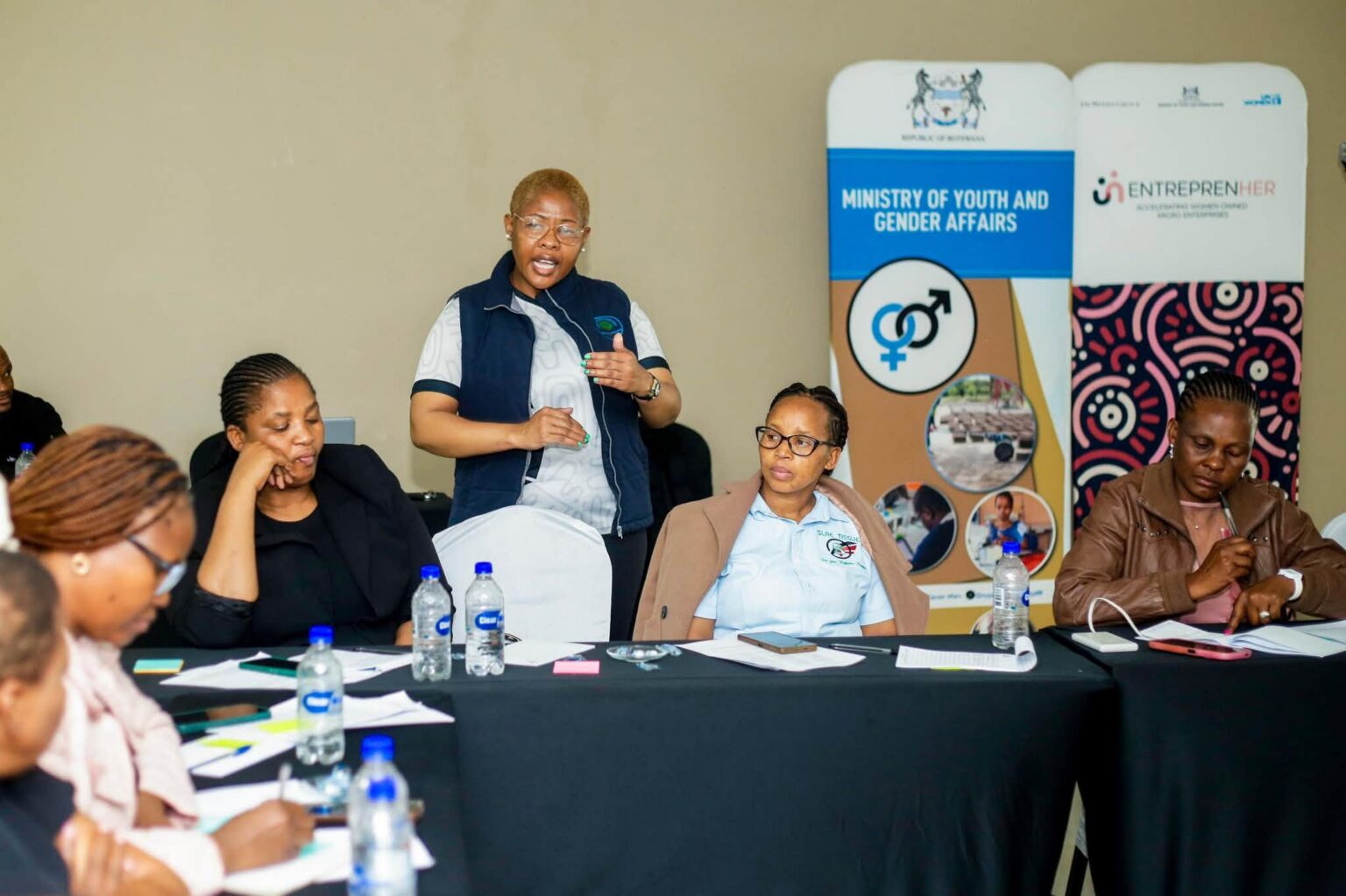
Twenty-three women entrepreneurs from Botswana’s Boteti and Bobirwa areas have embarked on an empowering mentorship journey designed to help them move their businesses beyond survival and towards sustainable growth. The programme focuses on building business resilience among micro, small and medium enterprises (MSMEs), recognising that many entrepreneurs face challenges that can make it difficult to grow consistently. Through practical mentorship, the participating women are being encouraged to examine their business models, strengthen their systems and prepare for changing market conditions. The initiative is being delivered under the theme “Building Business Resilience for MSMEs” through a collaboration between EntreprenHER and the Stanford Seed Southern African Network. The programme provides an opportunity for women entrepreneurs to gain practical insights while reflecting honestly on the challenges that may be limiting the growth and sustainability of their businesses.
The first mentorship session was led by Dr Phabion Chaza, Director of Dynamic Road Services, who brought 34 years of experience in the transport and trucking industry to the programme. Rather than presenting entrepreneurship as a purely theoretical subject, Chaza drew on his own experiences to demonstrate the realities of building and sustaining a business over many years. He openly discussed both his successes and struggles, giving participants an honest perspective on the resilience required to remain in business through periods of uncertainty. His experience highlighted the importance of making intentional decisions, responding to challenges and remaining willing to adapt as circumstances change. The session therefore positioned entrepreneurship as an ongoing process that requires business owners to learn from setbacks while continuously looking for ways to improve.
Chaza emphasised that the mentorship was intended to take participants beyond conventional business training and towards practical business growth. He explained that his role was not simply to lecture the entrepreneurs about entrepreneurship but to mentor them as they work towards building businesses that can progress beyond survival. This distinction is important because many small businesses can become heavily dependent on the founder for almost every decision, task and customer relationship. While this approach may help a business operate in its early stages, it can create limitations when the entrepreneur needs to expand operations or cope with unexpected disruptions. The mentorship therefore encourages participants to consider how they can create stronger businesses that can operate effectively through clear systems, effective leadership and better planning.
During the first day, the entrepreneurs explored the core pillars of business resilience and considered the factors that may be preventing their enterprises from reaching their full potential. They were encouraged to assess whether their businesses are primarily focused on surviving from one day to the next or whether they have established a foundation for sustainable growth. This type of reflection can help entrepreneurs identify weaknesses in areas such as financial management, customer retention, operational processes, technology and leadership. The participants were also challenged to think beyond immediate challenges and consider what their businesses need to remain competitive over the long term. By examining these issues directly, the mentorship aims to help the women move from reacting to problems towards anticipating risks and making deliberate decisions about the future.
Technology and business systems also emerged as important areas of focus during the mentorship. Entrepreneurs were encouraged to embrace technology as a tool that can improve efficiency, communication, record keeping and customer service. Stronger systems can also reduce the extent to which a business depends on the founder to keep daily operations running. This becomes particularly important as a business grows because the entrepreneur needs to spend more time on strategy, opportunities and leadership rather than handling every operational responsibility personally. Building systems can also help businesses respond more effectively when unexpected disruptions affect staff, suppliers, customers or markets.
The concept of resilience extends beyond simply surviving difficult periods. A resilient business needs to anticipate change, absorb shocks, adapt to uncertainty and continue moving towards its objectives even when conditions become challenging. For the women participating in the programme, this means considering how their businesses can respond when customer demand changes, costs increase, supply challenges arise or new competitors enter the market. It also requires entrepreneurs to understand the risks facing their businesses and develop practical ways to manage those risks. By developing this mindset, participants can strengthen their ability to make informed decisions instead of allowing unexpected events to determine the direction of their enterprises.
The mentorship programme also has a broader development dimension because it contributes towards several Sustainable Development Goals. Its focus on women’s economic empowerment and leadership supports SDG 5, Gender Equality, by helping women strengthen their participation in entrepreneurship and economic activity. Through enterprise development and the potential for job creation, the initiative also supports SDG 8, Decent Work and Economic Growth. Its emphasis on improving the competitiveness and resilience of MSMEs contributes to SDG 9, Industry, Innovation and Infrastructure, particularly by encouraging businesses to strengthen their systems and adopt technology. The collaboration between EntreprenHER and the Stanford Seed Southern African Network further reflects SDG 17, Partnerships for the Goals, demonstrating how partnerships can support entrepreneurs and contribute to broader economic development.
The participation of women from the Boteti and Bobirwa areas also highlights the importance of creating opportunities for entrepreneurs outside major commercial centres. Small businesses play an important role in local economies because they can provide income opportunities, create employment and supply goods and services within communities. However, entrepreneurs can face practical barriers when they lack access to mentorship, networks, technology, business knowledge or opportunities to connect with experienced business leaders. Programmes that provide structured mentorship can help bridge some of these gaps by giving entrepreneurs access to practical guidance and new perspectives. The value of the programme will ultimately depend on how effectively participants can apply what they learn to their individual businesses and turn the lessons into measurable improvements.
Day one established a foundation for honest reflection, stronger leadership and practical action among the 23 participating women entrepreneurs. The discussions made it clear that hard work alone does not guarantee sustainable business growth, particularly when entrepreneurs lack clear direction, effective systems and the ability to adapt to changing conditions. Building resilience requires business owners to understand where their enterprises currently stand and identify the changes needed to create stronger foundations for the future. The mentorship provides the participants with an opportunity to turn those reflections into practical strategies that can improve the way their businesses operate and grow. As the journey continues, the focus on resilience, technology, leadership and stronger business systems could help these entrepreneurs build enterprises that are better equipped to withstand challenges and pursue sustainable growth.