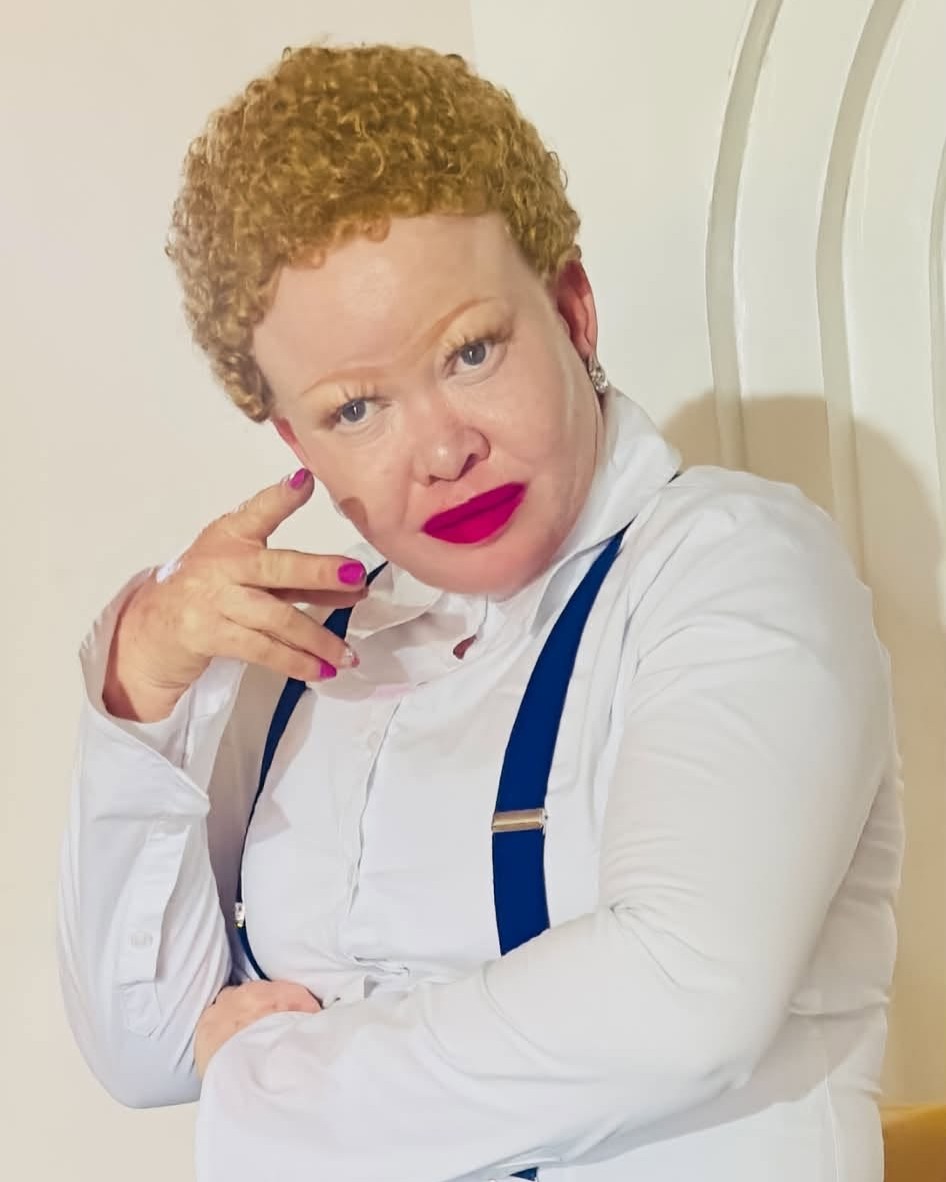
At 39, Aobakwe Lebikwe Mosomane has transformed her personal experience of living with albinism and visual impairment into a message of hope, resilience and self-acceptance. Growing up in Ramotswa, Botswana, Mosomane faced challenges that shaped much of her childhood and adulthood. She experienced stigma, misconceptions, stares, name-calling and situations where people underestimated her because of her appearance and visual impairment. Reading and moving around safely also presented difficulties, but she chose not to allow those experiences to determine the direction of her life. Instead, Mosomane turned painful experiences into a source of purpose and used them to encourage others facing similar challenges.
Her journey is now documented in her motivational book, Lebikwe’s Light, which she describes as a completely personal account of her life. The book follows her experiences from childhood and school through adulthood, giving readers insight into the challenges she faced and the lessons she gained along the way. It explores her scars, struggles, triumphs, faith and the experiences that helped shape her understanding of herself. Rather than presenting only the positive moments, Mosomane uses the book to acknowledge the difficult parts of her journey. Her willingness to share those experiences provides an honest account of what it can mean to grow up with a disability while navigating attitudes and expectations from other people.
Living with albinism and visual impairment affected different parts of Mosomane’s everyday life, including education and mobility. Simple activities such as reading and moving around safely could require additional effort and adaptation. At the same time, she had to deal with social challenges created by misconceptions about albinism and reactions to her appearance. Staring, name-calling and being underestimated can have a lasting effect on a person’s confidence and sense of belonging, particularly during childhood and adolescence. Mosomane’s story shows how those experiences can become part of a person’s journey without becoming the definition of who they are.
Her decision to write Lebikwe’s Light was influenced by the response she received from young people with disabilities who found encouragement in her story. Their experiences helped her recognise that sharing her journey could have an impact beyond her own life. One of the moments that strongly influenced her decision came during her involvement in the organisation and sponsorship of Mr and Mrs Albinism Southern Africa in Zimbabwe. Through her events company, Lebikwe’s Palace Pty Ltd, she encountered a contestant who had experienced bullying at university and was considering leaving. Mosomane shared her own story with the young woman, who responded by saying that if Mosomane had managed to continue despite her challenges, perhaps she could do the same.
That encounter became a turning point for Mosomane and prompted her to begin writing her story. The experience showed her that personal stories can provide encouragement to people who may feel isolated by their circumstances. For someone facing bullying, discrimination or uncertainty about their future, seeing another person overcome difficult experiences can provide a different perspective. Mosomane recognised that her experiences could serve a purpose if they helped another person believe that their circumstances did not have to determine their future. She began writing that night, turning years of memories and experiences into the foundation of a book intended to reach people who need encouragement.
The writing process was not always easy because putting personal experiences on paper required Mosomane to revisit painful parts of her life. She recalls having days when she cried while writing and other days when she experienced a sense of liberation. The process allowed her to confront experiences that had remained part of her emotional journey for years. She says writing ultimately helped her forgive, heal and understand that difficult experiences could have a purpose. By documenting both the pain and the progress, she created a personal record that reflects the complexity of learning to accept oneself after years of dealing with other people’s judgments.
Faith is also an important part of Mosomane’s story and forms part of the lessons explored in Lebikwe’s Light. Her journey shows how personal resilience can develop through a combination of self-reflection, faith and the decision to keep moving forward despite difficult circumstances. She does not present her life as a journey without challenges, but rather as an experience in which challenges became opportunities to develop a stronger understanding of herself. This perspective gives the book relevance to people dealing with different forms of adversity. Her message is particularly focused on helping people recognise their value even when circumstances or social attitudes make them feel unseen or limited.
Mosomane hopes Lebikwe’s Light will reach people who feel broken, unseen or restricted by their circumstances. She has identified people with disabilities, students and young women among those she particularly hopes to inspire through her story. Her message centres on self-acceptance and the importance of refusing to reduce a person’s identity to a disability or diagnosis. For people who have experienced discrimination or exclusion, this message can provide encouragement to recognise their abilities and continue pursuing their goals. Her experience also demonstrates the importance of representation because personal stories can help people see possibilities beyond the limitations others may place on them.
Through her life and her writing, Mosomane is using her experiences to encourage a broader understanding of disability and human potential. Her story challenges the idea that albinism or visual impairment should determine what a person can achieve. It also highlights the importance of creating environments where people with disabilities can participate fully in education, work, business and community life. Her experiences of stigma and exclusion remain an important part of her story, but they are not the only part. The growth, achievements, faith and lessons she gained along the way have become equally important elements of the message she wants to share.
Lebikwe’s Light represents more than a record of one woman’s experiences with albinism and visual impairment. It captures a journey through childhood challenges, social stigma, personal struggles, faith, healing and self-acceptance. Mosomane has turned experiences that once caused pain into an opportunity to encourage others who may be facing similar challenges. Her story demonstrates the value of sharing lived experiences, particularly when those experiences can help someone else see possibilities for their own future. At 39, her message remains focused on the belief that disability does not define a person’s worth, identity or potential, and that even difficult experiences can become part of a journey towards purpose, confidence and hope.