The Botswana Police Service is intensifying its efforts to combat drug and substance abuse through community engagement, education and public awareness initiatives across the country. Recent campaigns held by Moshupa and Gaborone West Police Stations brought police officers, learners, community leaders, parents and members of the public together to address the dangers associated with drug abuse. The initiatives focused on increasing awareness while encouraging communities to take greater responsibility for preventing substance abuse. Police officials emphasised that protecting young people requires cooperation between law enforcement, families, schools and communities. The outreach activities demonstrate the Botswana Police Service’s continued focus on prevention and community partnerships as important components of its response to drug and substance abuse.
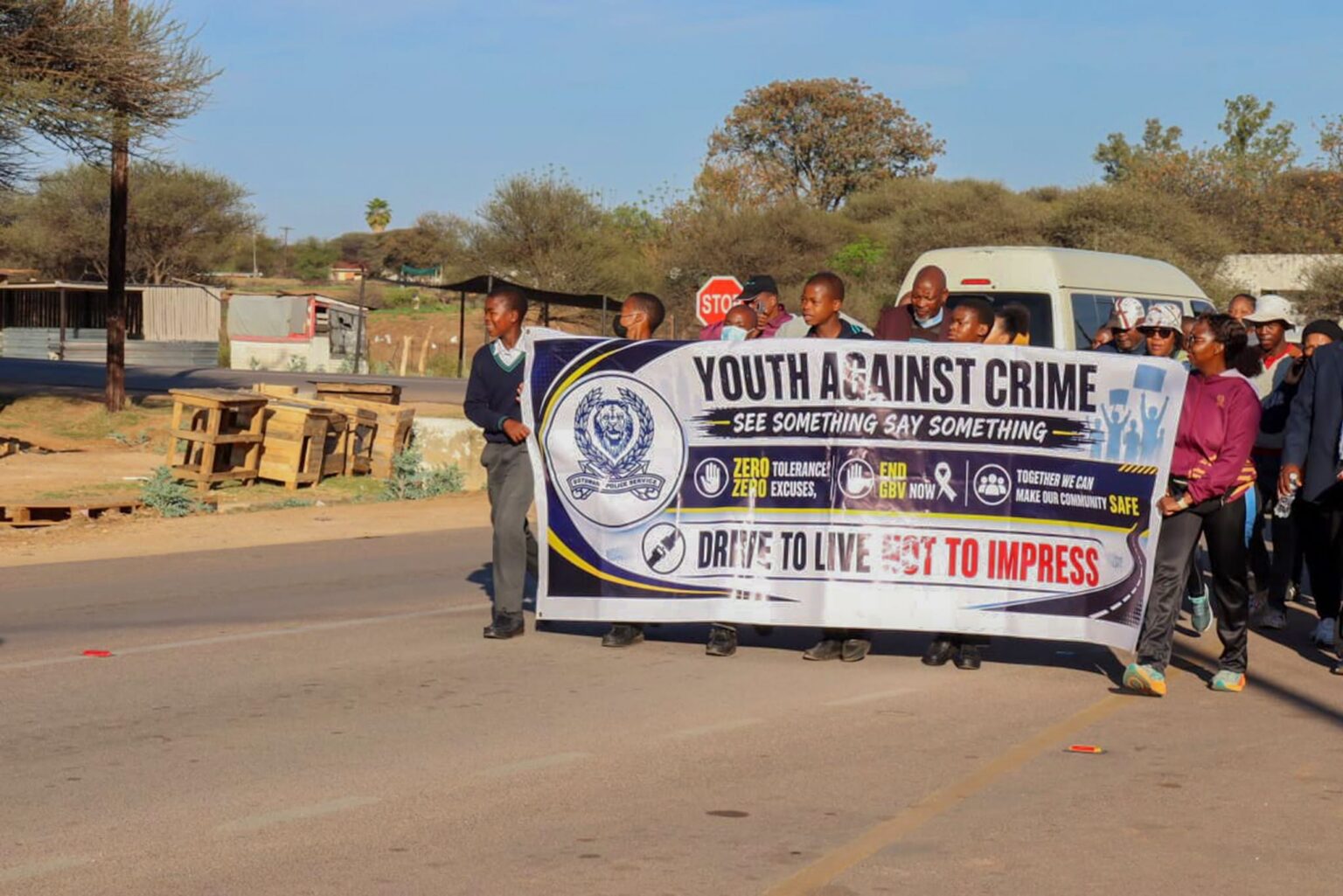
At Moshupa, the anti-drug and substance abuse campaign began with a sponsored walk that brought together different members of the community. The walk served as a public demonstration of collective opposition to drug and substance abuse and promoted the importance of building healthier communities. Police officers participated alongside community leaders, learners and members of the public, creating an opportunity for people from different backgrounds to unite around a common concern. Activities such as the sponsored walk can also help take public awareness beyond traditional meetings by creating visible community participation. The event reinforced the message that preventing drug abuse requires continued involvement from the wider community rather than relying on law enforcement alone.
Addressing participants during the Moshupa campaign, Officer Commanding No. 14 Police District in Kanye, Senior Superintendent David Ramoseki, highlighted the importance of stronger partnerships between the police and communities. He emphasised the role of parents, schools and community members in protecting young people from the risks associated with illicit drugs. Young people can face various pressures and influences that may affect the choices they make, making early education and support important elements of prevention. Ramoseki stressed that communities need to work together to identify challenges and provide young people with appropriate guidance. His message placed collective responsibility at the centre of efforts to address drug and substance abuse.
The involvement of schools and learners in the campaign also reflects the importance of reaching young people with accurate information about substance abuse. Educational initiatives can help learners understand the potential consequences of drug use and recognise situations where they may face pressure to experiment with harmful substances. Providing young people with knowledge can also support their ability to make informed decisions and seek assistance when they encounter difficult situations. Schools provide an important setting for these conversations because they bring together large groups of young people and educators who can reinforce positive messages. Continued engagement with learners can therefore form part of a broader prevention strategy involving families, schools, police and community organisations.
Gaborone West Police Station also conducted an interactive educational workshop aimed at sensitising learners about the dangers of drug and substance abuse. The session focused on providing young people with information that can help them make responsible decisions and understand the potential consequences of substance abuse. Participants were encouraged to resist peer pressure and adopt positive lifestyles that support their education, personal development and future aspirations. Interactive discussions can provide learners with an opportunity to raise questions and engage directly with officials about issues affecting them. Such programmes can complement enforcement activities by focusing on awareness and prevention before substance abuse develops into more serious problems.
The focus on peer pressure was particularly relevant to the educational campaign because young people may encounter social situations where they feel encouraged to engage in risky behaviour. Giving learners practical information and confidence to make independent decisions can help them respond to these situations. Positive relationships with parents, teachers, police officers and other trusted adults can also provide young people with sources of guidance when they face challenges. Awareness campaigns can create opportunities for these conversations to take place in environments where learners can ask questions and receive appropriate information. The Botswana Police Service’s engagement with schools therefore forms part of a wider community-based approach to preventing substance abuse.
Community participation remains an important part of the police service’s approach to addressing drug and substance abuse. Police officers have a direct role in enforcing laws relating to illicit drugs, but enforcement alone cannot address all of the social factors that contribute to substance abuse. Families, schools, community leaders and other organisations can contribute through education, early intervention and support for young people. Strong relationships between police and communities can also encourage people to share information and participate in prevention programmes. The campaigns in Moshupa and Gaborone West demonstrate how public education can complement policing efforts by creating greater awareness of the risks associated with substance abuse.
The Botswana Police Service’s community outreach efforts have also extended beyond drug and substance abuse awareness. In Kasane, the No. 7 Police District Women Network donated sanitary towels to Mabele Primary School as part of its ongoing community support activities. The donation was intended to support the wellbeing of learners and contribute to a more conducive learning environment. Access to essential hygiene products can be important for learners’ ability to participate comfortably in school activities. The initiative demonstrates how police community networks can contribute to broader social support programmes that address practical challenges affecting learners.
Kasane Airport Police Station Commander, Superintendent Patricia Seeiso, officially presented the sanitary towel donation to Mabele Primary School. The donation was received by the school’s Deputy Head, Mr Mothokawaabo Sebako, who expressed appreciation to the Botswana Police Service for its continued support. The initiative provided an opportunity for the police to engage with the school community in an area focused on learner welfare rather than law enforcement. Such outreach can help strengthen relationships between police structures and communities by demonstrating support for issues affecting young people’s everyday lives. It also reflects the broader role that community-focused police initiatives can play in supporting schools and vulnerable members of society.
The activities in Moshupa, Gaborone West and Kasane highlight the range of community engagement initiatives being undertaken by the Botswana Police Service. Anti-drug campaigns focus on education, awareness and collective action, while community support initiatives such as the sanitary towel donation address practical issues affecting learners. Together, these activities demonstrate an approach that combines public education with direct community engagement. Continued programmes of this nature can create more opportunities for police officers, educators, parents, learners and community leaders to work together. Sustained participation will be important for ensuring that awareness messages translate into practical support and responsible decision-making within communities.
The Botswana Police Service’s recent initiatives reinforce the importance of prevention, education and community partnerships in addressing drug and substance abuse. The sponsored walk in Moshupa brought different groups together around a shared commitment to drug-free communities, while the Gaborone West workshop provided learners with information aimed at helping them make informed choices and resist negative peer pressure. The sanitary towel donation in Kasane further demonstrated the role of police community networks in supporting learner welfare and strengthening relationships with schools. These efforts show that addressing challenges affecting young people requires cooperation between law enforcement, families, schools and the wider community. Continued community engagement and public awareness will remain important as Botswana works to protect young people, support healthier communities and strengthen collective action against drug and substance abuse.