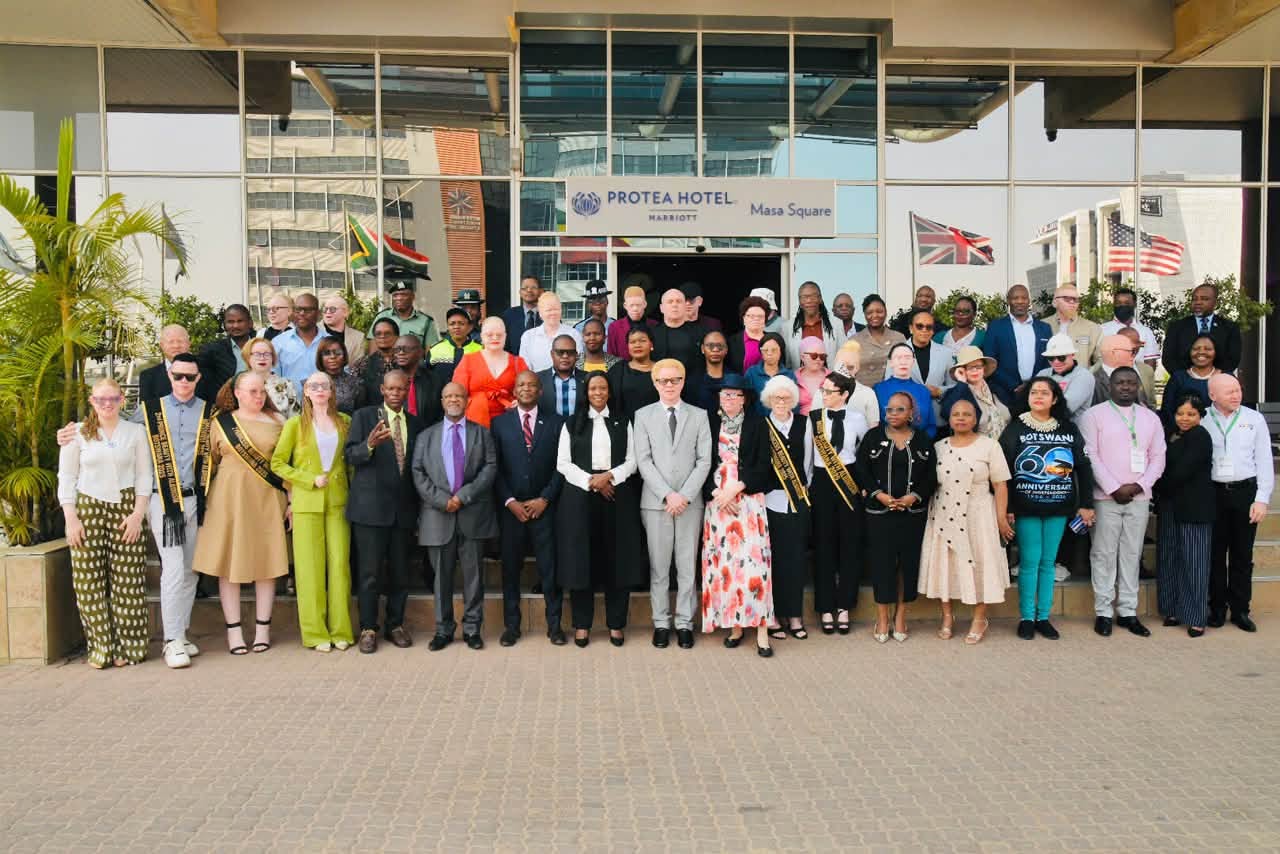
Kaone Boko, the First Lady of Botswana, has highlighted the importance of protecting the rights and dignity of persons with albinism following her participation in a two-day National Albinism Learning Forum in Gaborone. The forum brought together stakeholders for important discussions aimed at deepening understanding of albinism and the experiences of people living with the condition. Boko said the engagement provided an opportunity to listen directly to the lived experiences of persons with albinism and gain a clearer understanding of the challenges they face. Her participation also reinforced the importance of creating spaces where issues affecting persons with disabilities can be discussed openly and addressed through meaningful advocacy. The engagement forms part of wider efforts to promote inclusion, equality and respect for the rights of all people in Botswana.
Boko reflected on the forum through the words of civil rights leader Martin Luther King Jr., who famously spoke about his dream that his children would one day live in a nation where they would not be judged by the colour of their skin but by the content of their character. The quote carries particular relevance when discussing discrimination and the need to recognise people for their humanity rather than allowing physical characteristics to determine how they are treated. For persons with albinism, greater public understanding can play an important role in challenging misconceptions and harmful attitudes. Listening to people with lived experience also provides an opportunity to move beyond assumptions and understand the practical barriers they encounter in their daily lives. Boko’s reflection therefore placed the forum within a broader conversation about dignity, equality and the responsibility of society to protect people from discrimination.
The National Albinism Learning Forum provided an opportunity for stakeholders to examine issues affecting persons with albinism and consider how advocacy and public awareness can contribute to improved inclusion. Boko described the discussions as insightful and said they deepened her understanding of albinism. Importantly, the forum also allowed participants to hear directly from persons with albinism about their experiences. Such engagement is valuable because policies and advocacy efforts can become more effective when they are informed by the people directly affected by the issues being addressed. Their experiences can help stakeholders identify gaps in protection, accessibility, public understanding and social inclusion.
Albinism is a genetic condition that affects the production of melanin, which gives colour to the skin, hair and eyes. People with albinism can experience visual difficulties and increased sensitivity to sunlight, making access to appropriate healthcare, eye care and sun protection important. However, the challenges associated with albinism can extend beyond health and accessibility concerns. People with albinism can also face stigma, discrimination and misconceptions because of their appearance. Creating greater awareness can help communities understand albinism more accurately and encourage people to treat those affected with the same dignity, respect and consideration afforded to everyone else.
The forum also highlights the importance of including persons with disabilities in conversations that affect their rights and wellbeing. Disability advocacy requires more than raising awareness because it also involves identifying barriers that prevent people from participating fully in society. These barriers can occur in education, employment, healthcare, public spaces and other areas of everyday life. Meaningful advocacy must therefore consider both the legal rights of persons with disabilities and the practical conditions they experience. By listening to lived experiences, stakeholders can gain information that can help shape more responsive programmes and strengthen efforts to protect vulnerable communities.
Boko said the lessons gained from the National Albinism Learning Forum would help strengthen her office’s advocacy efforts through the MPEPU Programme. This places learning and engagement at the centre of efforts to advance the protection of rights and dignity for persons with disabilities. The approach also recognises that effective advocacy requires continued engagement with communities rather than relying only on broad statements about inclusion. Understanding the specific experiences of people with disabilities can help advocates communicate their concerns more accurately and identify areas where further support may be needed. Continued dialogue can also encourage greater cooperation among government, civil society, community organisations and other stakeholders.
The participation of the First Lady’s office in the forum also draws attention to the role of public leadership in promoting awareness around disability rights and social inclusion. National conversations can help bring issues that are often overlooked into wider public discussions. When stakeholders listen to people with albinism and other persons with disabilities, they create opportunities to better understand the realities behind statistics and policy discussions. This can help encourage communities to challenge stereotypes and support environments where people are able to participate without discrimination. Public advocacy can therefore complement practical interventions by helping shift attitudes and encouraging greater respect for diversity.
For persons with albinism, inclusion must involve both protection from discrimination and access to the support required to participate fully in society. This includes understanding their experiences in schools, workplaces, healthcare settings and communities. It also means ensuring that public discussions do not simply speak about persons with albinism but provide opportunities for them to speak for themselves and influence the conversations that affect them. The National Albinism Learning Forum created such an opportunity by bringing lived experiences into the centre of the discussion. The lessons shared during the engagement can help strengthen future advocacy and encourage more informed approaches to disability rights.
Boko’s message following the forum ultimately placed dignity, understanding and inclusion at the centre of the discussion around albinism and disability rights. Her commitment to using the insights gained to strengthen advocacy through the MPEPU Programme signals the importance of turning learning into continued action. The forum also demonstrated why listening to people with lived experience matters when developing approaches to discrimination, accessibility and social protection. Greater understanding can help communities move away from misconceptions and towards greater respect for people with albinism. As the country continues to advance disability rights, sustained advocacy, informed dialogue and meaningful inclusion remain important to ensuring that every person can live with dignity and participate fully in society.