
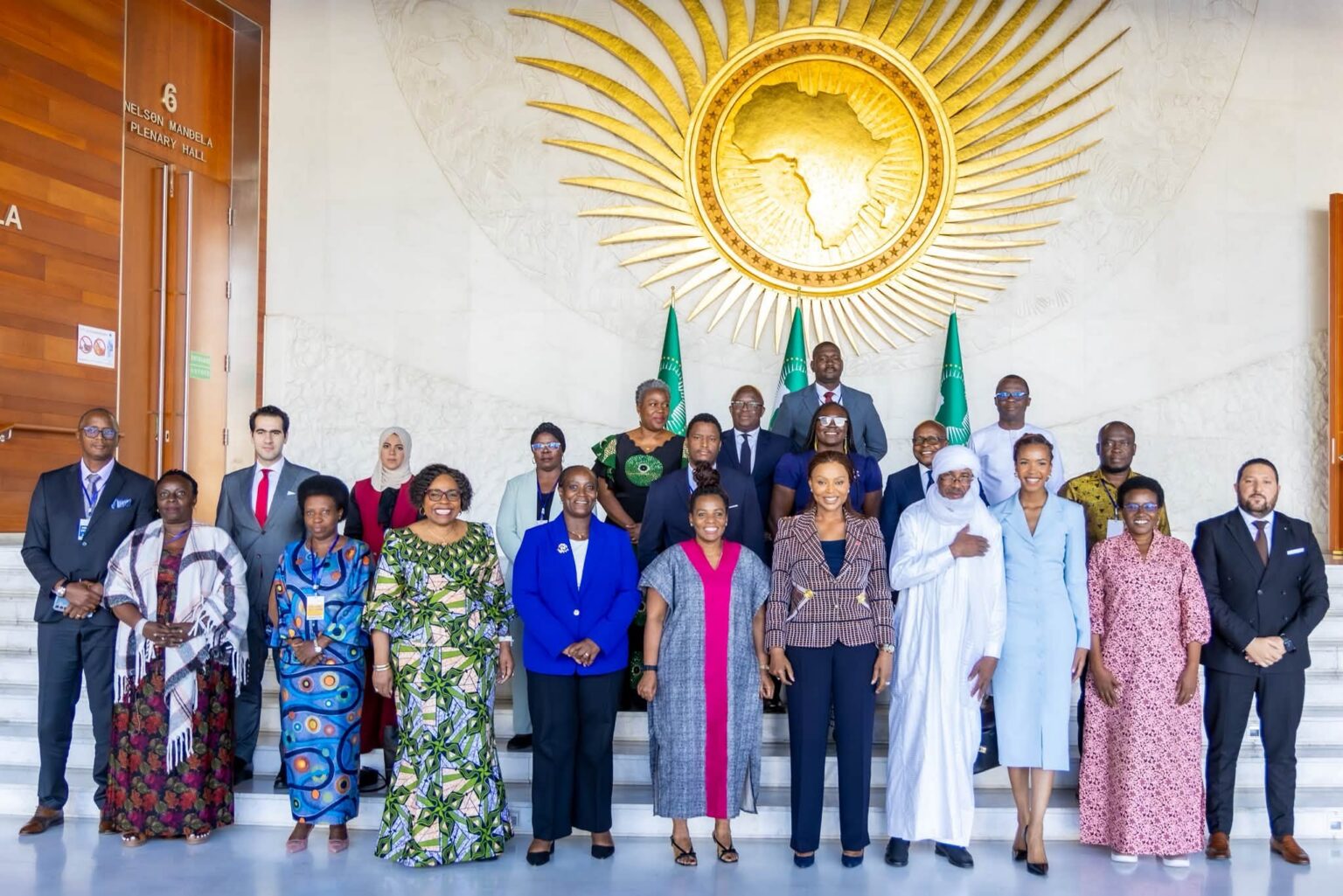
Botswana has reaffirmed its commitment to advancing gender equality and women’s empowerment across Africa as African Union ministers call for stronger action to turn continental policies into meaningful results. The call was made during the Ministerial Segment of the 11th Ordinary Session of the Specialized Technical Committee on Gender Equality and Women’s Empowerment (STC-GEWE) in Addis Ababa, Ethiopia. Botswana’s Minister of Youth and Gender Affairs, Honourable Lesego Chombo, played a key role in the proceedings as the outgoing Chairperson of the STC-GEWE Bureau, highlighting achievements recorded during her two-year leadership. The discussions focused on strengthening women’s rights, improving protection against gender-based violence, expanding economic opportunities and ensuring that women and girls have better access to essential services. For Botswana, the meeting also provided an opportunity to demonstrate its continued involvement in shaping Africa’s gender equality agenda.
The 11th Ordinary Session brought together ministers responsible for gender and women’s affairs from across the African continent to assess progress and identify priorities for the next phase of the African Union’s gender equality programme. A central message emerging from the discussions was that adopting policies and signing agreements would not be enough without proper implementation. Governments were urged to allocate adequate resources, improve coordination between ministries and establish effective monitoring systems to measure progress. These priorities are particularly relevant to Botswana as the country continues working towards greater participation of women in economic development, leadership and decision-making. The discussions also reinforced the importance of ensuring that national development programmes respond to the needs and experiences of women and girls.
Minister Chombo officially opened the 11th Session in her capacity as the outgoing Chairperson of the STC-GEWE Bureau. During her address, she reflected on the achievements recorded over the past two years and acknowledged the cooperation of Member States, the African Union Commission and development partners. She highlighted the importance of collective leadership in advancing gender equality and strengthening the protection of women’s rights across Africa. Her address also provided an opportunity to recognise the progress made under the outgoing Bureau while encouraging continued commitment from the incoming leadership. Botswana’s role in the continental structure has placed the country among the participants contributing to discussions on policies that affect women and girls across Africa.
One of the major achievements highlighted by Minister Chombo was the adoption of the African Union Convention on Ending Violence Against Women and Girls in February 2025. The Convention represents an important step towards strengthening continental efforts to prevent violence and protect women and girls. Minister Chombo urged African Union Member States to support its signature, ratification and effective implementation. She specifically commended The Gambia and Ghana for taking the lead in ratifying the Convention. Her call highlighted the need for African countries, including Botswana, to translate continental commitments into practical measures that strengthen legal protection and improve support for survivors of gender-based violence.
Gender-based violence remains an important concern for communities across Africa, including Botswana. Women and girls can experience different forms of abuse, including domestic violence, sexual violence, harassment and other harmful practices that threaten their safety and dignity. Addressing these challenges requires more than awareness campaigns because survivors also need accessible support services, effective law enforcement and justice systems that respond appropriately to reported cases. Communities must also be encouraged to challenge attitudes and behaviours that normalise violence or discourage survivors from seeking assistance. The African Union Convention provides a shared continental framework for strengthening these efforts and encouraging governments to improve their national responses.
Minister Chombo also highlighted the development of the Common African Position on Care Work, which recognises the contribution of care responsibilities to economies and societies. The position acknowledges that activities such as childcare, caring for older people and supporting individuals with disabilities are essential to the functioning of families and communities. Much of this work is performed without financial compensation and is often carried disproportionately by women. Despite its importance, unpaid care work is frequently overlooked in economic planning and discussions about productivity. The Common African Position seeks to change this by encouraging stronger care systems, greater recognition of unpaid care responsibilities and increased investment in the care economy.
For Botswana, the discussion on care work is particularly relevant to efforts to improve women’s participation in employment and entrepreneurship. Women who carry extensive household and caregiving responsibilities may have limited time to pursue education, develop businesses or take up employment opportunities. Improved access to childcare and other support services could help reduce some of these pressures. Recognising care work as an important contribution to society would also encourage more balanced sharing of responsibilities between women and men. Investment in the care economy could therefore support women’s economic independence while creating opportunities for employment and service development.
Another achievement highlighted by Minister Chombo was the launch of Africa’s candidacy to host the 74th session of the Commission on the Status of Women in 2030. The initiative reflects the continent’s ambition to play a greater role in international discussions on women’s rights and gender equality. Hosting the session would provide an opportunity for African countries to present their experiences, priorities and approaches to women’s empowerment on a global platform. It could also strengthen cooperation between African governments and international partners working to advance gender equality. The initiative demonstrates the importance of ensuring that African perspectives remain part of global conversations about the future of women’s rights.
Minister Chombo also recognised the inaugural Egumeni Dialogue held in 2025 as another important achievement during the outgoing Bureau’s tenure. The dialogue created a platform for discussions and knowledge-sharing on gender equality. Such engagements allow governments and stakeholders to exchange experiences, identify common challenges and consider practical approaches to improving women’s lives. They also provide opportunities to strengthen cooperation between policymakers, development partners and organisations working directly with communities. Continued dialogue will be important in ensuring that gender equality initiatives respond to the different social and economic conditions across African countries.
As her two-year tenure as Chairperson came to an end, Minister Chombo expressed appreciation to members of the outgoing Bureau for their dedication, cooperation and solidarity. She also acknowledged the support provided by the African Union Commission and development partners throughout the mandate. She emphasised the importance of preserving the progress already achieved and ensuring that ongoing initiatives continue under the incoming leadership. Her remarks reflected the value of institutional continuity in advancing programmes that require sustained commitment. She also extended congratulations and best wishes to the incoming Bureau, encouraging its members to build on the foundations established during the previous two years.
Botswana will continue serving on the incoming STC-GEWE Bureau in the capacity of Rapporteur. Minister Chombo welcomed this continued participation, noting that it would allow the country to preserve institutional knowledge and contribute to the implementation of the Committee’s priorities. This role gives Botswana an opportunity to remain actively involved in continental discussions on gender equality and women’s empowerment. It also provides continuity between the outgoing and incoming Bureau structures. Minister Chombo assured Member States that Botswana remains committed to supporting the STC-GEWE and advancing the African Union’s common agenda on women’s rights.
Speaking as First Vice-Chairperson of the incoming Bureau, Chad’s Minister of Health and Acting Minister of State in Charge of Women’s Affairs, His Excellency Dr Abdelmajid Abderahim, reaffirmed the importance of cooperation and continuity among Member States. As he assumed the Chair of the meeting, he emphasised that the incoming Bureau must focus on ensuring that African countries deliver on their gender equality commitments. He also acknowledged Botswana’s continued participation as an important contribution to the continent’s efforts. His remarks reinforced the need for African governments to work together rather than approach gender equality as an isolated national responsibility. The success of continental programmes will depend on cooperation, shared accountability and the willingness of Member States to implement agreed priorities.
Dr Abderahim stressed that the real challenge facing Africa is ensuring that policies and frameworks produce tangible results. He called for adequate resources, stronger coordination across government sectors and effective monitoring to assess progress. He further emphasised that gender equality must be integrated into health, education, employment, social protection, justice, peace and security, as well as national planning and budgeting. This approach recognises that women’s rights and opportunities are influenced by decisions made across different areas of government. For Botswana, it highlights the importance of ensuring that gender considerations remain part of national development planning and public service delivery.
The call for gender-responsive national planning and budgeting is particularly important because government spending decisions influence access to opportunities and essential services. Policies supporting women’s empowerment require funding to become effective programmes. Without adequate resources, commitments relating to education, healthcare, employment and protection against violence may struggle to produce meaningful results. Government departments must therefore coordinate their efforts to ensure that gender equality objectives are reflected in their plans and budgets. Regular assessments can also help identify areas where additional support or changes in implementation are needed.
Dr Abderahim further called for particular attention to women living in rural areas, those in vulnerable situations and women affected by conflict and displacement. These groups often face additional challenges when accessing healthcare, education, employment and social protection. In Botswana, rural communities may experience difficulties accessing certain services because of distance, transport limitations and the availability of resources. Women in vulnerable circumstances may also require targeted assistance to overcome economic and social barriers. Gender equality programmes must therefore consider the different experiences of women rather than assume that every community faces the same challenges.
Access to quality healthcare and education also remains central to women’s empowerment. Women and girls need reliable health services, including maternal healthcare, reproductive health support and appropriate treatment for medical conditions. Girls must also have opportunities to complete their education and develop the skills needed to participate in the economy. Barriers such as poverty, discrimination and limited access to services can restrict these opportunities. Strengthening public services and ensuring that women and girls can access them fairly are important steps towards achieving meaningful gender equality.
Economic empowerment was another important issue reflected in the ministerial discussions. Women need access to employment, financial resources, entrepreneurship opportunities and professional development to participate fully in economic growth. Supporting women-owned businesses through access to finance, business training and markets can help strengthen their economic independence. Fair employment practices and equal opportunities for career advancement are equally important. For Botswana, advancing women’s economic participation can contribute to household financial security, business development and broader national economic growth.
The discussions also highlighted the importance of women’s participation in leadership and decision-making. Women should have meaningful opportunities to contribute to decisions affecting their families, communities and country. Their participation in public institutions, business leadership and community structures can help ensure that different experiences and priorities are considered when policies are developed. However, representation must be accompanied by genuine influence and opportunities to contribute. Strengthening women’s leadership is therefore an important part of building inclusive institutions and responsive governance.
Dr Abderahim concluded by emphasising that progress must extend beyond policy decisions to improvements in healthcare, protection against violence and opportunities for women and girls to shape their own futures. He stressed that the success of gender equality frameworks should ultimately be measured by whether women and girls are safer, have better access to services and enjoy greater opportunities. This message places the experiences of ordinary women and girls at the centre of continental development efforts. It also reinforces the need for governments to be accountable for the results of their policies. For Botswana, the message provides an important reminder that participation in continental agreements must be matched by consistent action at home.
Botswana’s continued participation in the incoming STC-GEWE Bureau as Rapporteur gives the country an opportunity to maintain its contribution to Africa’s gender equality agenda. Minister Lesego Chombo’s outgoing leadership highlighted important milestones, including the adoption of the Convention on Ending Violence Against Women and Girls, the Common African Position on Care Work and the Egumeni Dialogue. These initiatives provide a foundation for stronger cooperation among African countries. The incoming Bureau will now face the task of ensuring that these achievements translate into practical improvements through effective implementation, adequate funding and accountability. Botswana’s continued involvement will allow it to contribute to this work while maintaining institutional experience gained during the previous mandate.
The discussions in Addis Ababa carry an important message for Botswana and the rest of the continent. Gender equality cannot be achieved through policies and declarations alone. It requires stronger protection against violence, accessible healthcare, quality education, economic opportunities and meaningful participation by women in decision-making. Governments must also recognise unpaid care work and address the specific challenges faced by women in rural communities and vulnerable circumstances. As Botswana continues contributing to the African Union’s gender equality agenda, the priority must be to turn commitments into visible improvements in people’s lives. Ultimately, the true measure of progress will be a society where women and girls enjoy equal opportunities, personal safety, economic independence and the freedom to determine their own futures.