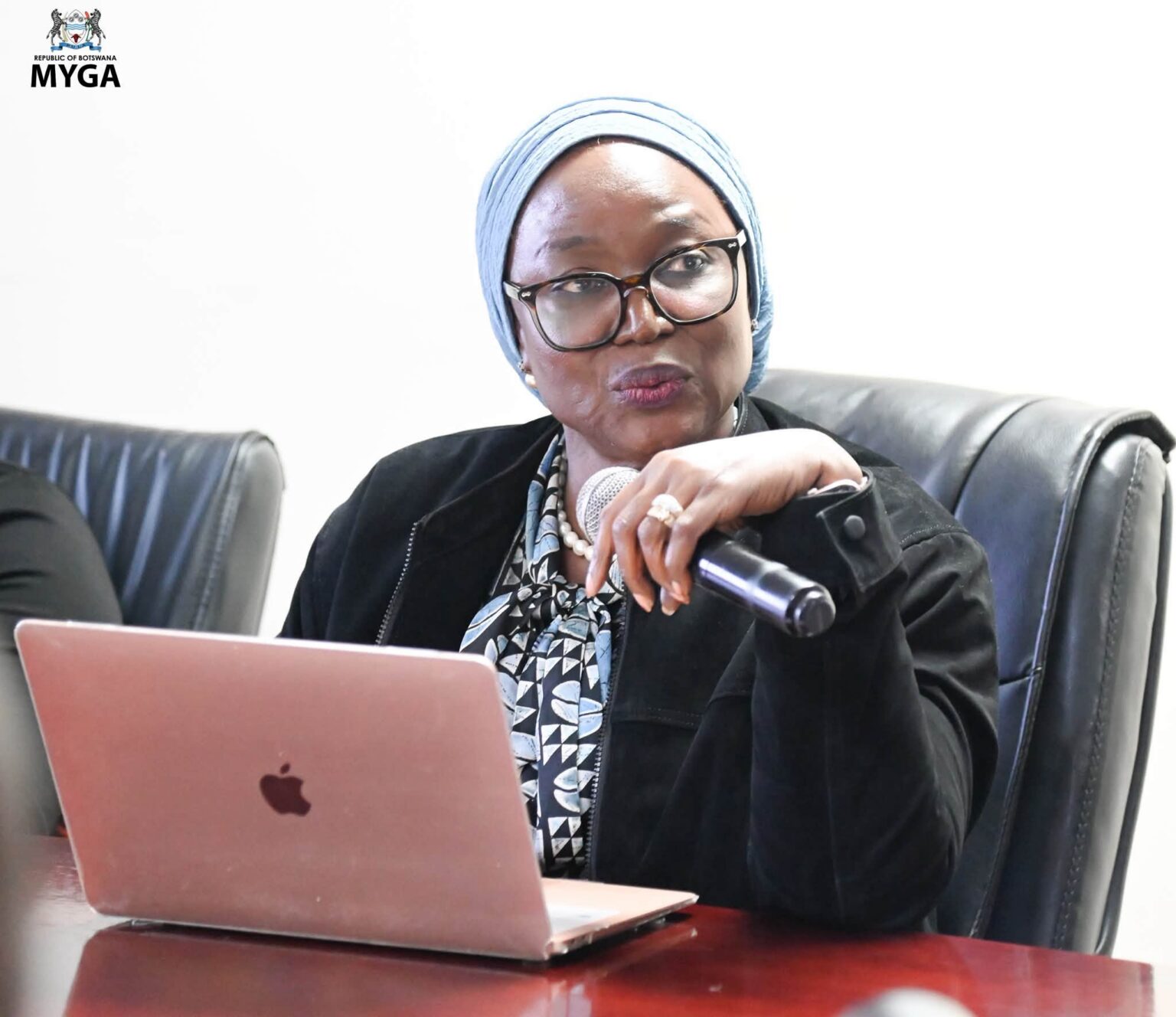
The African Union Commission has reaffirmed its commitment to ending violence against women and girls across the continent, emphasizing that meaningful partnerships with Civil Society Organisations (CSOs) are essential to achieving lasting change. African Union Commissioner Hon. Janet Ramatoulie Sallah-Njie delivered this message during a consultative meeting in Gaborone, Botswana, where government representatives, civil society leaders and development partners gathered to discuss the African Union Convention on Ending Violence Against Women and Girls (AU-CEVAWG). The meeting formed part of the African Union Commission delegation’s ongoing visit to Botswana and highlighted the importance of collaboration in strengthening the protection of women and girls. Hosted in partnership with the Ministry of Youth and Gender Affairs, the engagement created an opportunity for stakeholders to exchange ideas and contribute to shaping a convention that reflects the realities experienced across Africa. The discussions reinforced the shared commitment to building stronger systems that prevent violence, promote equality and protect the rights of vulnerable communities.
Commissioner Janet Ramatoulie Sallah-Njie stressed that violence against women and girls remains one of the most pressing human rights challenges facing the world today. Despite significant progress in policy development and advocacy, millions of women and girls continue to experience physical, emotional, sexual and economic violence in their homes, workplaces, schools and communities. The Commissioner emphasized that addressing these challenges requires coordinated action from governments, civil society, international organizations and local communities. She explained that sustainable solutions can only be achieved when all stakeholders work together to eliminate the conditions that allow violence to persist. Her remarks underscored the African Union’s determination to create stronger legal and institutional frameworks that protect women and girls across the continent.
A central focus of the meeting was the African Union Convention on Ending Violence Against Women and Girls, commonly referred to as the AU-CEVAWG. The proposed convention is designed to strengthen existing efforts to prevent violence, improve legal protections and promote the rights of women and girls throughout Africa. Rather than replacing current initiatives, the convention seeks to provide a comprehensive continental framework that supports member states in developing stronger policies, laws and programmes. It also encourages greater cooperation between governments, regional institutions and community organizations working on issues affecting women and children. By creating a unified approach, the convention aims to ensure that all African countries move toward higher standards of protection and accountability.
Commissioner Sallah-Njie made it clear that the convention is intended to support rather than replace the important work already being carried out by Civil Society Organisations. She explained that the African Union recognizes CSOs as valuable partners because of their close relationships with communities and their deep understanding of local challenges. Many civil society organizations provide frontline services, including legal support, counseling, emergency shelter, education and advocacy for survivors of violence. Their experience allows them to identify emerging issues and recommend practical solutions that can improve policies and service delivery. Strengthening partnerships with these organizations therefore remains a key component of the African Union’s broader strategy to eliminate violence against women and girls.
The consultative meeting brought together participants from across Botswana, with representatives attending both in person and virtually. This inclusive approach ensured that organizations from different regions had the opportunity to contribute their perspectives regardless of location. The meeting created an open platform for dialogue between government officials, African Union representatives and grassroots organizations working directly with women, children and vulnerable communities. Such engagements encourage transparency while allowing policymakers to hear firsthand accounts of the challenges faced by those delivering services on the ground. Bringing together diverse voices also improves the quality of policy development by ensuring that multiple experiences and perspectives are considered.
Commissioner Sallah-Njie highlighted that the African Union Commission actively works alongside Civil Society Organisations in implementing its mandate to promote women’s rights and gender equality. She acknowledged that these organizations often serve as trusted partners within communities where government services may be limited or difficult to access. Through awareness campaigns, survivor support services, advocacy and community education, CSOs contribute significantly to preventing violence and empowering women. Their work complements government programmes by reaching vulnerable populations and addressing barriers that prevent survivors from seeking assistance. Recognizing this contribution, the African Union remains committed to maintaining strong partnerships that strengthen collective action across the continent.
Although important progress has been made in advancing women’s rights, Commissioner Sallah-Njie acknowledged that significant gaps still exist in efforts to eliminate all forms of violence. She noted that legal reforms alone are not enough without effective implementation, adequate resources and community engagement. Many survivors continue to face obstacles when reporting abuse, accessing justice or obtaining support services. Social attitudes, economic inequalities and limited institutional capacity can also contribute to ongoing challenges. Addressing these issues requires continuous evaluation, stronger cooperation and a willingness to adapt strategies based on lessons learned from communities and stakeholders.
An important aspect of the consultation was the Commission’s invitation for constructive feedback from participants. Commissioner Sallah-Njie encouraged stakeholders to share comments, recommendations and practical suggestions that could strengthen the draft convention before its adoption. This collaborative approach reflects the African Union’s commitment to developing policies that respond to the actual needs of member states and their citizens. By actively seeking input from those working directly with affected communities, the Commission aims to produce a convention that is both effective and practical. Inclusive policymaking also increases stakeholder ownership and improves the likelihood of successful implementation once the convention is adopted.
The Ministry of Youth and Gender Affairs reaffirmed Botswana’s commitment to aligning national policies with continental frameworks aimed at protecting women and girls. Government officials emphasized the importance of working closely with Civil Society Organisations to strengthen service delivery and ensure that no woman or girl is left behind. Botswana continues to prioritize partnerships that improve prevention programmes, survivor support services and public awareness initiatives addressing gender-based violence. Aligning national legislation with African Union frameworks also strengthens the country’s ability to fulfill regional and international human rights commitments. These efforts demonstrate Botswana’s dedication to building a society where women and girls can live free from violence and discrimination.
Civil Society Organisations participating in the meeting used the opportunity to share their experiences from working directly with communities affected by violence. They highlighted challenges related to service delivery, access to justice, funding and survivor support while offering practical recommendations to strengthen the draft convention. Their contributions reflected the realities faced by women and girls in different parts of Botswana and emphasized the importance of community-based solutions. These recommendations will help ensure that the AU-CEVAWG addresses both policy objectives and practical implementation challenges. Including grassroots perspectives strengthens the convention’s relevance and supports more effective action across diverse social and cultural contexts.
The African Union delegation’s visit to Botswana forms part of wider consultations taking place across the continent to ensure that the African Union Convention on Ending Violence Against Women and Girls reflects the experiences of women and girls in every region of Africa. These consultations are designed to create a convention that can be implemented effectively at national, regional and community levels while respecting the diversity of African societies. By engaging governments, Civil Society Organisations and local communities throughout the consultation process, the African Union is laying the foundation for stronger cooperation in the fight against gender-based violence. Commissioner Janet Ramatoulie Sallah-Njie’s reaffirmation of the Commission’s commitment to partnership highlights the vital role that collaboration will continue to play in protecting women and girls. As the convention moves closer to adoption, ongoing dialogue and shared responsibility will remain essential in creating safer communities and advancing the rights, dignity and equality of women and girls across Africa.