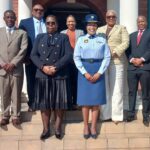

Artesia Junior Secondary School officially inaugurated its Scout Movement on 9 June 2026 during a ceremony that marked a major step in strengthening student leadership, discipline and holistic development. The event was presided over by Assistant Minister of Child Welfare and Basic Education Hon. Justin Chipo Hunyepa, who highlighted the importance of scouting in shaping responsible and capable young citizens. The launch brought together learners, teachers, community leaders and government representatives in a shared commitment to youth development. The initiative is expected to play a key role in improving student behaviour, teamwork and academic focus. It also reflects a broader national effort to promote well-rounded education beyond classroom learning.
School Head Ms Segakweng Qobo welcomed attendees and provided a detailed overview of the school’s history and achievements since its establishment in 1994. She noted that Artesia Junior Secondary School has consistently performed well in sports and co-curricular activities, building a strong foundation for student engagement outside academics. The school serves learners from several neighbouring villages including Kgomodiatshaba, Khurutshe, Budungwane, Dikgonnye, Leshibitse and Ramotlabaki. She explained that this diverse intake makes unity-building initiatives like scouting especially important for social cohesion. According to her, the Scout Movement will help learners from different backgrounds develop shared values and stronger bonds within the school environment.
Assistant Minister Hon. Justin Chipo Hunyepa emphasized that scouting goes far beyond outdoor activities and uniforms, describing it as a structured system for developing discipline, leadership and critical thinking. He stated that the programme encourages learners to take responsibility for their actions while developing essential life skills that support both academic and personal growth. He also highlighted that parents and teachers have long supported scouting because of its positive impact on children’s behaviour and development. The Assistant Minister encouraged learners to embrace the programme as their own and take active roles in leadership structures within the school. His message focused on building independence among students while ensuring they grow into responsible and self-driven individuals.
Hon. Hunyepa further explained that everyday habits such as maintaining personal hygiene, making beds and keeping surroundings clean contribute significantly to building discipline and order. He stressed that these small routines develop habits that prepare learners for success in both school and adult life. According to him, consistency in personal responsibility builds a strong foundation for academic performance and future workplace readiness. He encouraged learners to practice self-discipline even in the absence of supervision from teachers. This approach, he noted, is central to the long-term success of the Scout Movement and its impact on student development.
The Assistant Minister also highlighted how scouting aligns with Botswana’s STEAM-based education approach, which focuses on science, technology, engineering, arts and mathematics. He explained that scouting helps learners develop creativity, teamwork and problem-solving skills that complement formal education. He encouraged the formation of structured committees within the Scout Movement, including entrepreneurship, environmental conservation, community service and cultural groups. These committees are expected to provide learners with practical exposure to real-world challenges while building leadership capacity. By participating in these activities, students can gain skills that extend beyond the classroom and prepare them for future opportunities.
Hon. Hunyepa acknowledged the infrastructure and resource challenges faced by many schools and expressed optimism about ongoing education reforms. He referenced the role of the Education Infrastructure Management Company, a government-owned entity tasked with modernising and improving school infrastructure across the country. He noted that such initiatives offer hope for better learning environments that support both academic and extracurricular development. He also highlighted the Botswana Economic Transformation Programme, described as a national initiative aimed at driving economic growth through education and innovation. According to him, education remains a central pillar in achieving long-term national transformation and development goals.
Member of Parliament for Kgatleng West Hon. Unity Dow also addressed the gathering, emphasizing the importance of scouting in shaping disciplined and responsible citizens. She encouraged learners to use their time productively and take advantage of opportunities available to them within the school environment. She described scouting as a powerful platform for building character, responsibility and sound decision-making skills. Hon. Dow stressed that these qualities are essential for future leadership and personal success. Her remarks reinforced the idea that structured youth programmes play a critical role in national development by preparing young people for meaningful participation in society.
The launch of the Scout Movement at Artesia Junior Secondary School is expected to have a lasting impact on student development by strengthening discipline, leadership and academic performance. Through peer support systems, learner-led initiatives and community service activities, students will have opportunities to apply skills in practical settings. The programme is also expected to improve cooperation among learners from different communities while fostering a sense of shared responsibility. As the initiative takes root, it is likely to become a key part of the school’s identity and educational approach. The introduction of scouting marks a significant step toward building confident, disciplined and capable young leaders who can contribute positively to Botswana’s future.