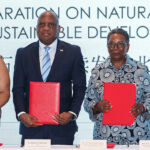

Botswana has taken another significant step toward strengthening its long term economic growth through a renewed partnership with the Arab Bank for Economic Development in Africa (BADEA). The development finance institution has reaffirmed its commitment to supporting Botswana’s economic diversification by signing two important agreements that will benefit both industry and education. The financing package includes a €110 million agreement with the Botswana Development Corporation (BDC) and a €500,000 grant agreement with the Botswana University of Agriculture and Natural Resources (BUAN). These investments reflect a shared vision of building a stronger, more resilient economy that creates jobs, encourages innovation and supports sustainable development. The agreements also reinforce the growing relationship between Botswana and BADEA, highlighting the confidence international development partners have in the country’s economic future.
The €110 million financing agreement signed with the Botswana Development Corporation is expected to play a major role in expanding industrial development across the country. The Botswana Development Corporation has long been responsible for promoting investment, supporting strategic industries and encouraging private sector participation in the national economy. With additional financial support from BADEA, the corporation will be better positioned to invest in projects that generate employment and stimulate economic activity. The funding is also expected to strengthen local businesses by improving access to development finance for productive investments. As Botswana continues to reduce its dependence on diamond revenues, investments of this nature are becoming increasingly important in building a more diversified and sustainable economy.
BADEA Board of Directors Chairman H.E. Dr. Farhad Aldossari emphasized that the institution remains committed to supporting Botswana’s development agenda. According to Dr. Aldossari, the financial support will focus on industrial growth, expanding the private sector and creating sustainable employment opportunities for citizens. These priorities closely align with Botswana’s national development goals, which seek to encourage economic resilience through investment in productive sectors. Supporting private businesses can increase innovation, attract additional investment and improve the country’s competitiveness in regional and international markets. By investing in projects that generate lasting economic value, BADEA is helping to create opportunities that extend well beyond immediate financial assistance.
The €500,000 grant agreement signed with the Botswana University of Agriculture and Natural Resources highlights the importance of investing in education and agricultural research. Agriculture remains an important sector for Botswana despite ongoing challenges such as climate variability, water shortages and changing market conditions. The grant is expected to strengthen research, innovation and skills development that can improve agricultural productivity and sustainability. Universities play a critical role in preparing future professionals who can develop practical solutions for modern farming and natural resource management. By supporting higher education, BADEA is contributing to the long term development of knowledge, technology and human capital that will benefit Botswana’s economy for many years.
Speaking during the signing ceremony, Vice President and Minister of Finance Ndaba Gaolathe praised BADEA as a reliable development finance institution and an important strategic partner. He noted that Botswana highly values its relationship with BADEA because the institution has consistently supported projects that align with the country’s national priorities. According to Gaolathe, the partnership has already produced measurable results through investments in key infrastructure and economic development initiatives. Strong partnerships with international financial institutions allow Botswana to accelerate projects that improve public services and create opportunities for businesses and communities. Such collaborations also demonstrate international confidence in Botswana’s governance, financial management and long term development strategy.
Gaolathe highlighted several successful projects that have already benefited from BADEA’s support. One of the most notable achievements includes the upgrade of the terminal building and the provision of modern equipment at Sir Seretse Khama International Airport. These improvements have enhanced the airport’s operational efficiency, increased passenger comfort and strengthened Botswana’s connectivity with regional and international markets. Improved airport infrastructure also supports tourism, trade and investment by making travel more efficient for visitors and business travelers. As aviation remains an important driver of economic growth, these investments contribute directly to Botswana’s broader diversification objectives.
In addition to improvements at Sir Seretse Khama International Airport, BADEA has also supported major upgrades at Kasane International Airport. These projects included the extension of the terminal building, widening of the runway and the supply of modern operational equipment. Kasane serves as an important gateway to one of Botswana’s leading tourism destinations, attracting visitors to the country’s renowned wildlife reserves and natural attractions. Modern airport facilities improve the travel experience while increasing the capacity to accommodate growing numbers of domestic and international passengers. Better transport infrastructure also strengthens regional trade links and supports businesses that depend on reliable transportation networks.
Beyond transport infrastructure, BADEA’s investments have also contributed to improving Botswana’s agricultural sector. Vice President Gaolathe noted that the institution’s interventions have enhanced the productive capacity of agriculture, which remains essential for food security, rural development and economic inclusion. Investment in agriculture helps farmers adopt better technologies, improve productivity and strengthen resilience against environmental challenges. A stronger agricultural sector can also create employment opportunities while reducing dependence on imported food products. These outcomes support Botswana’s efforts to build a balanced economy with multiple sources of sustainable growth.
Economic diversification has remained one of Botswana’s highest national priorities as the country works to reduce its dependence on the mining sector. While diamonds have played a central role in Botswana’s economic success for decades, expanding industries such as manufacturing, agriculture, tourism, technology and services will provide greater long term stability. Financial partnerships with institutions like BADEA enable Botswana to invest in sectors that have significant growth potential. Encouraging private sector participation is especially important because businesses create jobs, generate innovation and contribute to higher levels of economic productivity. By supporting both infrastructure and enterprise development, these agreements create a solid foundation for future economic expansion.
The latest agreements between BADEA, the Botswana Development Corporation and the Botswana University of Agriculture and Natural Resources represent more than financial transactions. They demonstrate a shared commitment to sustainable development, stronger institutions and inclusive economic growth. The combination of industrial financing and educational support reflects a comprehensive approach that addresses both immediate investment needs and long term capacity building. As Botswana continues implementing its economic diversification strategy, partnerships with trusted development institutions will remain essential in achieving national development objectives. With continued collaboration, strategic investment and a clear focus on sustainable growth, Botswana is well positioned to build a more resilient economy that creates lasting opportunities for future generations.