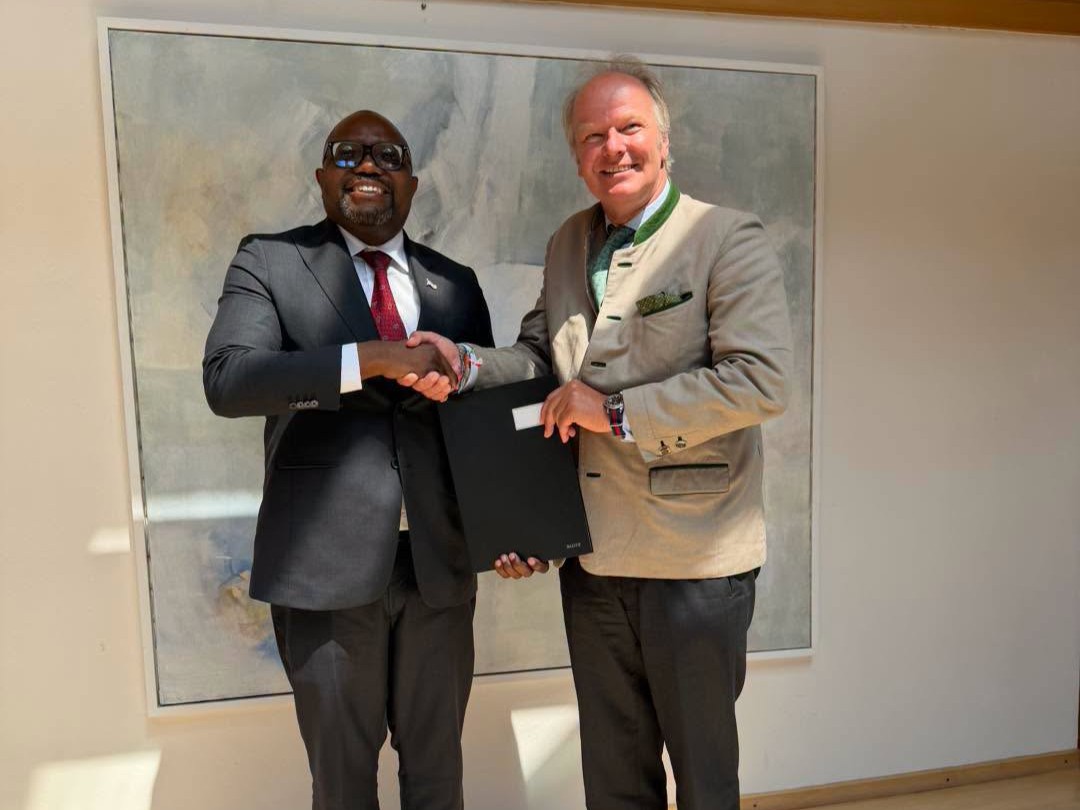
Botswana continues to strengthen its position as an attractive investment destination through strategic international partnerships that support economic growth and industrial development. As part of his working visit to Munich, Germany, Minister Butale met with Mr. Stefan HiPP, the leader of the internationally respected HiPP family business, one of Europe’s leading producers of organic baby food and infant nutrition products. The meeting focused on advancing HiPP’s planned investment in Botswana and discussing the remaining steps needed to move the project forward. Both parties explored ways to conclude key formalities and complete the necessary due diligence required before establishing a regional production and distribution hub. The proposed investment has the potential to transform Botswana’s manufacturing landscape while creating new opportunities for employment, trade and improved infant nutrition across Southern Africa.
The meeting in Munich reflects Botswana’s continued efforts to attract high-quality foreign direct investment that supports long-term economic diversification. Rather than relying heavily on traditional industries, the country has been actively pursuing investments in manufacturing, food processing and value-added production. Bringing an internationally recognized company such as HiPP into Botswana would represent a significant milestone in these efforts. It would also demonstrate growing international confidence in Botswana’s stable business environment, strong governance and strategic location within the Southern African region. Such investments contribute not only to economic growth but also to the transfer of technology, skills and international production standards.
HiPP has built a strong global reputation for producing high-quality organic baby food and infant nutrition products that prioritize safety, nutrition and sustainable farming practices. The company’s long history of innovation and commitment to quality has made it one of Europe’s most trusted brands in infant nutrition. Establishing a regional production and distribution hub in Botswana would allow the company to serve growing markets across Southern Africa more efficiently while maintaining its commitment to quality products. Producing goods closer to consumers can reduce transportation costs, improve supply chain efficiency and increase product availability throughout the region. This approach also supports regional trade by strengthening manufacturing capacity within Africa.
One of the major benefits of the proposed investment is its potential to improve infant nutrition across Botswana and neighboring countries. Access to nutritious, high-quality baby food is an important component of early childhood development, supporting healthy growth during the critical first years of life. Local production can help ensure a more reliable supply of infant nutrition products while reducing dependence on imported goods. Increased availability may also improve access for families throughout the region as production expands to meet demand. Investments in nutrition-focused industries contribute to broader public health goals while supporting the well-being of future generations.
The planned investment is also expected to create meaningful employment opportunities for Botswana’s workforce. The establishment of a manufacturing and distribution facility requires employees across a wide range of occupations, including production, quality control, engineering, logistics, administration, sales and management. In addition to direct jobs, the project could stimulate employment within supporting industries such as packaging, transportation, warehousing and agricultural supply chains. Small and medium-sized businesses may also benefit by providing goods and services to the new facility. As the operation grows, skills development and workforce training programs could further strengthen Botswana’s manufacturing sector and improve long-term employment prospects.
Another important aspect of the discussions was the promotion of local manufacturing, which remains a key priority in Botswana’s economic development strategy. Expanding domestic production reduces reliance on imports while encouraging value addition within the country. Manufacturing investments generate industrial capacity, strengthen supply chains and improve economic resilience by creating diverse sources of income and employment. The presence of a globally recognized manufacturer such as HiPP could encourage additional international companies to consider Botswana as a competitive location for future investments. Increased industrial activity also contributes to economic diversification, helping the country build a more balanced and sustainable economy.
Botswana’s strategic location makes it well positioned to serve as a gateway to the Southern African market. The country’s modern infrastructure, political stability and access to regional trade agreements provide important advantages for companies seeking to distribute products throughout neighboring countries. A regional production and distribution hub would allow HiPP to efficiently supply multiple markets while taking advantage of Botswana’s connectivity within Southern Africa. This would strengthen regional trade links and reinforce Botswana’s growing role as a logistics and manufacturing center. The investment could also support broader regional integration by improving the movement of goods and fostering stronger commercial partnerships across borders.
The discussions between Minister Butale and Mr. Stefan HiPP represent an encouraging step toward a potentially significant investment that could deliver lasting economic and social benefits for Botswana. By working to complete the necessary formalities and due diligence, both parties are laying the foundation for a partnership focused on innovation, nutrition and sustainable industrial growth. The proposed regional production and distribution hub has the potential to improve infant nutrition, create quality jobs, strengthen local manufacturing and expand Botswana’s role in regional trade. If successfully implemented, the investment would reinforce the country’s reputation as a preferred destination for international business and responsible manufacturing. As Botswana continues to pursue strategic partnerships with global companies, initiatives such as this one demonstrate the country’s commitment to building a diversified, competitive and inclusive economy for the future.