
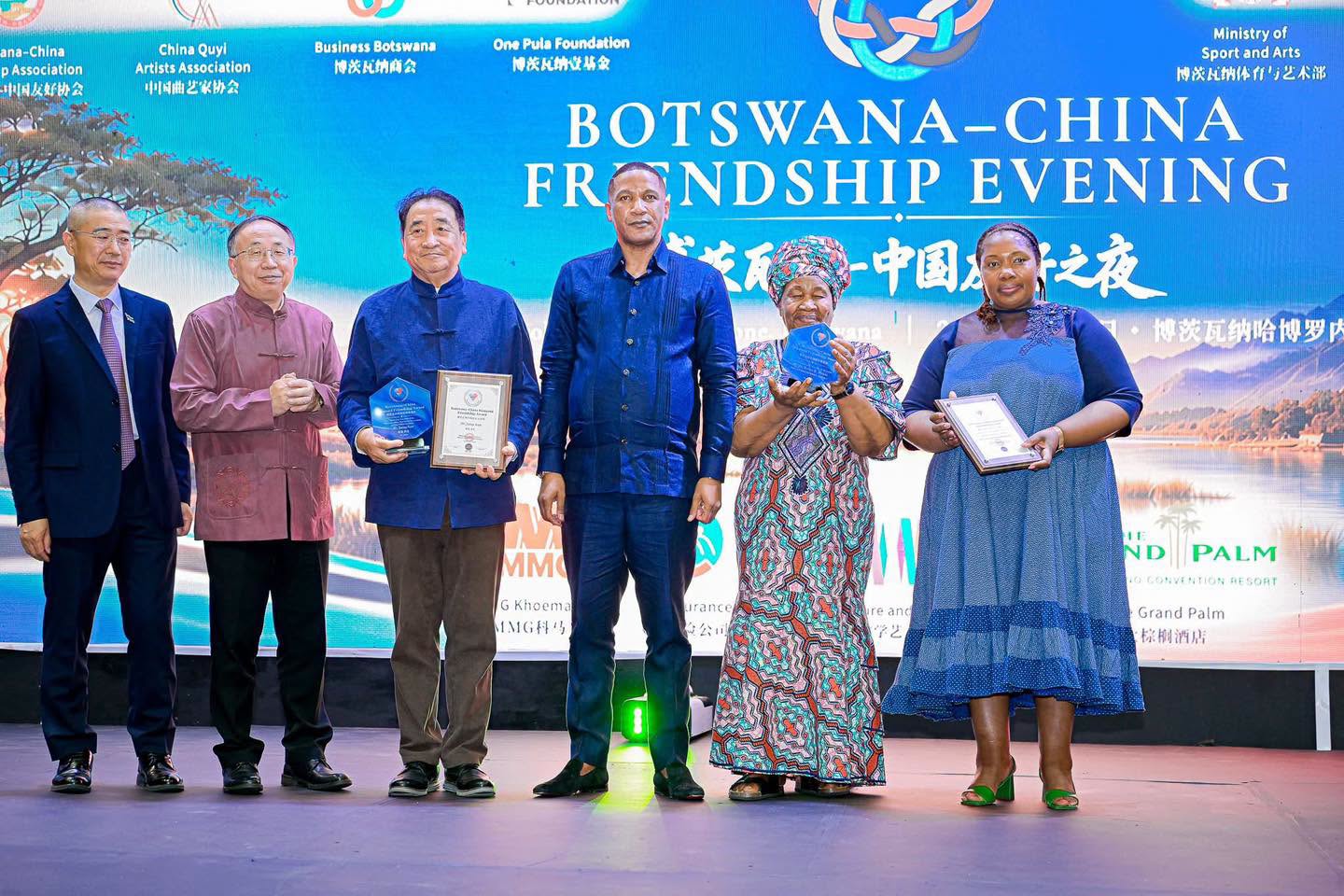
Botswana and China have reaffirmed their commitment to strengthening bilateral relations following the elevation of their diplomatic ties to a Comprehensive Strategic Cooperative Partnership during President Advocate Duma Boko’s recent State Visit to China. The development marks an important milestone in the longstanding relationship between the two countries and signals a renewed commitment to expanding cooperation across several key sectors. The partnership is expected to create new opportunities for economic growth, investment, technological advancement and social development. It also reflects the shared ambition of Botswana and China to build stronger diplomatic and economic relations that deliver meaningful benefits to their respective citizens. The announcement was highlighted during the 2026 Botswana-China Friendship Evening held at the Grand Palm Hotel, where leaders and guests celebrated the growing friendship between the two nations.
Speaking at the event, President Boko described his State Visit to China as a significant milestone in the history of Botswana-China relations. He highlighted the warm reception he received from Chinese President Xi Jinping and praised the constructive discussions held during the visit. According to President Boko, the engagements provided an important opportunity to explore new areas of cooperation and strengthen existing agreements between the two countries. He noted that the elevation of relations to a Comprehensive Strategic Cooperative Partnership demonstrates the confidence both governments have in the future of their relationship. The new diplomatic framework also provides an opportunity to translate political goodwill into practical programmes, investments and development initiatives.
Trade and investment emerged as important areas of focus during the discussions between the two leaders. Stronger economic cooperation could help Botswana attract additional investment, expand its productive industries and create employment opportunities for its people. China remains an important international economic partner with experience in manufacturing, infrastructure development and technological innovation. For Botswana, deeper engagement could support efforts to diversify the economy and reduce its dependence on traditional economic sectors. Greater cooperation could also create opportunities for local businesses to access new markets, develop commercial partnerships and participate in international supply chains.
Technology was another key area identified for expanded cooperation between Botswana and China. As countries increasingly depend on digital systems and innovation to drive economic growth, access to modern technology has become essential for improving productivity and competitiveness. Botswana could benefit from stronger collaboration in digital infrastructure, scientific research, technical training and the development of modern industrial capabilities. Such cooperation could also support the country’s efforts to strengthen its digital economy and improve public services. However, the long-term benefits will depend on effective implementation, skills development and the ability of local institutions and businesses to adopt new technologies.
Agriculture and healthcare also featured prominently among the areas where the two countries intend to strengthen their partnership. Agricultural cooperation could support Botswana’s efforts to improve food production, strengthen food security and modernise farming practices. China has considerable experience in agricultural technology, irrigation systems and rural development, which could provide useful opportunities for knowledge exchange. Cooperation in healthcare could similarly contribute to improved medical services, professional training and access to modern healthcare technologies. These sectors are particularly important because their development has a direct impact on people’s living standards, economic resilience and national well-being.
President Boko also reflected on the lessons Botswana could learn from China’s development journey, particularly its achievement in lifting millions of people out of poverty. He identified education, innovation and collective responsibility as important factors behind China’s economic and social transformation. His remarks highlighted the importance of investing in people and building institutions that support long-term national development. Education plays a critical role in preparing citizens to participate in a modern economy, while innovation helps businesses and industries remain competitive. Collective responsibility, meanwhile, encourages cooperation between government, the private sector and communities in addressing national challenges.
For Botswana, these lessons are relevant as the country continues pursuing economic diversification, sustainable development and improved employment opportunities. The experience of other developing economies can offer useful insights into how strategic planning, investment in human capital and technological progress can support national transformation. However, Botswana’s development strategy must also reflect its own economic conditions, population needs and institutional priorities. Applying lessons from China’s experience will require policies that strengthen local industries, improve productivity and expand opportunities for young people. The growing partnership could provide a platform for sharing knowledge and expertise while allowing Botswana to identify approaches that suit its national development objectives.
Chinese Ambassador to Botswana, His Excellency Fan Yong, described President Boko’s State Visit as historic and reaffirmed China’s commitment to strengthening relations between the two countries. He emphasised the importance of implementing the agreements reached during the visit and ensuring that the partnership produces practical results. His remarks reinforced China’s position that bilateral cooperation should deliver mutual benefits and support the development priorities of both nations. Effective implementation will be essential in turning diplomatic commitments into tangible outcomes for businesses, institutions and ordinary citizens. Continued engagement between government officials, investors and other stakeholders will therefore play an important role in advancing the new partnership.
The Botswana-China Friendship Evening also provided an opportunity to recognise the longstanding friendship between the two countries. Diplomatic relations have created a foundation for cooperation through government engagements, economic activities, cultural exchanges and development initiatives. People-to-people exchanges remain particularly important because they help build understanding and strengthen connections beyond formal diplomatic meetings. Educational opportunities, cultural programmes, tourism and professional exchanges can encourage greater interaction between citizens of both countries. These relationships can help ensure that the benefits of stronger bilateral ties extend beyond government institutions and reach communities across Botswana and China.
The elevation to a Comprehensive Strategic Cooperative Partnership represents a broader commitment to maintaining regular dialogue and expanding cooperation over the long term. Such a relationship requires more than diplomatic agreements and official statements. It depends on consistent engagement, clear development priorities and measurable progress in areas identified by both governments. Botswana will need to ensure that cooperation supports domestic economic objectives, creates opportunities for local businesses and strengthens national capacity. China, in turn, has reaffirmed its willingness to work with Botswana in implementing agreed initiatives and expanding areas of mutual interest.
The 2026 Botswana-China Friendship Evening therefore marked more than a celebration of diplomatic relations. It reflected the growing ambition of both countries to build a stronger partnership based on shared interests, economic cooperation and mutual development. President Boko’s State Visit has opened new possibilities for collaboration in trade, investment, technology, agriculture, healthcare and people-to-people exchanges. The emphasis on education, innovation and collective responsibility also highlights the importance of learning from international development experiences while pursuing national priorities. As Botswana and China move forward under their Comprehensive Strategic Cooperative Partnership, the success of the relationship will ultimately depend on how effectively both countries turn their commitments into practical opportunities, sustainable economic growth and lasting benefits for their people.