
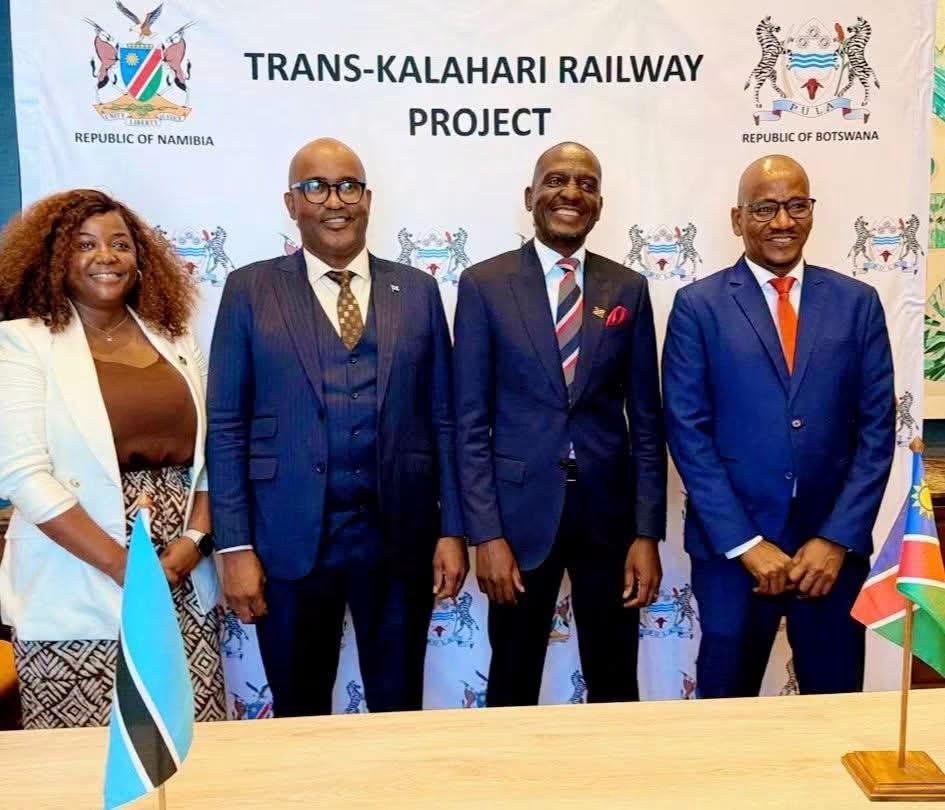
Botswana and Namibia are preparing to take another major step toward developing one of Southern Africa’s most ambitious infrastructure projects, the Trans-Kalahari Railway. The proposed cross-border rail corridor is expected to transform regional trade by improving transport links between Botswana’s mineral-producing regions and Namibia’s Port of Walvis Bay. Valued at approximately P224 billion, or US$16 billion, the railway represents a significant investment in the future of both countries and the wider Southern African Development Community (SADC). Government leaders believe the project has the potential to unlock new economic opportunities, reduce transport costs and strengthen regional integration. As preparations continue for an important ministerial meeting later this month, the railway remains one of the region’s most closely watched development initiatives.
The next phase of the project will be discussed during a Joint Ministerial Meeting scheduled to take place in Kasane. The gathering will bring together ministers, senior government officials and technical experts from Botswana and Namibia to assess the progress made on the flagship railway project. The meeting is expected to focus on several important areas, including implementation timelines, legal and regulatory frameworks, and the findings of ongoing feasibility studies. These discussions are essential to ensuring that both countries remain aligned as they move toward construction. Strong cooperation between the two governments will be critical to delivering a project of this scale successfully.
The Trans-Kalahari Railway has been designed to connect Botswana’s mineral-rich regions directly to the Port of Walvis Bay on Namibia’s Atlantic coast. The railway will link important mining areas, including the Mmamabula coalfields, as well as major iron ore and copper deposits, creating a more efficient route for transporting valuable resources to international markets. Currently, transporting minerals over long distances by road can be costly and less efficient. A dedicated railway corridor offers a more sustainable and cost-effective solution for moving large volumes of freight. Improved transport infrastructure will help mining companies reduce operational expenses while increasing export capacity.
One of the biggest advantages of the railway project is its potential to lower transportation costs for exporters. Rail transport is generally more efficient than road transport when moving bulk commodities such as coal, iron ore and copper over long distances. Lower logistics costs can make Botswana’s mineral exports more competitive in international markets, helping producers reach customers more efficiently. Increased competitiveness may also encourage further investment in the country’s mining sector. By improving access to global markets, the railway could strengthen Botswana’s position as one of Africa’s leading mineral-producing nations.
The Port of Walvis Bay will play a central role in the success of the Trans-Kalahari Railway. As one of Southern Africa’s key deep-water ports, Walvis Bay provides direct access to international shipping routes connecting Africa with Europe, Asia and the Americas. Faster and more reliable transport between Botswana’s mining regions and the port will improve export efficiency while reducing delivery times. This enhanced logistics network is expected to benefit not only Botswana but also Namibia through increased cargo volumes and expanded port operations. The partnership highlights the mutual economic benefits that can be achieved through regional infrastructure development.
Beyond supporting mineral exports, the railway is expected to strengthen regional trade throughout the SADC region. Efficient transport corridors encourage greater movement of goods between neighbouring countries while reducing barriers to trade. Improved connectivity can help businesses expand into new markets, support regional supply chains and encourage greater economic cooperation. Infrastructure projects of this scale often create opportunities for additional investment in manufacturing, warehousing and distribution services. As a result, the Trans-Kalahari Railway could become an important driver of long-term regional economic integration.
The project is also expected to contribute significantly to industrial development in both Botswana and Namibia. Reliable freight transport makes it easier for industries to access raw materials and deliver finished products to domestic and international markets. Improved logistics can attract manufacturers seeking efficient transport networks and stable trade routes. New industrial activity may create demand for supporting services, including engineering, maintenance, construction and technology. These developments have the potential to diversify both economies while reducing dependence on individual sectors.
According to current plans, construction of the railway is anticipated to begin in 2027 after the completion of the ongoing feasibility study. Feasibility studies are an important part of major infrastructure projects because they evaluate technical requirements, environmental considerations, financial viability and potential economic benefits. The findings help governments and investors make informed decisions before construction begins. Completing these assessments also ensures that legal, regulatory and operational frameworks are properly established. Careful planning at this stage increases the likelihood of successful project delivery while reducing future risks.
The construction phase itself is expected to create substantial employment opportunities across a wide range of industries. Thousands of jobs may be generated during the development of the railway, including positions in engineering, construction, project management, logistics and related support services. Local businesses may also benefit from increased demand for accommodation, catering, transportation and other services associated with large-scale infrastructure projects. Once operational, the railway will continue supporting long-term employment through maintenance, operations and logistics management. These economic benefits could have a lasting positive impact on communities located along the railway corridor.
The Trans-Kalahari Railway represents far more than a transport project. It is a strategic investment that has the potential to reshape trade, strengthen regional cooperation and unlock new economic opportunities for Botswana, Namibia and the wider Southern African region. By connecting Botswana’s valuable mineral resources with the Port of Walvis Bay, the railway will improve export efficiency, support industrialisation and encourage greater regional integration. The upcoming Joint Ministerial Meeting in Kasane marks another important milestone as both countries continue working toward implementation. If completed as planned, the P224 billion Trans-Kalahari Railway will position Botswana and Namibia as key transport and trade hubs while creating jobs, attracting investment and supporting sustainable economic growth for decades to come.