
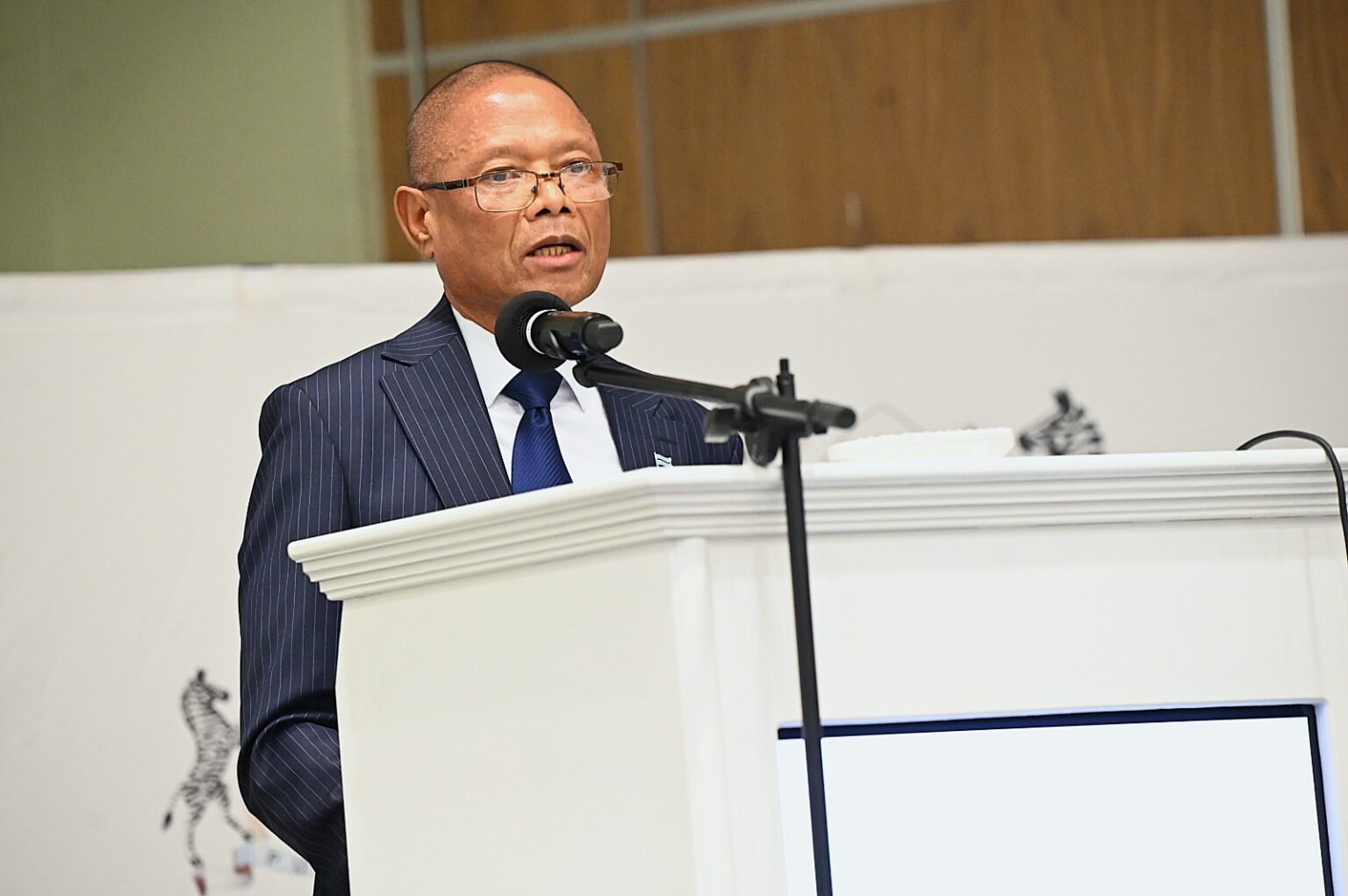
Attorney General Dick Bayford has called for a major shift in how government legal work is handled, urging a move away from reacting to litigation after governance failures and instead focusing on preventing disputes before they occur. He made the remarks during a two day workshop on the Public Service Act No. 5 of 2026 and conditions of service held at Cresta Lodge in Gaborone. The event was organised by the Directorate of Public Service Management, bringing together key stakeholders in the public sector legal and governance space. Bayford stressed that the current approach places too much pressure on legal teams once problems have already escalated. He argued that stronger early intervention can reduce costs, improve decision making, and protect public resources.
Bayford explained that the traditional model of legal engagement often begins too late in the process. In many cases, legal teams are only involved after decisions have already been made and disputes have already formed. He said this reactive approach is no longer sustainable for a modern government administration that deals with complex policy and service delivery demands. According to him, the most effective government legal officer is not defined by courtroom victories but by the ability to prevent disputes from reaching court in the first place. He pushed for legal advisors to be integrated earlier into policy development, procurement, contracting, and disciplinary processes.
The Attorney General revealed the scale of litigation facing his office, highlighting that in 2023 the Attorney General’s Chambers handled 5,221 cases across three stations. He noted that this workload was managed by only 37 attorneys, which translates to an average of about 141 matters per officer. He warned that such high caseloads place significant strain on legal resources and reduce efficiency in handling matters effectively. He also pointed out that litigation carries hidden costs beyond legal fees, including delays in government projects, reputational damage, and disruption of administrative systems. Bayford said that preventing even a single major High Court case could save the state millions in settlements and operational losses.
Bayford further identified several recurring weaknesses in the public service that contribute to legal disputes. These include outdated policies, inconsistent enforcement of rules, weak documentation practices, and poor record keeping. He emphasised that documentation is not just an administrative task but a key legal safeguard that protects institutions during disputes. To address these challenges, his office has already started implementing reforms such as seconding legal officers to ministries and assigning dedicated legal desk officers to departments with high litigation exposure. He said these measures are designed to improve early detection of legal risks and strengthen compliance across government operations.
The workshop concluded with remarks from the Minister of Justice and Correctional Services, Nelson Ramaotwana, who praised the collaborative efforts of all institutions involved in the reform process. He commended the Judiciary for its professionalism and acknowledged the contributions of the Attorney General’s Chambers, the Ministry of Labour, Trade Unions, and the Directorate of Public Service Management. He urged all stakeholders to maintain a spirit of cooperation and shared responsibility in advancing legal reforms. Ramaotwana emphasised that the law must serve citizens fairly and with integrity while supporting efficient governance. The discussions reinforced the need for a stronger preventative legal culture that supports long term development and stability in the public sector.