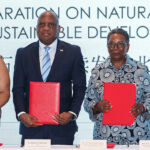

Botswana has taken another important step toward strengthening sustainable development by encouraging the financial sector to become a key partner in protecting the environment while supporting economic growth. The United Nations Development Programme (UNDP) Botswana, in partnership with the Ministry of Environment and Tourism and the Green Finance Mainstreaming Working Group, officially launched a two day Rio Conventions and Taskforce on Nature-related Financial Disclosures (TNFD) Training Workshop at the Avani Hotel in Gaborone. The workshop brings together representatives from government, academia, financial institutions, research organizations, the media and entrepreneurs working in the environmental sector. Its primary objective is to help financial institutions better understand Botswana’s environmental commitments while promoting nature-positive investment and sustainable financing. The initiative reflects a growing recognition that environmental sustainability and economic prosperity are closely connected and must be advanced together.
The workshop is being held under the theme, “Understanding Botswana’s Rio Convention Commitments and the Role of the Financial Sector in Supporting Sustainable Development and Nature-Positive Investment.” This theme highlights the increasing responsibility of banks, investors and financial institutions in helping Botswana achieve its national environmental and development goals. Rather than viewing environmental protection as solely the responsibility of government, the workshop encourages financial organizations to integrate sustainability into their investment decisions and lending practices. Participants are exploring practical ways to align financial systems with national commitments under international environmental agreements. By strengthening collaboration between the public and private sectors, Botswana aims to build a more resilient economy that protects natural resources while supporting long term growth.
Speaking during the official opening, Deputy Permanent Secretary in the Ministry of Environment and Tourism Professor Patricia Mogomotsi emphasized that the workshop’s theme is central to Botswana’s future economic development. She explained that climate change, biodiversity loss and land degradation are no longer distant environmental concerns but immediate challenges that are already affecting key sectors of the economy. Tourism, one of Botswana’s most important industries, depends heavily on healthy ecosystems and thriving wildlife populations. Agriculture continues to face increasing pressure from changing rainfall patterns, prolonged droughts and declining land productivity. Water security has also become a growing concern as climate change places additional strain on limited water resources throughout the country.
Professor Mogomotsi noted that Botswana’s commitments under the Convention on Biological Diversity (CBD), the United Nations Framework Convention on Climate Change (UNFCCC) and the United Nations Convention to Combat Desertification (UNCCD) represent much more than international environmental obligations. She explained that these agreements provide the foundation for long term economic resilience by promoting sustainable management of natural resources, climate adaptation and environmental conservation. Successfully implementing these commitments will help safeguard industries that rely directly on healthy ecosystems while creating new opportunities for sustainable economic development. Environmental protection, she stressed, should be viewed as an investment in Botswana’s future rather than as a cost. Strengthening resilience today will help reduce economic risks and improve national prosperity in the years ahead.
One of the key messages delivered during the workshop was that government funding alone will not be sufficient to achieve Botswana’s ambitious environmental targets. Professor Mogomotsi emphasized that greater participation from the private sector is essential if the country is to mobilize the financial resources needed for sustainable development. Banks, investment firms and other financial institutions have the capacity to direct capital toward projects that promote renewable energy, biodiversity conservation, climate resilience and sustainable agriculture. Encouraging private investment allows governments to expand the scale and impact of environmental initiatives while reducing pressure on public finances. Building strong partnerships between government and the financial industry therefore remains a critical component of Botswana’s sustainable development strategy.
Professor Mogomotsi also commended the work of the UNDP Biodiversity Finance Initiative and the Green Finance Mainstreaming Working Group for promoting dialogue across multiple sectors. Their efforts have created opportunities for government officials, financial institutions, researchers and environmental experts to exchange ideas and identify practical solutions to common challenges. She encouraged financial institutions to view Botswana’s environmental commitments not as regulatory obligations but as opportunities to innovate and expand their services. Green bonds, sustainable lending products and environmentally responsible investment portfolios represent growing areas of opportunity within global financial markets. By embracing these innovations, Botswana’s financial sector can strengthen its competitiveness while contributing to national development goals.
UNDP Botswana Deputy Resident Representative Ms. Josephine Lewis explained that the training workshop was developed in response to feedback received from financial stakeholders during consultations held in April 2026. Participants at those discussions requested practical guidance on environmental, social and governance principles, Botswana’s national environmental targets and available investment opportunities. The workshop has therefore been designed to provide participants with practical knowledge that can be applied directly within financial institutions. Rather than focusing only on theory, the programme encourages participants to develop strategies that integrate sustainability into everyday financial decision making. This practical approach aims to build long lasting institutional capacity across the financial sector.
Ms. Lewis emphasized that sustainable development can no longer be treated as a separate corporate social responsibility activity. Instead, she encouraged financial institutions to integrate nature-positive investments into their core business operations, lending policies and investment strategies. Embedding sustainability into financial decision making allows institutions to better manage environmental risks while identifying new commercial opportunities. Investors around the world are increasingly considering environmental performance when making investment decisions, making sustainable finance an important area of future growth. Botswana’s financial sector therefore has an opportunity to position itself as a leader in responsible investment within the region.
Throughout the workshop, speakers consistently highlighted the importance of treating environmental goals as drivers of innovation rather than obstacles to economic growth. Financial institutions are being encouraged to develop products and services that support businesses committed to sustainable practices while promoting investments that protect biodiversity and natural ecosystems. Innovation in green finance has the potential to stimulate entrepreneurship, create employment opportunities and strengthen Botswana’s resilience against environmental challenges. Participants are expected to contribute ideas that will help shape a practical roadmap for the country’s financial industry by the conclusion of the workshop. This roadmap is intended to provide clear guidance on how financial institutions can actively support Botswana’s sustainability objectives.
The broad participation at the workshop reflects the importance of cross sector collaboration in achieving meaningful environmental progress. Representatives from academia, research institutions, the media, financial organizations and environmental enterprises each bring valuable expertise and perspectives to the discussions. Such diversity encourages knowledge sharing while strengthening partnerships that extend beyond the duration of the workshop. Collaboration between different sectors is essential because environmental challenges affect every part of the economy and require coordinated responses. By bringing together experts from multiple disciplines, Botswana is creating stronger foundations for sustainable development and informed decision making.
The Rio Conventions and TNFD Training Workshop represents an important milestone in Botswana’s journey toward a more sustainable and resilient economy. Through the partnership between UNDP Botswana, the Ministry of Environment and Tourism and the Green Finance Mainstreaming Working Group, the country is encouraging its financial sector to become an active partner in environmental protection and economic transformation. The discussions have demonstrated that sustainable finance is not only beneficial for conservation but also essential for strengthening long term economic resilience, protecting natural resources and supporting future investment opportunities. As participants work toward developing a practical roadmap for the financial industry, Botswana is positioning itself to harness the power of green finance in achieving its national development goals. Continued collaboration between government, financial institutions and development partners will play a vital role in building a prosperous economy that values both people and nature.