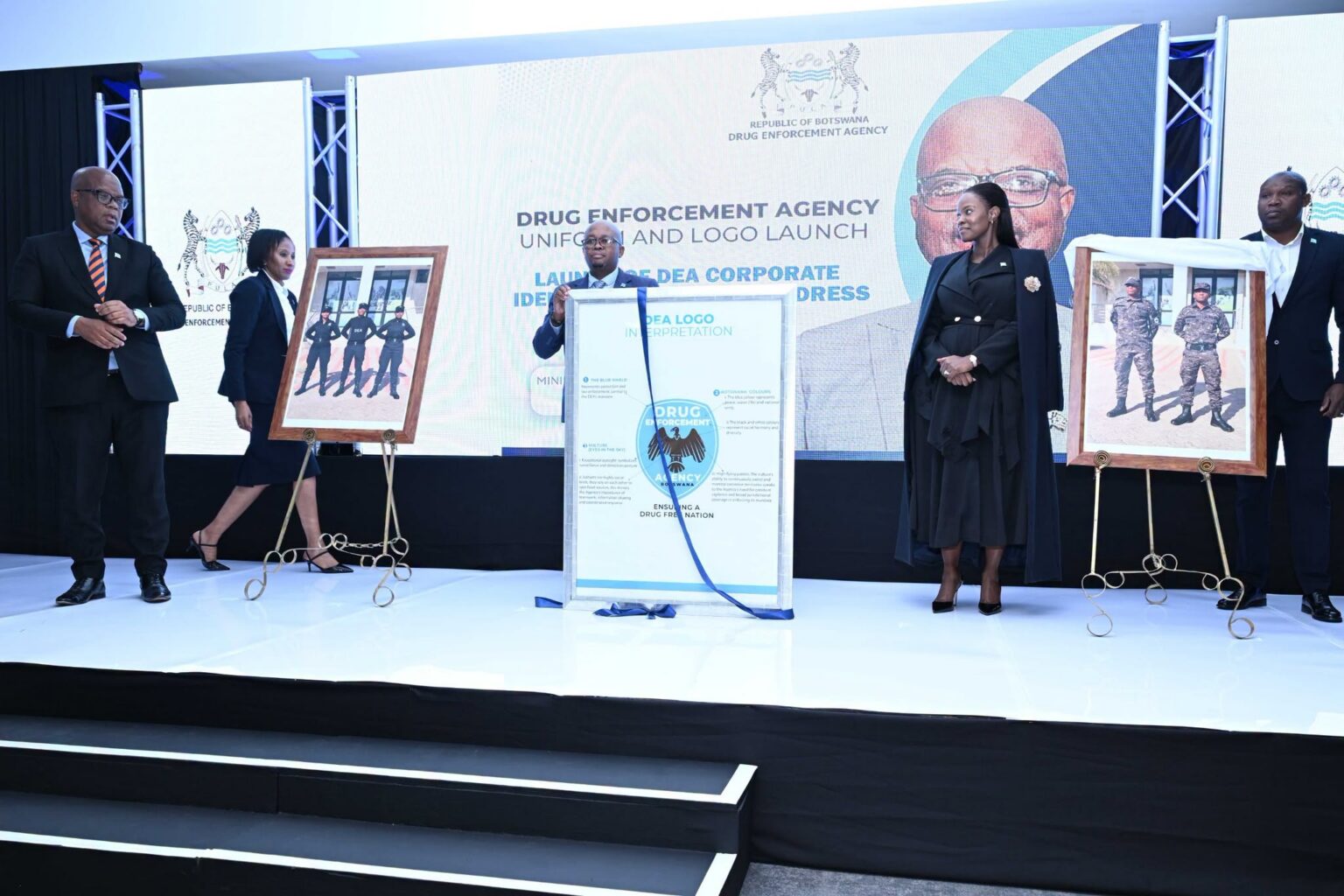
Botswana has taken another important step in strengthening its fight against illicit drugs with the official unveiling of a new corporate identity for the Drug Enforcement Agency (DEA). The launch of the Agency’s new logo and uniform represents more than a visual transformation, as it reflects a renewed commitment to public safety, law enforcement and community engagement. The initiative aims to improve the Agency’s visibility while reinforcing its role in protecting citizens from the growing threat of drug trafficking and substance abuse. Government leaders have also emphasized that tackling drug-related challenges requires a balanced approach that combines strict law enforcement with compassion for those struggling with addiction. The announcement highlights Botswana’s determination to build stronger institutions capable of responding effectively to evolving criminal activities while supporting rehabilitation and recovery efforts.
The introduction of the DEA’s new logo and uniform was announced during an official launch attended by government officials and stakeholders committed to strengthening national security. Director General Phemelo Ramakorwane explained that the refreshed corporate identity is intended to enhance the Agency’s public image and make it more easily recognizable across the country. A stronger visual identity can improve communication between the DEA, government departments, private organizations and members of the public. It also creates consistency in how the Agency presents itself during operations, awareness campaigns and community engagements. By establishing a recognizable brand, the DEA hopes to encourage greater public trust and improve cooperation in the fight against illegal drugs.
According to Director General Ramakorwane, the updated identity is also designed to strengthen collaboration with stakeholders who play a vital role in combating drug-related crimes. Drug enforcement often depends on partnerships involving law enforcement agencies, healthcare providers, educational institutions and community organizations. A clearly identifiable agency helps build confidence among these partners while encouraging information sharing and coordinated responses. Improved visibility also supports public education campaigns by making it easier for citizens to identify official DEA officers and access reliable information. This coordinated approach is expected to strengthen Botswana’s broader national strategy against illicit drugs.
Launching the new identity, Minister for State President, Defence and Security Moeti Mohwasa described the occasion as a clear demonstration of the government’s commitment to protecting its people and upholding the rule of law. He stated that the initiative reinforces Botswana’s determination to intensify efforts against the growing threat posed by illegal drugs. Drug trafficking continues to challenge law enforcement agencies across many countries, with criminal networks adapting their methods to evade detection. Botswana has recognized the importance of strengthening its institutions to respond effectively to these changing threats. The DEA’s updated image therefore symbolizes a broader effort to modernize the Agency while increasing its operational effectiveness.
Minister Mohwasa highlighted the serious consequences that drug trafficking and substance abuse have on individuals, families and communities throughout Botswana. Young people remain particularly vulnerable, with addiction affecting education, employment opportunities and long-term health. Communities also face increased crime, social instability and economic hardship when drug abuse becomes widespread. The Minister stressed that addressing these challenges requires continued vigilance from law enforcement agencies alongside active participation from parents, educators, community leaders and civil society organizations. Preventing drug abuse is therefore seen as a shared responsibility that extends beyond government institutions alone.
While emphasizing accountability for those involved in drug trafficking and distribution, Minister Mohwasa also called for compassion toward individuals battling addiction. He noted that addiction should not automatically define a person’s future, especially when treatment and rehabilitation opportunities are available. Rehabilitation services provide people with the support needed to overcome substance dependence and reintegrate into society. Offering individuals a second chance not only benefits them personally but also strengthens families and communities affected by addiction. This balanced approach reflects a growing understanding that successful drug policies combine enforcement with public health and social support initiatives.
The Minister also acknowledged several significant milestones achieved since the establishment of Botswana’s Drug Enforcement Agency. Among these accomplishments is the successful recruitment and training of the Agency’s first officers, creating a dedicated workforce focused specifically on combating drug-related crimes. These officers have undergone specialized preparation to investigate drug trafficking, support enforcement operations and engage with communities. Another important development is the near completion of the DEA headquarters along with regional operational offices, which will improve the Agency’s ability to coordinate activities across Botswana. Expanded infrastructure will help ensure quicker responses to emerging threats while supporting more efficient operations nationwide.
The expansion of operational facilities is expected to strengthen the DEA’s long-term effectiveness by improving coordination and resource management. Modern headquarters provide space for strategic planning, intelligence gathering and administrative functions that support frontline enforcement activities. Regional offices also allow officers to respond more rapidly to incidents within their respective areas while maintaining closer relationships with local communities. Better infrastructure contributes to improved communication between different branches of the Agency and enhances collaboration with other security services. These investments demonstrate Botswana’s commitment to building a capable institution prepared to address increasingly complex drug-related challenges.
During the event, Tlokweng Member of Parliament Phenyo Segokgo delivered an important message regarding rehabilitation and public attitudes toward addiction. He urged the nation to eliminate the stigma that often surrounds rehabilitation centres and those seeking treatment. Many people avoid asking for help because they fear judgment, discrimination or social exclusion. Such barriers can delay recovery and allow addiction to worsen over time. By encouraging greater acceptance and understanding, Botswana can create an environment where more individuals feel comfortable seeking the assistance they need.
Segokgo emphasized that rehabilitation centres play a critical role in restoring lives, rebuilding families and offering hope to people affected by substance abuse. Recovery programs provide medical care, counselling, life skills training and emotional support that help individuals regain stability. Successful rehabilitation also benefits communities by reducing crime, improving family relationships and increasing opportunities for education and employment. Supporting rehabilitation should therefore be viewed as an investment in public health and national development rather than simply a response to addiction. Greater public awareness can help communities understand the positive outcomes that rehabilitation programmes can achieve.
The unveiling of Botswana’s new DEA logo and uniform represents far more than a change in appearance. It symbolizes a renewed commitment to protecting communities, strengthening law enforcement and promoting cooperation between government agencies and the public. At the same time, national leaders have reinforced the importance of combining firm action against drug traffickers with compassion and rehabilitation for individuals affected by addiction. Continued investment in trained personnel, modern facilities and public awareness initiatives positions the Drug Enforcement Agency to play an even greater role in safeguarding Botswana’s future. As the country continues strengthening its response to illicit drugs, the new corporate identity stands as a visible reminder of the shared responsibility to create safer communities and offer hope to those seeking recovery.