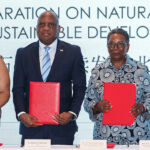

Botswana has taken another important step in advancing climate governance with the official opening of the South to South Peer to Peer Exchange on building sustainable institutional arrangements for the Enhanced Transparency Framework. The four day event, taking place in Gaborone, has brought together climate experts, policymakers and government representatives from Botswana, South Africa, Namibia, Zimbabwe, Eswatini, Uganda and Malawi. Hosted by Botswana’s Ministry of Environment and Tourism, the exchange provides a valuable platform for participating countries to strengthen cooperation while sharing practical experiences in climate reporting and institutional development. The gathering highlights the growing importance of transparency in implementing international climate commitments and ensuring that countries remain accountable for their environmental actions. Through collaboration and knowledge sharing, the event aims to strengthen regional capacity while supporting sustainable climate governance across Southern and Eastern Africa.
The exchange is supported by the Capacity Building Initiative for Transparency Global Support Programme, the United Nations Environment Programme and the United Nations Development Programme. These international partners continue to play an important role in helping developing countries build the technical and institutional capacity required to meet their reporting obligations under global climate agreements. Their support extends beyond financial assistance by providing technical expertise, training opportunities and platforms for countries to exchange knowledge and best practices. By working closely with national governments, these organizations contribute to stronger climate reporting systems that improve decision making and policy implementation. The partnership also demonstrates the value of international cooperation in addressing shared environmental challenges that affect countries across the world.
The event was officially opened by the Deputy Permanent Secretary for Corporate Services, Ms. Neo Sebolao, who emphasized the significance of the Enhanced Transparency Framework under the Paris Agreement. In her opening remarks, she explained that transparency forms the foundation of trust and accountability among countries working together to address climate change. Reliable reporting allows governments and international partners to monitor progress, identify challenges and strengthen climate action based on accurate information. Ms. Sebolao acknowledged that substantial progress has already been achieved globally, with more than 125 Biennial Transparency Reports submitted by countries participating in the framework. She noted, however, that producing reports is only one part of the process, while sustaining long term institutional coordination remains the greater challenge.
Ms. Sebolao stressed that one of the most important priorities is embedding transparency into national systems rather than treating reporting as an isolated exercise. Strong institutional arrangements ensure that climate reporting becomes a routine government function supported by effective legislation, clear responsibilities and ongoing collaboration between different ministries and agencies. Such systems improve consistency, strengthen data quality and enable countries to meet future reporting obligations more efficiently. She explained that sustainable institutional arrangements are essential for ensuring continuity even when government structures or personnel change over time. Building these systems creates a stronger foundation for long term climate planning and national accountability.
A key issue highlighted during the opening ceremony was Botswana’s first Biennial Transparency Report, which remains overdue. Ms. Sebolao noted that this reality makes the current peer exchange particularly important as the country works to accelerate its reporting efforts while strengthening its institutional and legal frameworks. She emphasized that learning directly from neighboring countries that have already completed similar reporting processes provides practical insights that can help Botswana overcome existing challenges. The exchange offers an opportunity to identify successful approaches while adapting proven solutions to Botswana’s national context. This collaborative learning process is expected to contribute significantly to improving the country’s readiness for future reporting cycles.
Another notable feature of the event is the participation of Members of Parliament, reflecting the recognition that climate transparency extends beyond technical reporting. Ms. Sebolao welcomed their involvement, explaining that transparency is fundamentally a matter of governance, accountability and national ownership. Legislators have an important role in developing legal frameworks, approving policies and supporting institutional reforms that enable effective climate reporting. Their participation also helps strengthen political commitment to climate action while ensuring that transparency becomes integrated into broader national development priorities. Bringing together technical experts and political leaders creates stronger alignment between policy development and practical implementation.
Throughout the four day programme, delegates will participate in discussions and knowledge sharing sessions covering several critical components of the Enhanced Transparency Framework. These include greenhouse gas inventories, which provide detailed information on national emissions, as well as tracking progress toward Nationally Determined Contributions under the Paris Agreement. Participants will also examine adaptation reporting, enabling countries to document efforts that strengthen resilience against climate change impacts. Institutional coordination will receive significant attention as delegates explore practical ways to improve collaboration between government departments and other stakeholders. These discussions are expected to generate practical recommendations that participating countries can apply within their own national reporting systems.
One of the primary outcomes expected from the exchange is the development of a clear roadmap that supports future Biennial Transparency Report cycles across participating countries. By identifying common challenges and sharing practical solutions, delegates will contribute to stronger regional cooperation in climate reporting and institutional development. Improved transparency systems provide governments with more reliable information for policy formulation while enhancing confidence among international partners and development institutions. Strong reporting mechanisms also allow countries to better demonstrate progress toward their climate commitments while identifying areas requiring additional support or investment. These improvements ultimately strengthen the effectiveness of national and regional climate action.
The South to South Peer to Peer Exchange in Gaborone represents an important milestone in strengthening climate transparency and regional collaboration under the Paris Agreement. By bringing together government officials, technical experts, legislators and international partners, the event creates a valuable opportunity to exchange knowledge, build institutional capacity and develop practical solutions for future climate reporting. The emphasis on sustainable institutional arrangements reflects the growing understanding that effective transparency depends on strong governance systems supported by national ownership and long term commitment. Botswana’s determination to accelerate its Biennial Transparency Report while learning from regional partners demonstrates its commitment to improving climate accountability and meeting international obligations. As delegates work together over the coming days, the exchange is expected to lay the foundation for stronger reporting systems, improved cooperation and more effective climate action across the participating countries.