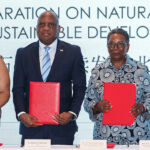

Botswana has taken a major step toward strengthening its tourism industry with the launch of the Tourism Satellite Account (TSA) and the Tourism Statistics System (TSTATS). These new tools are expected to transform the way tourism data is collected, analysed and used to support economic growth and national development. As tourism continues to play a vital role in Botswana’s economy, accurate and reliable information has become increasingly important for effective planning and informed decision making. The launch reflects the country’s commitment to adopting internationally recognised standards while improving transparency and accountability across the tourism sector. By embracing modern technology and better data management, Botswana is positioning itself to compete more effectively in the global tourism market.
Minister of Environment and Tourism Wynter Mmolotsi officially launched Botswana’s Tourism Satellite Account, describing it as a significant milestone in the country’s efforts to strengthen tourism planning and economic measurement. The Tourism Satellite Account is an internationally recognised framework developed by the United Nations and the World Tourism Organization to accurately measure tourism’s contribution to national economies. Unlike traditional tourism reports, the TSA provides a comprehensive picture of how tourism contributes to gross domestic product, employment, investment and other key economic indicators. This internationally accepted framework allows governments to understand the true value of tourism and its influence on multiple sectors of the economy. For Botswana, adopting this system represents an important move toward producing more reliable and internationally comparable tourism statistics.
The Tourism Satellite Account provides policymakers and stakeholders with detailed information that goes beyond visitor numbers and accommodation statistics. It captures the broader economic impact of tourism by measuring spending, production, employment and business activities connected to the industry. This allows decision-makers to identify opportunities for growth while addressing challenges that may limit the sector’s performance. Reliable data also helps governments allocate resources more effectively and develop policies based on measurable outcomes rather than assumptions. As a result, Botswana will be better equipped to maximise the benefits generated by tourism for its people and its economy.
Alongside the Tourism Satellite Account, Minister Mmolotsi also launched the Tourism Statistics System, commonly known as TSTATS, together with its accompanying mobile application. The new digital platform modernises how tourism information is collected, managed and shared across the country. Through the mobile application, tourism operators and stakeholders can submit information in real time, significantly reducing reporting delays and improving data accuracy. Faster access to information enables government officials and industry leaders to monitor tourism trends more efficiently while responding quickly to changes within the sector. The digital transformation also reduces the administrative burden associated with manual reporting processes.
According to Minister Mmolotsi, the Tourism Statistics System will serve as the foundation for compiling future Tourism Satellite Accounts. By creating a consistent and reliable source of tourism data, Botswana will be able to produce annual tourism accounts with greater confidence and full national ownership. This represents an important shift toward sustainable data management that reduces reliance on external sources while strengthening local institutional capacity. Consistent annual reporting will also make it easier to identify long-term trends and evaluate the effectiveness of tourism policies. These improvements will support more informed planning and contribute to the continued development of Botswana’s tourism industry.
The Minister explained that the new system would significantly strengthen evidence-based policymaking across the tourism sector. Governments depend on accurate statistics to make informed decisions regarding infrastructure investment, destination development, marketing strategies and conservation efforts. With improved access to reliable information, policymakers can identify areas requiring support while measuring the success of existing programmes. Better data also increases accountability by allowing stakeholders to assess whether tourism initiatives are delivering the intended economic and social benefits. This evidence-driven approach supports more effective governance while encouraging sustainable tourism growth.
Transparency was another key benefit highlighted during the launch of the new tourism tools. Minister Mmolotsi noted that accurate and accessible tourism data builds confidence among investors, development partners and industry stakeholders. Investors are more likely to commit resources when they have access to credible information demonstrating market performance and future growth potential. Transparent reporting also strengthens trust between government and the private sector by providing a shared understanding of industry trends and economic opportunities. This openness creates a stronger foundation for collaboration and long-term investment in Botswana’s tourism sector.
Minister Mmolotsi further stated that the Tourism Satellite Account and Tourism Statistics System position Botswana alongside other countries that use internationally recognised methods for measuring tourism performance. The ability to benchmark Botswana’s tourism sector against global standards allows the country to evaluate its competitiveness and identify opportunities for improvement. International comparisons also strengthen Botswana’s reputation as a destination committed to transparency, professionalism and high-quality governance. As global competition for tourism investment continues to increase, reliable statistics become an important tool for attracting international partners and promoting confidence in the country’s tourism industry. These systems therefore contribute not only to national planning but also to Botswana’s global visibility.
The Minister emphasized that tourism statistics should not be viewed solely as government planning tools. He explained that behind every tourism statistic are real people whose livelihoods depend on the success of the industry. Tourism supports jobs in accommodation, transport, food services, conservation, cultural heritage, guiding services and many other sectors across Botswana. Strong tourism performance creates opportunities for entrepreneurs, small businesses and rural communities that benefit from visitor spending. Accurate measurement of these contributions helps ensure that future policies continue to support inclusive economic growth and community development.
Recognising the important role played by businesses, Minister Mmolotsi encouraged the private sector to actively use the Tourism Satellite Account and tourism expenditure data to drive innovation and improve competitiveness. Access to detailed market information enables businesses to better understand customer behaviour, identify emerging trends and develop products that meet changing visitor expectations. Companies can also use reliable statistics to strengthen business planning, attract investment and expand into new markets. Collaboration between government and the private sector will be essential for ensuring that the benefits of these new systems are fully realised. By working together, Botswana’s tourism industry can continue to grow while creating more employment opportunities and generating greater economic value.
The launch of Botswana’s Tourism Satellite Account and Tourism Statistics System marks a significant milestone in the country’s tourism development journey. By adopting internationally recognised measurement standards and embracing digital innovation, Botswana is strengthening its ability to monitor tourism performance with greater accuracy and transparency. The new tools will support better policymaking, attract investment and provide valuable insights that benefit government, businesses and local communities alike. As tourism continues to contribute to livelihoods, employment and national economic growth, reliable data will become an increasingly valuable resource for shaping the sector’s future. Botswana’s commitment to modern tourism statistics demonstrates its readiness to compete on the global stage while building a stronger, more sustainable and inclusive tourism industry for years to come.