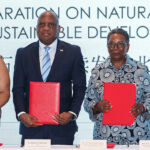

Botswana has reached a significant milestone in the growth of its agricultural sector with the official launch of its inaugural weekly export of 90,000 hatching eggs to the Republic of Mozambique. The launch represents a major step forward for the country’s poultry industry and demonstrates Botswana’s growing ability to compete in regional agricultural markets. The initiative, led by Ross Breeders, establishes the foundation for a long-term export programme that is expected to strengthen the country’s economy while expanding opportunities for local producers. It also reflects the increasing role of agriculture in Botswana’s broader economic diversification strategy. By successfully entering the regional export market with high-quality poultry products, Botswana is positioning itself as a trusted supplier while creating new opportunities for investment, employment and sustainable growth.
The official launch was led by the Minister of Lands and Agriculture, Dr Edwin Gorataone Dikoloti, who described the export programme as an important achievement for Botswana’s agricultural future. He praised the successful collaboration between government and the private sector, highlighting how supportive policies can help businesses expand into international markets. The Minister emphasized that the export initiative is more than a commercial achievement because it also contributes directly to national development through job creation and increased economic activity. The launch sends a strong message that Botswana’s agricultural sector is capable of producing goods that meet international quality standards. It also reinforces the government’s commitment to building competitive agricultural industries that contribute to food security and export earnings.
Ross Breeders has emerged as a key driver behind this development by establishing a reliable production system capable of supporting continuous exports. The company has committed to exporting 90,000 hatching eggs to Mozambique every week, creating a stable supply chain that benefits both countries. This sustained export programme provides confidence to buyers while allowing Botswana to build a strong reputation in the regional poultry industry. Regular exports also encourage long-term planning, investment in production facilities and continuous improvements in quality standards. Such consistency is essential for maintaining customer confidence and securing future export opportunities in additional markets across Southern Africa.
One of the most immediate benefits of the project has been its contribution to employment. According to Dr Dikoloti, the initiative has already created 370 direct jobs, providing income for hundreds of households while supporting local economic development. Employment opportunities generated by agricultural projects often have a positive ripple effect throughout surrounding communities by increasing demand for goods, transport, housing and services. The growth of the poultry sector also creates opportunities for suppliers of feed, equipment, packaging, veterinary services and logistics. As production expands, even more indirect employment opportunities are expected to emerge across the agricultural value chain.
The Ministry of Lands and Agriculture has reaffirmed its commitment to supporting the continued growth of Botswana’s poultry industry. Dr Dikoloti stated that the government will continue improving market access for producers while strengthening certification processes that are essential for international trade. Efficient certification systems help ensure that exported agricultural products comply with the health and quality standards required by importing countries. The Ministry also plans to reinforce veterinary services to maintain high levels of animal health and disease prevention. These measures are expected to increase Botswana’s competitiveness while protecting the reputation of its agricultural exports.
The Minister also used the occasion to encourage Batswana to take advantage of the support programmes offered by the Ministry of Lands and Agriculture. He urged entrepreneurs, farmers and aspiring agricultural businesses to approach the Ministry for assistance in developing their business ideas and expanding existing operations. Access to technical guidance, training and government support can help reduce barriers that often prevent small businesses from entering the agricultural sector. By working closely with farmers and investors, the Ministry aims to unlock greater economic potential throughout the country. Encouraging entrepreneurship within agriculture remains an important part of Botswana’s efforts to diversify its economy beyond traditional industries.
Dr Dikoloti also reminded citizens about the broader vision for Botswana’s livestock sector by clarifying the meaning of BMC, which stands for Botswana Meat Commission and not Botswana Beef Commission. His remarks highlighted the importance of encouraging farmers to diversify into different types of meat production instead of relying exclusively on beef. Expanding poultry, goat, sheep and other livestock industries can improve national food security while reducing dependence on a single agricultural product. Diversification also helps protect farmers from market fluctuations that may affect one particular industry. Developing multiple livestock sectors strengthens the country’s resilience while creating new export opportunities across regional markets.
Ross Breeders Managing Director Allen Bradford shared details about the company’s production capabilities and future expansion plans during the launch. He explained that the company intends to maintain a weekly export schedule of the same quantity of hatching eggs, demonstrating confidence in its production capacity and long-term market demand. The exported hatching eggs are produced at the company’s breeder farm in Artesia, where three production sites are currently operating with a capacity of 31,000 female breeder birds each. In addition, two more production sites are already in the development stage, further increasing the company’s ability to meet growing demand. These investments provide a strong foundation for expanding Botswana’s poultry production capacity in the coming years.
Bradford emphasized that Ross Breeders is committed to supplying farmers with high-quality chicks that offer strong genetic performance and improved productivity. High-quality breeding stock plays an essential role in improving poultry production by delivering healthier birds, better growth rates and increased efficiency for commercial farmers. Investing in superior genetics allows producers to achieve higher yields while maintaining consistent quality across the industry. This commitment to excellence supports Botswana’s ambition of becoming a leading poultry producer within the Southern African region. It also helps local farmers become more competitive in both domestic and export markets.
Another important message delivered by Bradford was the need for Botswana to become increasingly self-reliant in food production. Building domestic production capacity reduces dependence on imported poultry products while strengthening national food security. Greater self-sufficiency also helps retain more economic value within the country by supporting local businesses, creating employment and encouraging investment in agricultural infrastructure. As Botswana continues expanding its poultry sector, local farmers and businesses will have greater opportunities to participate in a growing and increasingly sophisticated agricultural industry. Self-reliance also improves the country’s ability to respond to changing market conditions and regional food supply challenges.
The launch of Botswana’s inaugural weekly export of 90,000 hatching eggs to Mozambique represents much more than a successful trade agreement. It reflects years of investment, collaboration and strategic planning aimed at transforming Botswana into a regional leader in poultry production. With strong government support, private sector investment and a clear commitment to quality, the country’s poultry industry is well positioned for continued growth. The creation of hundreds of jobs, ongoing expansion of production facilities and focus on self-reliance demonstrate the broader economic benefits of agricultural development. As Ross Breeders continues its weekly exports and Botswana strengthens its poultry value chain, this milestone is likely to serve as the beginning of an even more successful future for the nation’s agricultural sector.