The Botswana Police Service (BPS) and the South African Police Service (SAPS) have reaffirmed their commitment to strengthening cooperation in the fight against cross-border crime. The two law enforcement agencies are prioritising intelligence sharing, coordinated operations and improved investigative capacity to address criminal activities affecting communities along the Botswana-South Africa border. Their renewed partnership focuses particularly on stock theft, vehicle-related offences and organised criminal networks that operate across national boundaries. The commitment follows a bilateral engagement held in Gaborone from 16 to 19 November 2026. The meeting reflects growing recognition that effective policing requires cooperation, timely information exchange and coordinated responses to criminal threats that extend beyond individual countries.
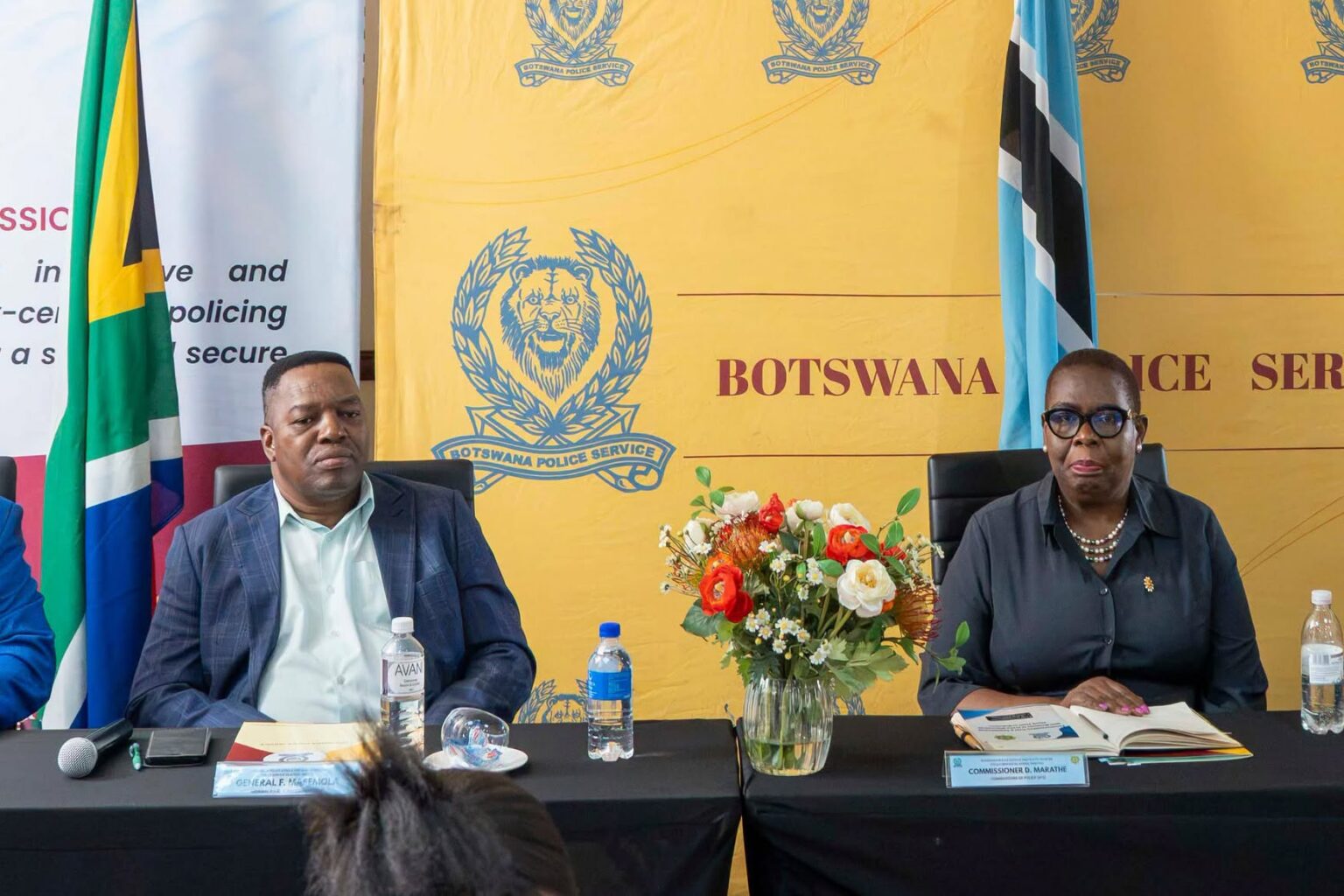
The engagement was led by Botswana Police Service Commissioner Dinah Marathe and South African Police Service National Commissioner General Sehlahle Fannie Masemola. Their discussions focused on strengthening existing law enforcement relationships and developing practical strategies to address shared security challenges. Both police services acknowledged the importance of working together to prevent crime, identify suspects and disrupt criminal networks operating across the border. Criminals who move stolen livestock, vehicles or other goods between countries often exploit jurisdictional boundaries to evade arrest and investigation. Stronger cooperation between the two police agencies is expected to improve their ability to track criminal activities, respond to incidents and bring offenders before the law.
A key outcome of the bilateral engagement is the development of a joint action plan aimed at improving operational coordination between the BPS and SAPS. The proposed plan will focus on coordinated policing operations, intelligence sharing and strengthening investigative capacity. These measures are intended to improve communication between officers, support evidence-based investigations and enable both services to respond more effectively to emerging criminal threats. Intelligence sharing will play an important role in identifying suspects, tracking stolen property and understanding criminal patterns across border communities. By combining information and resources, the two agencies aim to close gaps that organised criminals may exploit.
Stock theft remains one of the major concerns discussed during the engagement, particularly in rural communities where livestock represents an important source of income, food security and economic stability. Cattle theft can place significant financial pressure on farmers and livestock owners, especially those who depend on their animals for their livelihoods. Criminal groups may transport stolen livestock across borders, making recovery efforts more difficult when investigations involve different jurisdictions. Cooperation between Botswana and South Africa could improve the tracing of stolen animals, the identification of suspects and the exchange of information about suspected stock theft syndicates. Coordinated operations and stronger investigative collaboration could also help deter criminals who target farming communities on both sides of the border.
Vehicle-related crime was another priority area addressed by the two police services. Vehicle theft, the movement of stolen vehicles across borders and related criminal activities present challenges that require cooperation between law enforcement agencies. Criminals may use border routes to move stolen vehicles, conceal their origins or evade detection by authorities. Improved intelligence sharing could help officers identify suspicious vehicles, verify ownership information and investigate criminal networks involved in vehicle theft and trafficking. Joint operations could also strengthen border surveillance and improve the response to reported incidents. Greater cooperation between the BPS and SAPS is expected to support efforts to disrupt these activities and protect motorists, businesses and communities.
The two commissioners also recognised the threat posed by organised criminal networks that operate across national borders. These groups may exploit weaknesses in law enforcement coordination, communication systems and investigative processes to carry out criminal activities. Addressing organised crime requires more than isolated arrests because investigators must identify the individuals, structures and connections behind criminal operations. The joint action plan is expected to strengthen the ability of both police services to investigate complex cases and share information about suspects and criminal activities. Greater operational coordination could help authorities respond to criminal networks more systematically and improve the effectiveness of cross-border investigations.
Community involvement also featured prominently during the bilateral engagement. Commissioner Marathe and General Masemola met Dikgosi and members of the mophato near the Ramatlabama border to discuss stock theft and the role of communities in preventing crime. The meeting provided an opportunity to engage traditional leadership and local community structures on the challenges affecting residents in border areas. Community members often possess valuable information about suspicious activities, unfamiliar vehicles and movements that may be linked to criminal operations. Building trust between residents and law enforcement officers can encourage people to report crime and share information that supports investigations. The engagement highlighted the importance of combining police intelligence with community knowledge to improve crime prevention.
Traditional leaders play an important role in promoting cooperation and encouraging communities to take responsibility for local safety. In rural areas, relationships between farmers, livestock owners, residents and police officers can help identify emerging threats before criminal activities escalate. Discussions with Dikgosi and members of the mophato also reinforce the importance of local leadership in supporting crime prevention initiatives. Community participation can strengthen awareness of reporting procedures, improve communication with police and encourage collective action against stock theft. Effective partnerships between law enforcement and traditional authorities can contribute to safer communities and more responsive policing along the border.
Commissioner Marathe emphasised the need for a united approach to cross-border crime, calling for “one border, one intelligence quotient, one response”. Her statement reflects the importance of treating shared border security challenges as a collective responsibility rather than separate national problems. Criminal activities that begin in one country may have consequences for communities in another, making cooperation essential at every stage of prevention and investigation. A coordinated response can improve the exchange of intelligence, reduce delays in communication and strengthen the ability of officers to act on information. The message from both commissioners underscores the importance of unity, trust and practical cooperation in addressing criminal threats.
The bilateral engagement also highlights the broader importance of regional security cooperation between Botswana and South Africa. The two countries share economic, social and geographical connections that make border security a priority for both governments and their communities. Effective policing can help protect legitimate trade, support the movement of people and goods and strengthen confidence among residents living near border areas. Cooperation between police agencies can also contribute to wider regional efforts to address organised crime and improve public safety. Stronger law enforcement relationships are particularly important when criminal networks operate across several jurisdictions and require coordinated investigations.
The success of the proposed joint action plan will depend on its implementation, the consistency of intelligence sharing and the ability of both police services to maintain effective communication. Coordinated operations will require clear procedures, operational planning and cooperation between officers working at different levels of the two organisations. Investigative capacity will also be important, particularly when dealing with complex cases involving multiple suspects, stolen property and criminal networks. Continued engagement with border communities could strengthen these efforts by encouraging information sharing and building public trust. Practical measures and sustained cooperation will determine how effectively the commitments made in Gaborone translate into results on the ground.
The Botswana Police Service and South African Police Service have taken an important step towards strengthening their partnership against cross-border crime. Their commitment to intelligence sharing, joint operations and improved investigative capacity addresses major concerns involving stock theft, vehicle-related offences and organised criminal networks. The engagement with traditional leaders and community members near Ramatlabama further demonstrates that effective crime prevention requires cooperation between police and the public. As the two agencies work towards implementing their joint action plan, their shared approach could strengthen border security and improve protection for affected communities. Their commitment to a united response sends a clear message that cross-border criminal activity requires coordinated action, shared intelligence and sustained cooperation between Botswana and South Africa.