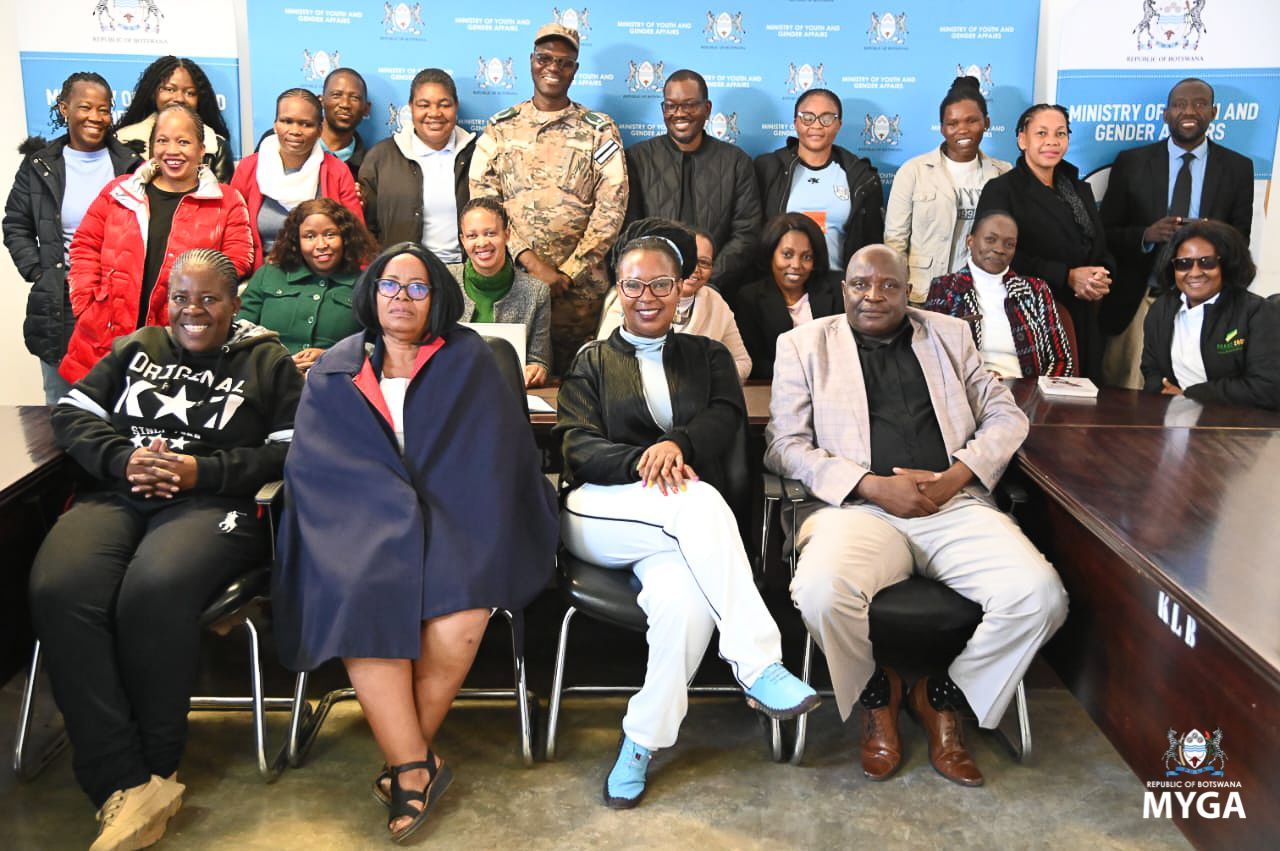
The conclusion of the hybrid District Gender Committee capacity building workshop in Letlhakeng placed a strong spotlight on the urgent need for inclusive and equitable education across all sectors of society. Participants and facilitators engaged in meaningful discussions around the persistent gender disparities in education, particularly in Science, Technology, Engineering and Mathematics subjects. The workshop highlighted growing concerns over the lower enrollment of female students in STEM fields when compared to their male counterparts. Stakeholders agreed that these inequalities continue to affect long term development goals and limit opportunities for young women and girls. The discussions also reinforced the importance of collaboration between education authorities, gender advocates and community leaders to create solutions that promote equal access to quality education.
One of the major issues raised during the workshop was the imbalance in STEM subject enrollment between boys and girls. Statistics presented during the discussions revealed that male students continue to dominate enrollment numbers in science and technology related subjects, while female participation remains significantly lower. This trend has raised concern among gender experts and education stakeholders because STEM education plays a critical role in shaping future careers and economic opportunities. Participants noted that when girls are underrepresented in these subjects, they are often excluded from many high paying and influential career paths. The workshop emphasized that closing this gap is necessary for creating balanced economic growth and ensuring that women are equally represented in innovation driven industries.
When addressing participants virtually, Budani Madandume stressed that inequalities in education remain a major obstacle to achieving Sustainable Development Goal 4. He explained that the goal focuses on ensuring inclusive and equitable quality education while promoting lifelong learning opportunities for all people regardless of gender or background. Mr Madandume pointed out that educational inequality affects communities at multiple levels because it limits social mobility, weakens economic participation and reinforces long standing gender stereotypes. He encouraged participants to recognize that equal access to education is not only a human rights issue but also a development priority. His remarks reinforced the importance of creating educational systems that empower both boys and girls equally.
The workshop also encouraged education sector representatives to actively mainstream student enrollment practices that support inclusivity and fairness. Participants discussed the need for schools and institutions to create environments where girls feel encouraged and supported in pursuing STEM subjects from an early age. Many contributors highlighted the role of teachers, parents and local communities in shaping students’ perceptions about career choices and academic abilities. Some facilitators noted that harmful stereotypes often discourage girls from pursuing mathematics, engineering and technology based studies. The workshop therefore called for targeted awareness campaigns, mentorship programs and policy reforms that would help remove barriers preventing girls from entering these fields.
Another important aspect of the discussions focused on the use of a gender lens in decision making and program development. Mr Madandume implored District Gender Committee stakeholders to adopt creative and practical strategies that promote gender parity across all sectors. Participants agreed that gender responsive planning must become a central part of educational and developmental initiatives at district level. Using a gender lens allows policymakers and educators to identify inequalities more effectively and implement solutions that address the unique challenges faced by different groups. Stakeholders also emphasized that inclusiveness should extend beyond education and influence health, employment, leadership and community development programs. This broader approach would help ensure that gender equality becomes embedded within all levels of governance and service delivery.
The capacity building workshop also played a practical role in equipping members of the District Gender Committee with the necessary skills to develop a district action plan aligned with the national gender response strategy. Facilitators guided participants through processes aimed at strengthening planning, coordination and implementation mechanisms within their districts. The training sessions focused on helping stakeholders identify local gender challenges and create measurable actions that respond to community needs. Participants were encouraged to use evidence based approaches and data driven strategies when developing interventions. These efforts are expected to improve accountability and create more effective district level responses to gender inequality.
The discussions held during the Letlhakeng workshop demonstrated the growing commitment among stakeholders to tackle gender disparities through education and community action. The focus on STEM education highlighted the urgent need to create opportunities that allow girls and young women to participate fully in sectors that shape the future economy. The workshop also showed that meaningful progress requires cooperation between government departments, schools, civil society organizations and local communities. By developing district action plans and promoting inclusive educational practices, stakeholders are laying the groundwork for a more balanced and equitable society. Continued investment in gender responsive education policies and community driven solutions will remain essential in achieving lasting equality and fulfilling the vision of inclusive quality education for all.