
Women entrepreneurs participating in the EntreprenHER Climate Smart Agriculture Training continued their journey toward sustainable agricultural development on Day 4 of the programme. The session focused on helping participants evaluate their current climate-smart agriculture practices and gain a deeper understanding of how these practices affect both the environment and the long-term success of their businesses. As climate change continues to place increasing pressure on agricultural systems across the globe, the training provided practical tools and knowledge that can help women-led enterprises become more resilient, productive, and environmentally responsible. The day’s activities reinforced the importance of integrating sustainability into everyday business operations while creating opportunities for growth and innovation. Through interactive discussions and practical assessments, participants were encouraged to take meaningful steps toward building stronger agricultural enterprises.
A key focus of the training was helping participants assess various aspects of their current farming and business operations. Women entrepreneurs learned how to evaluate critical areas such as energy consumption, water management, waste management, greenhouse gas emissions, and the sustainable use of natural resources. Understanding these factors is becoming increasingly important as businesses seek ways to reduce their environmental impact while maintaining profitability. The training highlighted how careful management of resources can improve efficiency, lower operating costs, and contribute to more sustainable production systems. Participants were guided through practical methods for identifying strengths and weaknesses within their current operations and exploring opportunities for improvement.
The programme also encouraged participants to establish realistic and measurable sustainability goals tailored to their individual businesses. By setting practical targets, entrepreneurs can create clear pathways toward reducing waste, conserving resources, and improving productivity. The training emphasized that sustainability is not only an environmental responsibility but also a smart business strategy that can generate long-term benefits. Reduced energy and water consumption can lower expenses, while improved resource management can enhance productivity and operational efficiency. These measures can ultimately strengthen the resilience of agricultural enterprises against economic and environmental challenges.
Another important aspect of the session focused on the value of communicating sustainability efforts to customers and stakeholders. Participants learned that sharing their unique stories and highlighting their climate-smart agricultural practices can help distinguish their businesses in competitive markets. Consumers are increasingly interested in supporting businesses that demonstrate environmental responsibility and positive community impact. By effectively communicating their sustainability journeys, women entrepreneurs can build stronger relationships with customers, attract new market opportunities, and enhance their brand reputation. The training encouraged participants to view sustainability not only as an operational practice but also as a powerful marketing tool that can contribute to business growth.
Climate change remained a central theme throughout the day’s discussions. Participants explored how agricultural producers continue to face significant challenges caused by droughts, floods, unpredictable weather patterns, pests, and diseases. These issues affect crop yields, livestock production, food security, and the financial stability of farming enterprises. The training highlighted that climate-smart agriculture offers practical solutions that can help farmers adapt to these changing conditions while maintaining productivity. By adopting sustainable farming methods and improving resource management, entrepreneurs can better prepare their businesses to withstand future environmental challenges. The session reinforced the urgency of embracing climate-smart approaches as part of a long-term strategy for agricultural success.
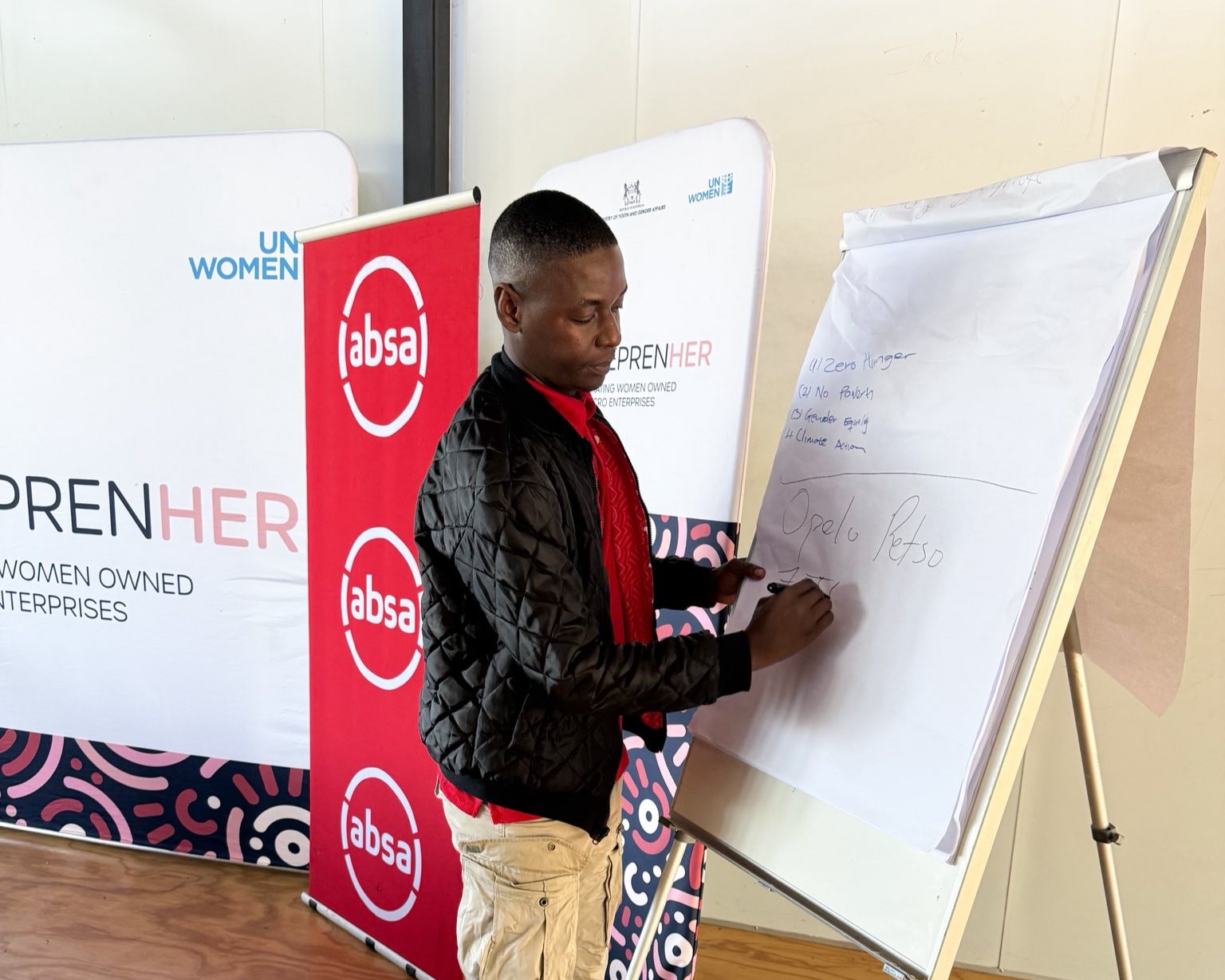
The involvement of key stakeholders added further value to the programme. As one of the sponsors of the initiative, ABSA Bank was represented by Opelo Petso, who engaged directly with the participants and shared valuable information about financial services available to support their entrepreneurial journeys. During his presentation, he introduced various banking accounts and financial products designed to meet the needs of small businesses and entrepreneurs. His engagement provided participants with greater awareness of the financial tools that can help them grow and sustain their enterprises. Access to appropriate financial support remains a critical factor in enabling entrepreneurs to invest in sustainable practices and expand their operations.
The session also highlighted the broader role that ABSA Bank plays in promoting sustainability, supporting communities, and empowering entrepreneurs. Beyond financial services, the bank demonstrated its commitment to environmental responsibility through its contribution to the programme. As part of its support, ABSA Bank announced that it will donate plants to the beneficiaries, encouraging environmental sustainability and the adoption of climate-smart agricultural practices. This contribution aligns with the programme’s objective of fostering environmentally conscious business practices while creating tangible benefits for participants. Such partnerships between financial institutions and development programmes can play an important role in advancing sustainable agricultural development.
Day 4 of the EntreprenHER Climate Smart Agriculture Training successfully equipped women entrepreneurs with practical knowledge, valuable assessment tools, and a stronger understanding of how sustainability can drive business success. By helping participants evaluate their environmental impact, set achievable sustainability goals, and communicate their climate-smart efforts effectively, the programme continues to empower women to become leaders in sustainable agriculture. The involvement of partners such as ABSA Bank further strengthened the training by providing financial insights and tangible support for environmental initiatives. As climate-related challenges continue to affect agricultural communities, programmes like EntreprenHER are helping entrepreneurs build resilient, productive, and sustainable businesses that can thrive in an increasingly uncertain future.