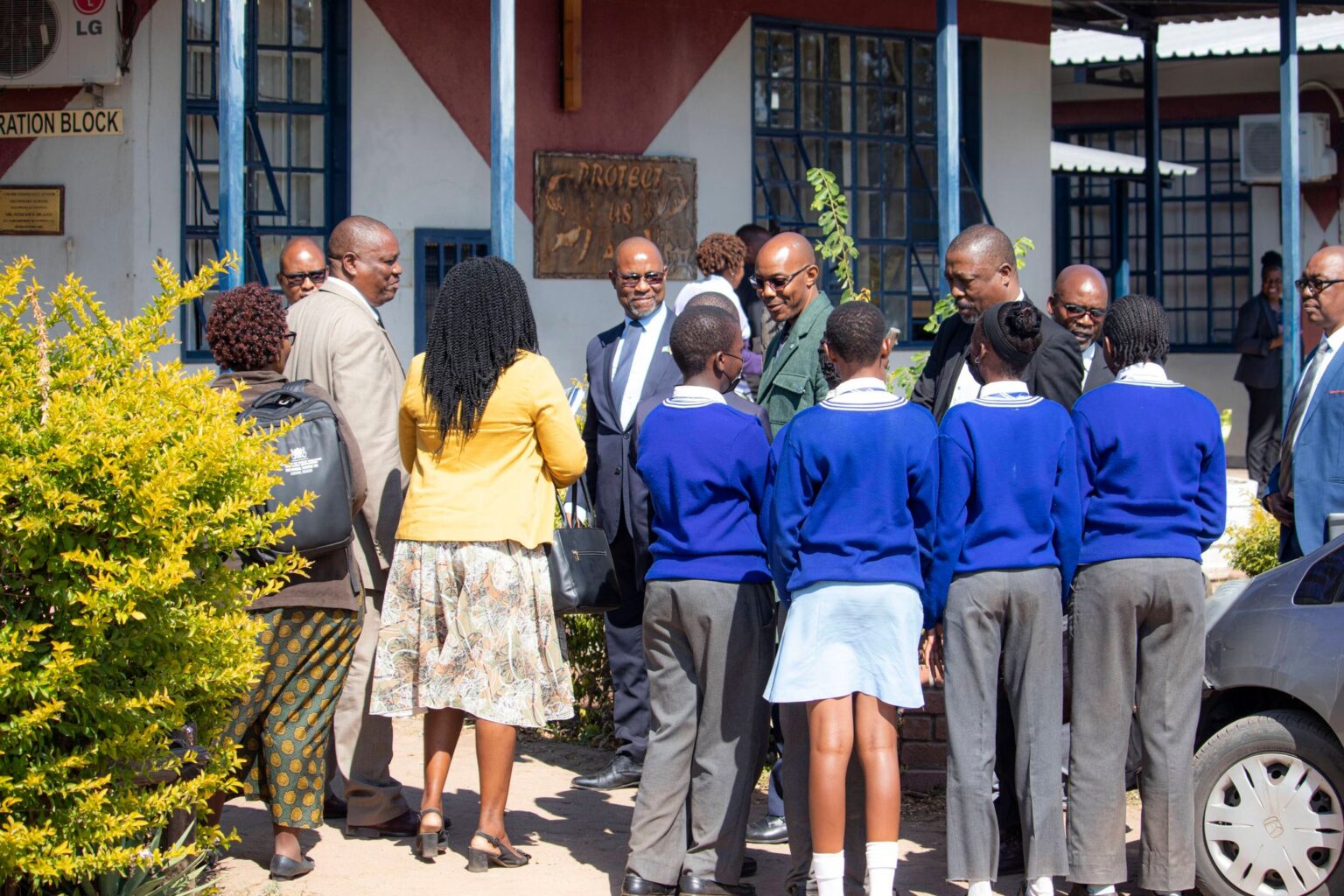
The Assistant Minister of Child Welfare and Basic Education, Honourable Justin Chipo Hunyepa, recently conducted a welfare visit to schools in the Chobe Region, focusing on teacher support, learner engagement and education system challenges. The visit aimed to recognise the dedication of teachers while also strengthening communication between government and school communities. He was accompanied by the Member of Parliament for Chobe, Honourable Oscar Simasiku Mapulanga, along with officials from the District Commissioner’s Office. The delegation visited multiple schools where they interacted directly with staff and learners. The visit formed part of ongoing efforts to improve education delivery and morale in remote and rural learning environments.
During the engagements, Honourable Hunyepa expressed appreciation for the commitment shown by teachers under often difficult working conditions. He highlighted the essential role educators play in shaping the future of learners and maintaining stability in the education system. Teachers were given space to share their concerns, including challenges related to resources, workload and general school welfare. The open discussions allowed government representatives to gain first hand insight into daily operational realities within schools. This direct engagement helped strengthen trust between education authorities and frontline staff.
The Assistant Minister also took time to interact with students, encouraging them to remain focused on their studies and to prioritise education as a foundation for their future. He advised learners to make responsible life choices from an early age, stressing the importance of discipline and consistency in academic work. A key message delivered during the visit focused on the dangers of drug abuse, with learners urged to avoid substances that could negatively affect their health and academic performance. He also addressed the use of social media, encouraging students to use digital platforms responsibly and to avoid harmful or disrespectful content. These messages were aimed at helping learners develop both academic and personal responsibility.
Honourable Hunyepa acknowledged the concerns raised by teachers and school administrators during the visit, particularly those linked to working conditions and resource limitations. He stated that government is aware of the challenges facing the education sector and is actively working on long term solutions. He appealed for patience from education stakeholders while reforms and improvements are being developed and implemented. The Assistant Minister also emphasised the importance of cooperation between teachers, communities and government to ensure steady progress. His remarks reflected a commitment to continuous engagement rather than short term intervention alone.
The presence of Honourable Oscar Simasiku Mapulanga reinforced the importance of political leadership working closely with education stakeholders in the region. Together with District Commissioner’s Office officials, the delegation ensured that concerns raised were properly documented and communicated through appropriate government channels. This coordinated approach is intended to improve response times and strengthen accountability within the education system. The visit also served as a platform for reinforcing government priorities in child welfare and basic education. It highlighted the shared responsibility of supporting both learners and educators in achieving better outcomes.
The welfare visit to schools in the Chobe Region demonstrated a practical approach to education leadership that combines recognition, dialogue and reassurance. Honourable Justin Chipo Hunyepa’s engagement with teachers and learners reflected a focus on both morale and accountability within the school system. By addressing challenges directly while encouraging patience and cooperation, the Assistant Minister reinforced government commitment to long term improvements in education. The visit also strengthened communication between schools and government structures, ensuring that concerns are heard and addressed through proper channels. It stands as a clear example of ongoing efforts to support teachers and guide learners toward a more stable and productive education environment.