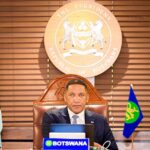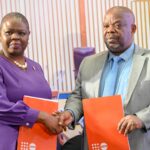
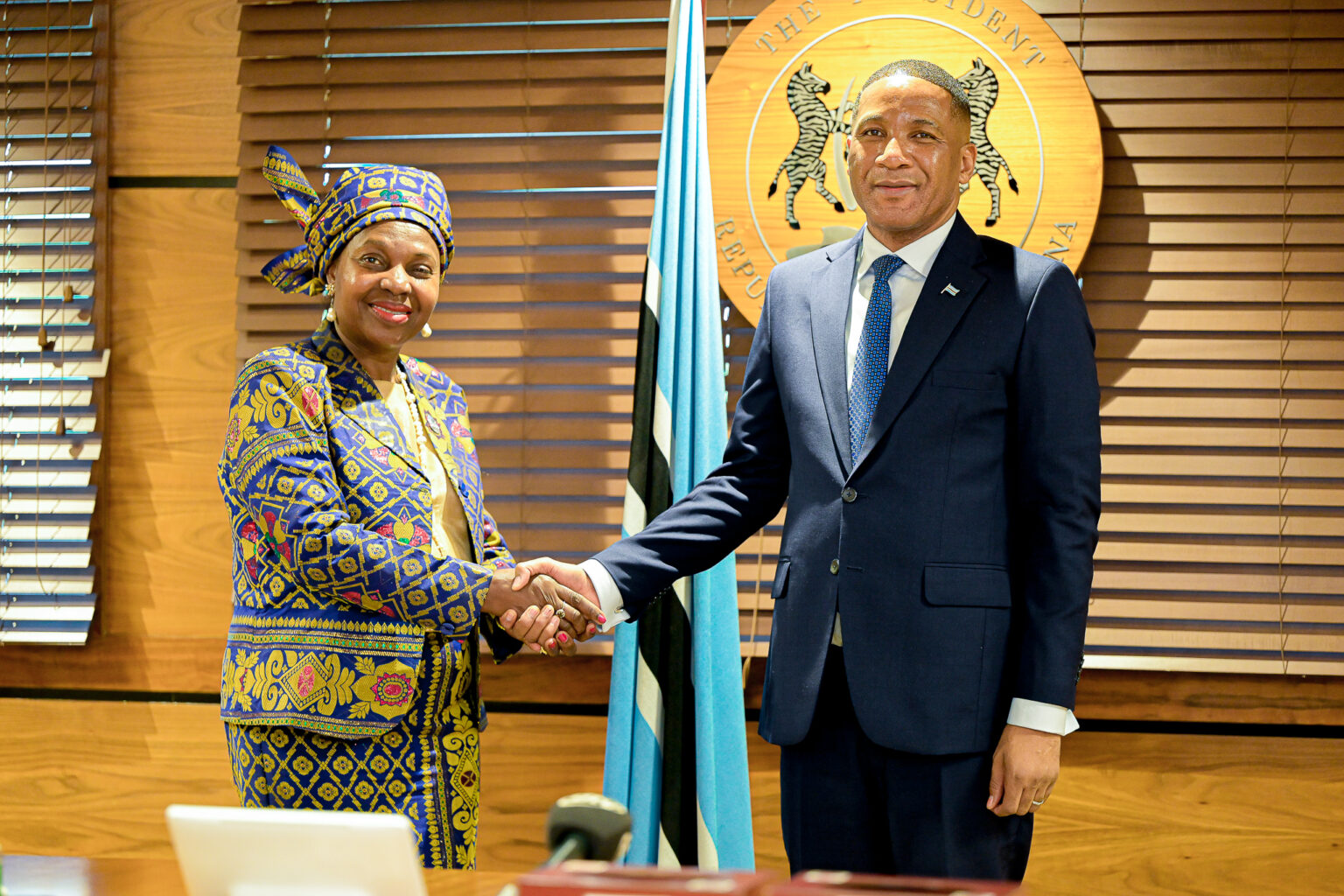
President Duma Boko strengthened Botswana’s position on human rights and indigenous recognition during a recent meeting with Litha Musyimi-Ogana, the African Union Commissioner responsible for human rights at the African Commission on Human and Peoples’ Rights. The courtesy call took place as part of ongoing efforts to promote human rights dialogue across the continent and reinforce cooperation between national governments and regional institutions. The meeting provided an opportunity for both leaders to exchange views on key issues affecting vulnerable and marginalized communities. Discussions focused particularly on the rights and recognition of indigenous populations within African societies. The engagement highlighted Botswana’s willingness to participate actively in regional conversations aimed at strengthening human rights protections.
During the discussion, President Boko raised concerns about how indigenous communities are often misunderstood or misrepresented in broader society. He explained that many societies tend to impose their own cultural frameworks when interpreting indigenous lifestyles and traditions. According to the President, this approach often results in oversimplified labels that fail to reflect the full diversity of these communities. Groups are frequently described under broad categories such as “San” or “hunter gatherers,” even though these terms do not capture the unique identities, languages, and cultural practices that exist among different communities. Boko emphasized that such generalizations can weaken efforts to recognize and protect the distinct rights of indigenous groups.
The President stressed that meaningful respect for indigenous communities requires a deeper effort to understand their cultures and social structures. He stated that policymakers and institutions must move beyond surface level descriptions and take time to learn about the traditions that shape these societies. Languages, customs, and ancestral knowledge systems form the foundation of many indigenous communities and deserve recognition and protection. Boko noted that acknowledging these defining elements helps build stronger policies that support cultural preservation and social inclusion. Without this understanding, development programs and legal frameworks may fail to address the real needs of indigenous populations.
Commissioner Musyimi-Ogana welcomed the discussion and acknowledged the importance of continued dialogue between African governments and the African Union human rights structures. The African Commission on Human and Peoples’ Rights works to promote and protect fundamental rights across member states. Its mandate includes monitoring human rights conditions, supporting legal reforms, and encouraging governments to strengthen protections for vulnerable groups. Meetings such as this courtesy call create opportunities for collaboration and mutual understanding between national leaders and continental institutions. They also help ensure that regional human rights frameworks remain relevant to the realities faced by communities across Africa.
The engagement concluded with President Boko accepting the role of Champion for Human Rights at the African Commission on Human and Peoples’ Rights. By accepting this responsibility, the President signaled Botswana’s commitment to supporting the advancement of human rights across the continent. Boko noted that the protection and promotion of human dignity has been a long standing priority throughout his public career. He expressed pride in being entrusted with a role that encourages advocacy, awareness, and stronger cooperation among African states on human rights matters. The position also places him in a leadership role in promoting policies that strengthen rights protections at both national and continental levels.
The meeting reflected the growing recognition that human rights issues require both national leadership and regional collaboration. Indigenous communities continue to face social, cultural, and economic challenges that require thoughtful policy responses. When leaders engage directly with institutions such as the African Commission on Human and Peoples’ Rights, they create pathways for more coordinated solutions. President Boko’s acceptance of the human rights champion role signals a commitment to advancing these efforts across Africa. The dialogue between Botswana’s leadership and the African Union human rights framework underscores the importance of understanding cultural diversity while strengthening protections for all communities across the continent.