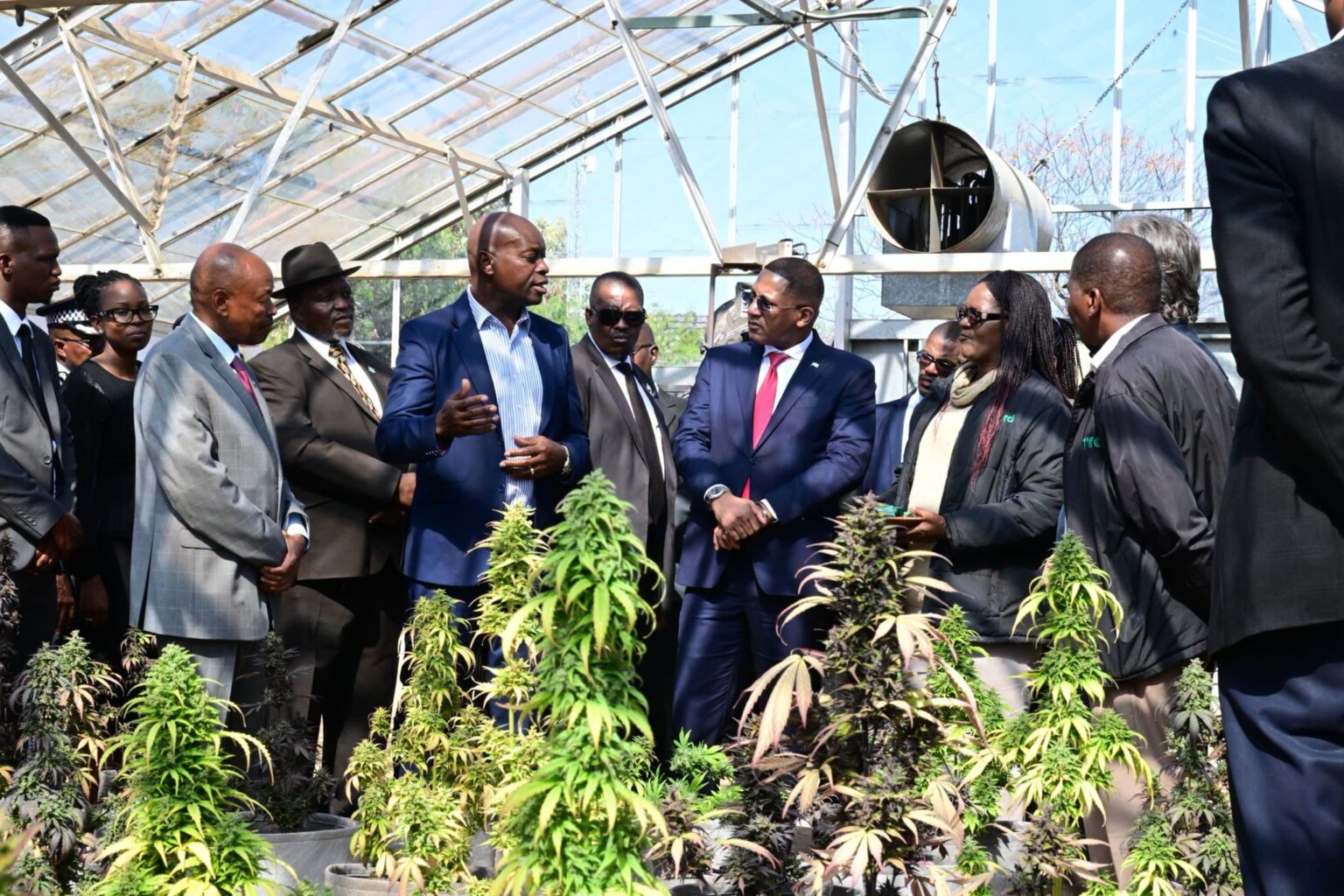
Botswana is taking an important step toward agricultural innovation and economic diversification as President Duma Boko has reaffirmed the government’s commitment to developing an industrial hemp industry. Following the successful completion of industrial hemp trial production, the country is now moving closer to commercial cultivation that could create jobs, attract investment and strengthen rural economies. Speaking during a visit to the Hemp Trial Project at the National Agricultural Research and Development Institute (NARDI), President Boko highlighted the positive results achieved through the trials and expressed confidence in the future of hemp farming in Botswana. His remarks signal a significant milestone in the government’s long-term plan to reduce dependence on the diamond industry while expanding opportunities in agriculture. The success of the trial project demonstrates that industrial hemp can grow successfully under Botswana’s diverse climatic conditions, providing new hope for farmers, entrepreneurs and investors. As global demand for hemp-based products continues to increase, Botswana is positioning itself to become a competitive player in this rapidly expanding agricultural sector.
President Duma Boko explained that the introduction of industrial hemp was one of the promises made to citizens during the election campaign, and the government remains committed to delivering on that pledge. According to the President, the successful trial production confirms that Botswana has the natural conditions needed to establish a sustainable hemp industry. He emphasized that the government is steadily moving toward allowing commercial production, which will enable citizens to participate directly in cultivating industrial hemp. This development represents more than simply introducing a new crop because it forms part of a broader strategy to modernize agriculture and stimulate economic growth. By investing in new agricultural industries, Botswana aims to create long-term opportunities that benefit both rural communities and the national economy.
The Hemp Trial Project at the National Agricultural Research and Development Institute has played a crucial role in demonstrating the viability of industrial hemp cultivation in Botswana. Researchers have evaluated how different hemp varieties perform under local environmental conditions, including varying temperatures and rainfall patterns. The positive outcomes from these trials provide scientific evidence that hemp can be cultivated successfully across different regions of the country. Such research reduces uncertainty for future farmers by providing valuable information on production methods, crop management and expected yields. The project’s success also strengthens investor confidence, as commercial production can now be supported by reliable research conducted under Botswana’s own agricultural conditions.
Industrial hemp differs significantly from cannabis grown for recreational or medicinal purposes because it contains only very low levels of tetrahydrocannabinol, commonly known as THC, the psychoactive compound associated with marijuana. Instead, industrial hemp is cultivated for its strong fibers, nutritious seeds and versatile plant materials that can be processed into thousands of commercial products. Around the world, hemp is used in the manufacture of textiles, construction materials, biodegradable plastics, paper, cosmetics, food products, animal feed and health supplements. Its ability to serve multiple industries makes hemp one of the most versatile agricultural crops available today. As international demand continues to rise, countries capable of producing high-quality hemp have the opportunity to generate substantial export earnings while supporting local manufacturing industries.
President Boko emphasized that commercial hemp farming will not only supply Botswana’s domestic market but also open doors to regional and international trade opportunities. Demand for industrial hemp continues to grow in many parts of Africa, Europe, North America and Asia, where manufacturers require a consistent supply of raw materials. Botswana’s strategic location within Southern Africa could provide local producers with easier access to neighboring markets while also expanding exports beyond the continent. Developing export markets would allow farmers to earn higher incomes while contributing valuable foreign exchange to the national economy. Building a strong export-oriented hemp industry would further strengthen Botswana’s efforts to diversify beyond traditional mining revenues.
One of the government’s primary objectives is to transform agriculture into a stronger contributor to Botswana’s economy. For decades, diamonds have remained the country’s dominant source of national income and export earnings. While the diamond industry has delivered significant economic growth, changing global market conditions have highlighted the importance of building alternative industries that can provide greater stability. Industrial hemp represents one such opportunity because it combines agricultural production with manufacturing, processing and export potential. Expanding high-value agricultural industries allows Botswana to spread economic risk across multiple sectors while creating new employment opportunities for future generations.
Assistant Minister of Lands and Agriculture Motsamai Motsamai also reaffirmed the government’s readiness to support citizens interested in entering the hemp industry. He explained that individuals wishing to produce industrial hemp will receive support provided they comply with the country’s regulatory requirements. Proper regulation is essential to distinguish industrial hemp from other cannabis varieties while ensuring that production remains safe, legal and commercially focused. Government oversight will help maintain quality standards, encourage responsible farming practices and build confidence among domestic and international buyers. Establishing a clear regulatory framework also provides investors with certainty, making Botswana a more attractive destination for agricultural investment.
Job creation remains one of the most significant expected benefits of commercial hemp production. Hemp farming requires workers throughout the production cycle, including land preparation, planting, irrigation, harvesting, transportation and processing. Additional employment opportunities are expected to emerge in manufacturing industries that convert hemp into finished products such as clothing, paper, construction materials and food products. Small businesses may also benefit by supplying equipment, agricultural services and logistics support to hemp farmers. As production expands, the industry could generate thousands of direct and indirect employment opportunities that strengthen household incomes and stimulate economic activity across both rural and urban communities.
Industrial hemp also offers environmental advantages that align with Botswana’s commitment to climate-resilient agriculture. Hemp is known for its relatively efficient use of water compared with some traditional crops and can contribute to healthier soils through its extensive root system. The crop grows rapidly and helps suppress weeds naturally, reducing the need for certain agricultural chemicals. Hemp fibers can replace less sustainable raw materials in several manufacturing industries, supporting environmentally friendly production methods. These characteristics make hemp an attractive option for countries seeking agricultural systems that balance economic growth with environmental sustainability.
The government’s broader vision extends beyond simply growing hemp in fields. Policymakers hope to develop complete value chains that include processing facilities, manufacturing plants, research institutions and export businesses. Building these supporting industries would increase the value retained within Botswana instead of exporting raw materials alone. Processing hemp domestically could encourage entrepreneurship while creating skilled jobs in engineering, manufacturing, quality control and logistics. Developing the entire value chain would maximize the economic impact of industrial hemp while supporting broader industrialization goals.
Botswana’s progress toward establishing a commercial industrial hemp industry represents an important chapter in the country’s economic transformation journey. The successful trial project has demonstrated that hemp can grow successfully under local conditions, giving policymakers confidence to move toward full-scale production. President Duma Boko’s commitment to fulfilling his government’s promise reflects a broader strategy of creating a more resilient and diversified economy that depends less on diamonds and more on innovation, agriculture and manufacturing. With continued research, effective regulation, government support and private sector participation, industrial hemp has the potential to become a valuable contributor to national development. As commercial cultivation expands, Botswana could create new jobs, increase exports, strengthen rural livelihoods and establish itself as one of Africa’s emerging leaders in industrial hemp production. The positive results achieved through the NARDI Hemp Trial Project provide a strong foundation for realizing this vision and ensuring that industrial hemp becomes a lasting driver of sustainable economic growth for the country.