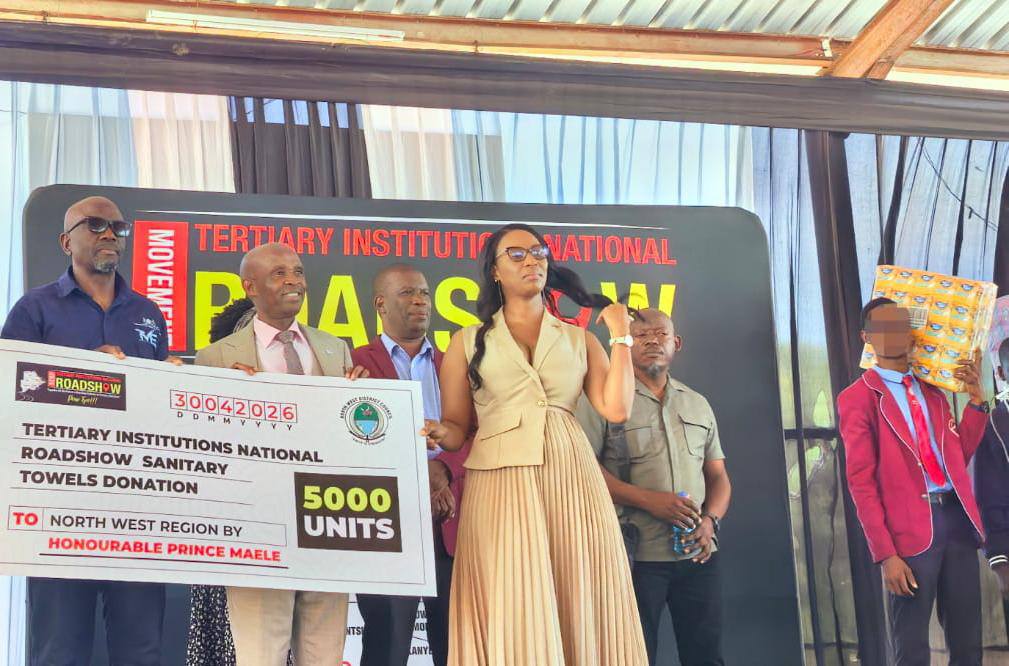
A heartfelt ceremony in Maun brought together school leaders, education officials, tertiary institutions, and learners from across the North West Region to mark a significant donation aimed at improving dignity and access to education. The gathering focused on the distribution of 5,000 sanitary pad units to selected primary and secondary schools, a contribution made possible through collaboration between more than 20 tertiary institutions in Botswana. The event highlighted the role of partnerships in addressing barriers that affect learners, especially girls, in rural and underserved communities. It also created a platform for open discussion about challenges that affect school attendance and performance. The ceremony reflected a growing commitment to practical solutions that support education outcomes.
The donation was officially received during an event officiated by the Minister of Higher Education and Member of Parliament for the Lerala-Maunatlala Constituency, Honourable Prince Maele. His presence underscored the importance of the initiative at a national leadership level and reinforced government support for education-focused community interventions. In his address, he expressed deep appreciation to the participating tertiary institutions for their collective effort. He emphasized that the donation represents more than material support, as it restores dignity and confidence among learners who face monthly challenges without access to basic sanitary products. His remarks highlighted the importance of addressing real-life barriers that impact school attendance and academic performance.
The North West Region continues to face education challenges linked to absenteeism, particularly among girls during menstrual cycles. Many learners miss school days due to a lack of access to sanitary products, which directly affects their academic progress and long-term educational outcomes. Teachers and school administrators have reported that repeated absenteeism contributes to lower performance rates and reduced classroom participation. The donation of sanitary pads is expected to reduce these interruptions and help learners remain in school consistently. By addressing this specific need, the initiative aims to improve both attendance and confidence among affected students.
Education stakeholders at the event stressed the importance of dignity in learning environments. The presence of school management teams, learners, and officials from multiple institutions demonstrated a shared understanding of the issue. Many attendees noted that access to sanitary products is not only a health concern but also an educational one. When learners are absent during critical teaching periods, they fall behind and struggle to catch up with coursework. This initiative is expected to help close that gap and promote equal learning opportunities for all students in the region.
The Acting Chief Education Officer for the North West Region, Mr. Keogotse Ketlogetswe, formally received and acknowledged the donation. He assured stakeholders that the sanitary pads would be distributed directly to learners who need them most. He emphasized accountability in ensuring that the resources reach the intended beneficiaries without delay or mismanagement. His remarks also highlighted the broader goal of improving academic outcomes in the region through targeted support initiatives. He noted that when basic needs are addressed, learners are better positioned to focus on their education and achieve stronger results.
The collaboration between tertiary institutions played a key role in the success of the donation. More than 20 institutions came together to contribute resources, showing a collective commitment to social responsibility and community development. This partnership demonstrates how higher education institutions can extend their impact beyond campuses and into surrounding communities. Their involvement also sets an example for future initiatives aimed at addressing social and educational challenges. The scale of participation reflects a growing awareness of the importance of supporting learners at all levels of education.
The impact of the donation is expected to be both immediate and long-term. In the short term, learners will benefit from improved access to sanitary products, which will reduce absenteeism and increase classroom participation. Over time, this is expected to contribute to better academic performance and higher retention rates in schools across the North West Region. Educators believe that consistent attendance will allow learners to build stronger foundations in key subjects. This will also help improve overall educational outcomes in a region that has faced persistent challenges.
The Maun ceremony highlighted how targeted interventions can address real barriers to education in meaningful ways. By focusing on dignity and access, the initiative supports both the emotional and academic well-being of learners. It also strengthens collaboration between government, educational institutions, and communities. The donation of 5,000 sanitary pads represents a practical step toward improving equality in education. As the initiative reaches learners across the region, it is expected to create lasting positive change and support a more inclusive learning environment for all students.