
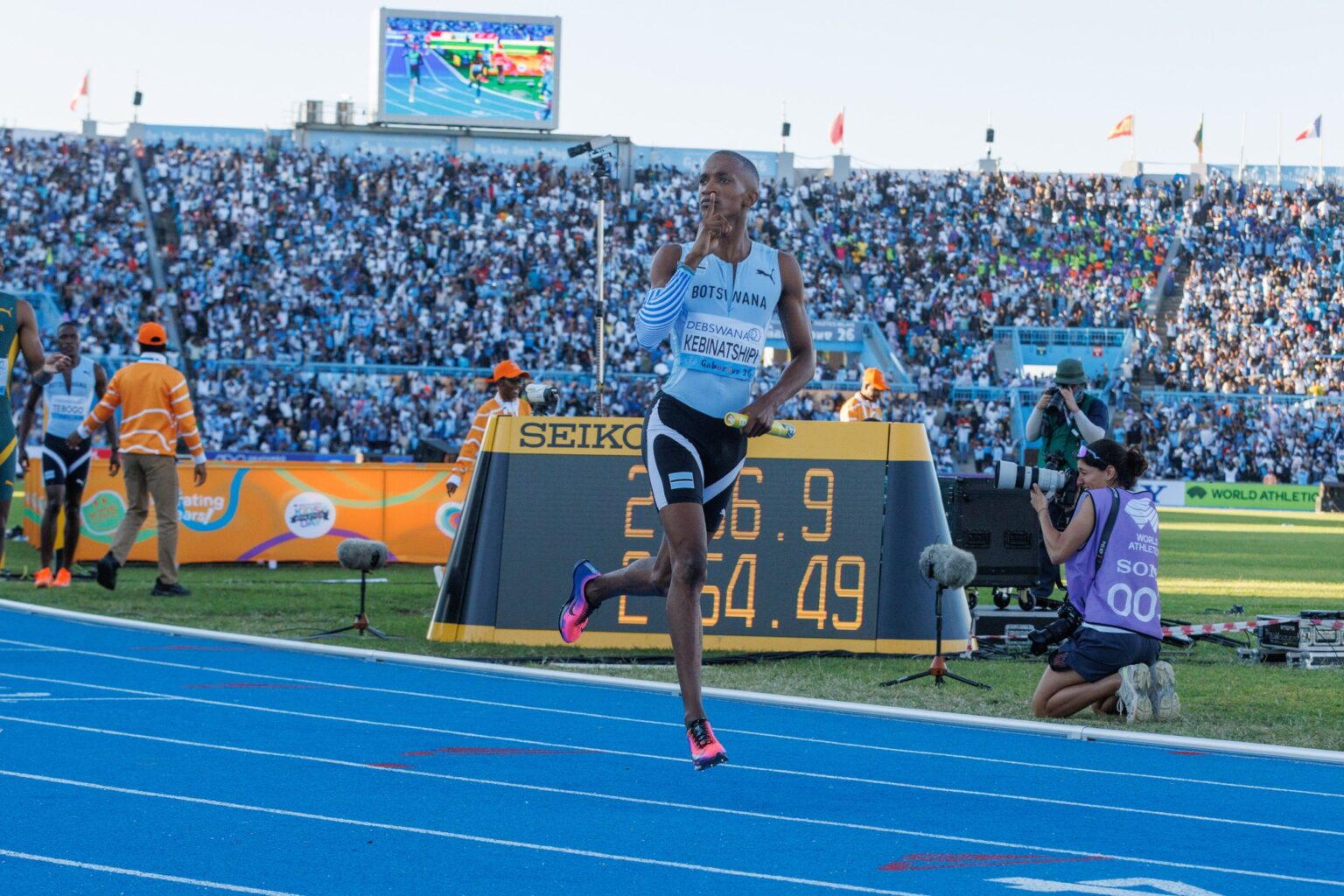
The Gaborone26 athletics showcase delivered high intensity relay racing that built steadily toward one of the most memorable moments in recent track history. Every event on the program carried weight, with national teams pushing for medals that symbolized both performance and pride. The stakes felt even higher due to the unique medals, which were encrusted with Botswana’s natural diamonds and added prestige to every podium finish. Fans witnessed tight finishes, clean baton exchanges, and strategic racing across all relay formats. This set the tone for what would become a defining competition, culminating in a historic Men’s 4x400m relay performance by the host nation.
The Mixed 4x100m relay opened the medal action with Jamaica delivering a composed and efficient race to secure gold in 39.72 seconds. Canada followed with a strong run for silver at 40.23, while the United States claimed bronze in 40.33 after a competitive final stretch. The race highlighted the importance of precision in baton exchanges, as even minor errors can cost valuable time. Jamaica’s execution stood out, especially in the transition zones where they maintained momentum. This event immediately signaled that relay dominance would come down to discipline and teamwork rather than just individual speed.
In the Mixed 4x400m relay, the United States asserted control with a winning time of 3:07.47, showing depth across both male and female athletes. Jamaica secured silver in 3:08.24, staying within striking distance but unable to close the gap in the final leg. Great Britain earned bronze with 3:09.84 after a consistent and balanced performance. This race required a different strategy compared to the shorter relay, with pacing and endurance playing a larger role. The United States executed a well-structured race plan, using strong middle legs to build a lead that proved difficult to challenge.
The Women’s 4x100m relay saw Jamaica return to the top of the podium with a commanding time of 42.00 seconds. Canada finished second in 42.17, maintaining close pressure throughout the race, while Spain captured bronze in 42.31 with a well-timed final leg. The margins in this event were extremely tight, showing how competitive the field had become. Jamaica’s consistency in sprint relays remained evident, supported by smooth baton exchanges and explosive acceleration phases. Canada and Spain demonstrated strong team cohesion, which allowed them to stay competitive against one of the most dominant sprint teams.
The Men’s 4x100m relay delivered one of the closest finishes of the event, with the United States taking gold in 37.43 seconds. South Africa pushed them to the line, finishing just behind in 37.49 to secure silver, while Germany took bronze in 37.76. South Africa’s performance stood out due to their aggressive start and clean transitions, which kept them within reach of the leaders. The United States relied on depth and top-end speed to maintain their advantage in the final meters. This race reinforced how critical every fraction of a second becomes at the elite level.
In the Women’s 4x400m relay, Norway produced a strong collective performance to win gold with a time of 3:20.96. Spain followed closely with 3:21.25 for silver, while Canada earned bronze in 3:22.66 after a steady race. The event required endurance, pacing, and tactical awareness, with teams needing to balance speed and energy conservation. Norway executed a disciplined approach, building their lead gradually rather than relying on a single standout leg. Spain and Canada remained competitive throughout, highlighting the depth of talent across multiple nations.
All these performances set the stage for the Men’s 4x400m relay, which delivered the most electrifying moment of the competition. Botswana secured gold in 2:54.47, marking a historic achievement on home soil and igniting celebration among local supporters. South Africa finished second with 2:55.07 in a strong and determined effort, while Australia claimed bronze in 2:55.20 after a tightly contested race. Botswana’s victory came from a combination of strategic pacing, strong baton exchanges, and a powerful anchor leg that sealed the win. The atmosphere reflected the significance of the moment, as the host nation rose above a highly competitive field to claim one of the most coveted titles in relay racing.
The Gaborone26 relays showcased the full spectrum of elite track competition, from explosive sprints to endurance-driven races. Each event contributed to a narrative of preparation, execution, and national pride, with athletes delivering performances that matched the occasion. Botswana’s Men’s 4x400m victory stood as the defining highlight, but it was the collective standard across all relays that elevated the event. The results demonstrated how relay success depends on coordination, discipline, and trust among teammates. This competition will remain a reference point for future championships, with its blend of competitive depth and historic achievement.