
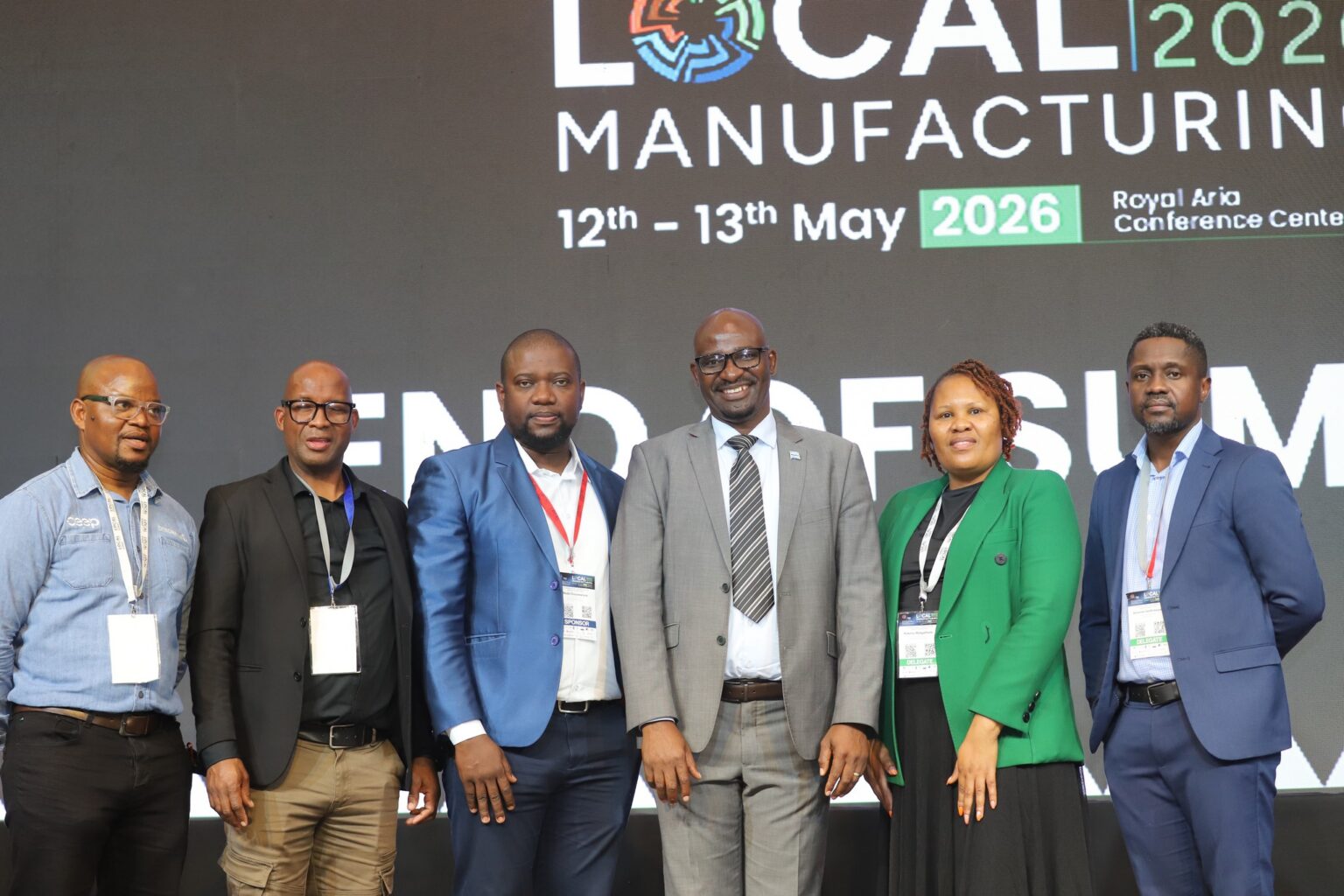
Botswana’s manufacturing sector took a central role at the Local Manufacturing Summit 2026, where industry leaders, policymakers and private sector stakeholders gathered with a shared goal of transforming ambition into measurable progress. The summit focused on positioning Botswana as a competitive, export-driven and private sector-led economy capable of standing strong in global markets. Discussions highlighted the urgency of accelerating local production and strengthening value chains that can support long-term economic diversification. The event underscored the importance of moving beyond planning into execution, with a strong emphasis on practical outcomes. It also reflected growing momentum within Botswana’s industrial sector to expand manufacturing capacity and reduce reliance on imports.
A key voice at the summit was Botswana Chamber of Mines (BCM) chairperson and Orapa, Letlhakane and Damtshaa Mines General Manager, Mogakolodi Maoketsa, who stressed the importance of intentional action in shaping the country’s manufacturing future. He reaffirmed BCM’s commitment to supporting a stronger industrial base and contributing to a positive economic transformation for Botswana. Maoketsa emphasized that accelerating growth in local manufacturing is essential to achieving the vision of a private sector-driven economy. He noted that such transformation requires coordinated effort from all stakeholders, including government, industry and development partners. His message reinforced the idea that industrial growth depends on shared responsibility and long-term commitment.
Maoketsa also highlighted that transformation does not happen automatically but requires deliberate and sustained effort over time. He cautioned that uncertainty in global markets should not lead to hesitation or reduced ambition within the local manufacturing space. Instead, he encouraged industry players to remain focused on building systems that can withstand external pressures. His remarks pointed to the importance of resilience and strategic thinking in navigating changing economic conditions. By emphasizing action over delay, he reinforced the need for consistent progress in strengthening Botswana’s industrial capacity.
Collaboration emerged as another major theme in Maoketsa’s address, where he described it as the driving force behind industrial progress. He explained that effective partnerships across sectors are essential for unlocking the full potential of Botswana’s manufacturing industry. According to his remarks, collaboration acts as the engine that powers growth and innovation within the sector. He acknowledged that despite global economic challenges, the industry has shown notable resilience and adaptability. This resilience, he suggested, provides a strong foundation for future expansion and increased competitiveness.
Maoketsa further stressed that deliberate and coordinated initiatives are necessary to convert Botswana’s manufacturing potential into tangible prosperity. He called on industry participants to take bold steps toward building export-ready value chains that can compete in international markets. His message highlighted the need to deepen skills development within the sector to support advanced production capabilities. He also pointed to inclusive economic growth as a key outcome that should guide all manufacturing efforts. These priorities reflect a broader national objective of creating sustainable industries that generate employment and long-term value.
The Local Manufacturing Summit 2026 reinforced Botswana’s commitment to strengthening its industrial base through strategic action and collaboration. It brought together stakeholders who share a vision of a more diversified and competitive economy driven by local production and innovation. The discussions and leadership messages reflected a clear focus on execution, resilience and partnership as essential pillars of growth. As Botswana continues to develop its manufacturing sector, the emphasis remains on building systems that support exports, skills development and economic inclusion. The outcomes of the summit point toward a future where deliberate action and coordinated efforts shape a stronger, more self-reliant industrial economy.