
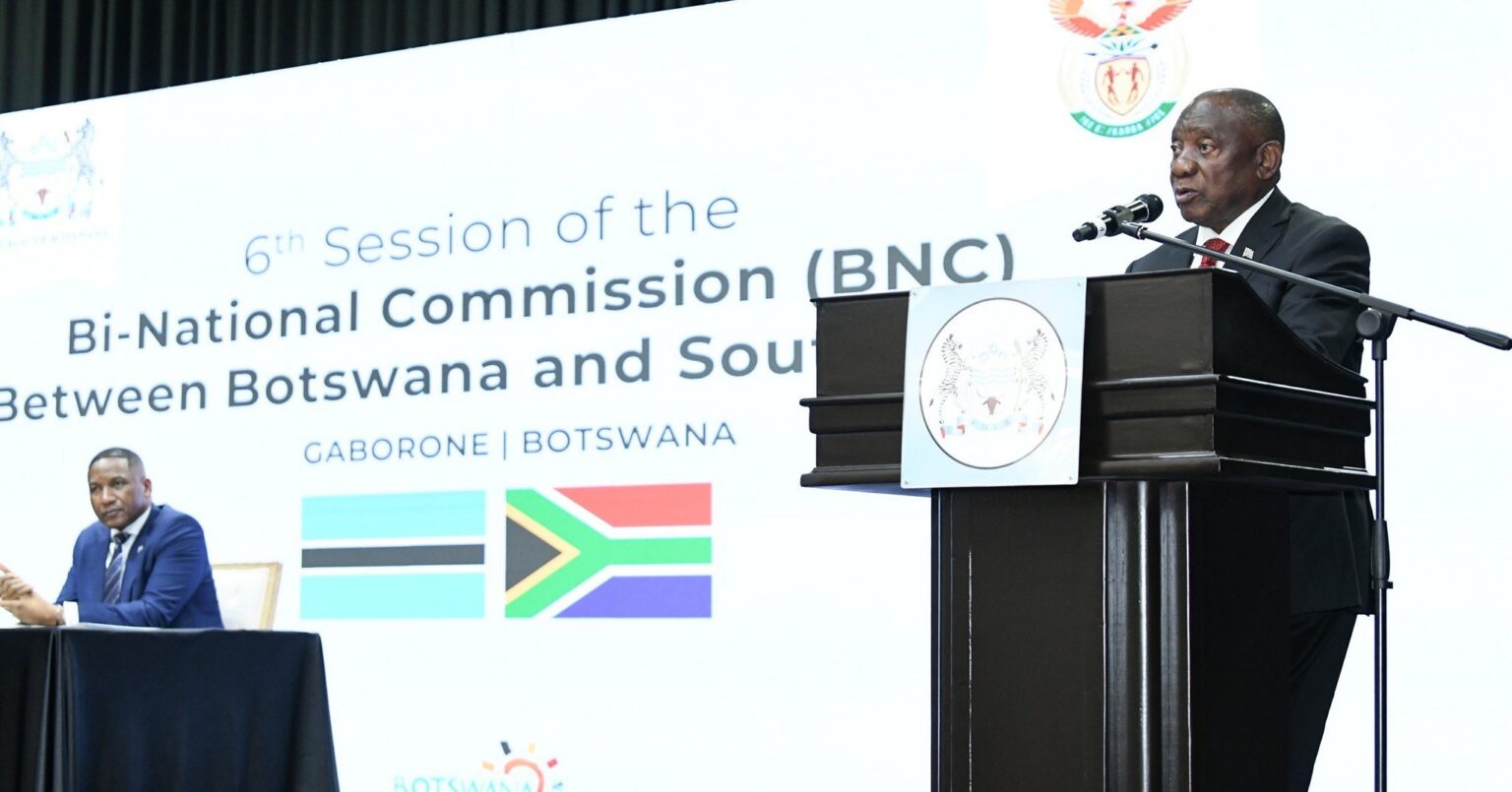
South African President Cyril Ramaphosa has renewed calls for stronger and more balanced trade relations between South Africa and Botswana during the 6th Session of the Bi-National Commission held today. The meeting focused on improving economic cooperation, expanding trade opportunities and strengthening long term development partnerships between the two neighbouring countries. Ramaphosa stressed that South Africa wants a more diversified import relationship with Botswana, moving beyond limited goods and encouraging a wider flow of products across both economies. The discussions highlighted the importance of deepening regional integration in Southern Africa at a time when global economic conditions continue to shift. Leaders from both sides framed the session as a platform to unlock practical cooperation rather than symbolic commitments. The tone of the engagement reflected a shared interest in building stronger economic resilience through collaboration.
A central focus of the discussions was the need to increase investment across key sectors that can drive growth and job creation in both countries. Ramaphosa identified agriculture, energy, mineral beneficiation, infrastructure and water security as priority areas for cooperation. These sectors were described as essential for long term economic stability and for reducing reliance on external supply chains. In agriculture, both countries aim to improve food production systems and strengthen value chains that support rural communities. In energy, cooperation is expected to support more reliable supply systems and explore sustainable solutions that can meet growing demand. Mineral beneficiation was also highlighted as a major opportunity to add value to raw materials within the region instead of exporting them in unprocessed form. Infrastructure development and water security projects were presented as critical foundations for economic growth and cross border development planning.
Several major strategic projects were discussed as examples of how cooperation can move from policy to implementation. These include the Mmamabula–Lephalale Rail Link, which is expected to improve transport connectivity and support trade efficiency between the two countries. The Lesotho–Botswana Water Transfer Project was also highlighted as a regional initiative aimed at improving water access and long term resource sharing. The Ramotswa Transboundary Aquifer project was presented as another important effort to strengthen shared water management systems in the region. Leaders also discussed the proposed One Stop Border Post at Tlokweng and Kopfontein, which is intended to reduce delays and improve the movement of goods and people across the border. These infrastructure projects were framed as practical tools that can reduce trade barriers and strengthen economic integration. They also reflect a broader effort to modernise cross border systems and improve efficiency in regional logistics.
Beyond economic cooperation, the Bi-National Commission also addressed shared security challenges affecting both countries and the wider Southern African region. President Ramaphosa urged stronger collaboration in combating transnational organised crime, including cybercrime, human trafficking, illegal mining, money laundering and wildlife poaching. These issues were described as threats to economic stability, public safety and institutional integrity. Both governments acknowledged that criminal networks often operate across borders, making coordinated responses necessary. Strengthening intelligence sharing, law enforcement cooperation and judicial coordination were identified as key steps in addressing these challenges. The discussions also reinforced the importance of protecting natural resources and ensuring that economic development is not undermined by illegal activity.
The 6th Session of the Bi-National Commission was ultimately presented as an opportunity to deepen cooperation and accelerate regional integration between South Africa and Botswana. Both countries reaffirmed their commitment to working together on shared development goals and building a more connected regional economy. The emphasis on trade diversification, infrastructure development and security cooperation reflects a broader vision of Southern Africa that is more integrated and economically resilient. Leaders expressed confidence that continued collaboration will deliver tangible benefits for citizens in both countries, particularly in areas such as employment, trade expansion and resource management. The meeting reinforced the idea that regional partnerships remain essential in addressing both economic and security challenges. Through structured cooperation and joint planning, South Africa and Botswana aim to strengthen prosperity and stability across their shared border region.