
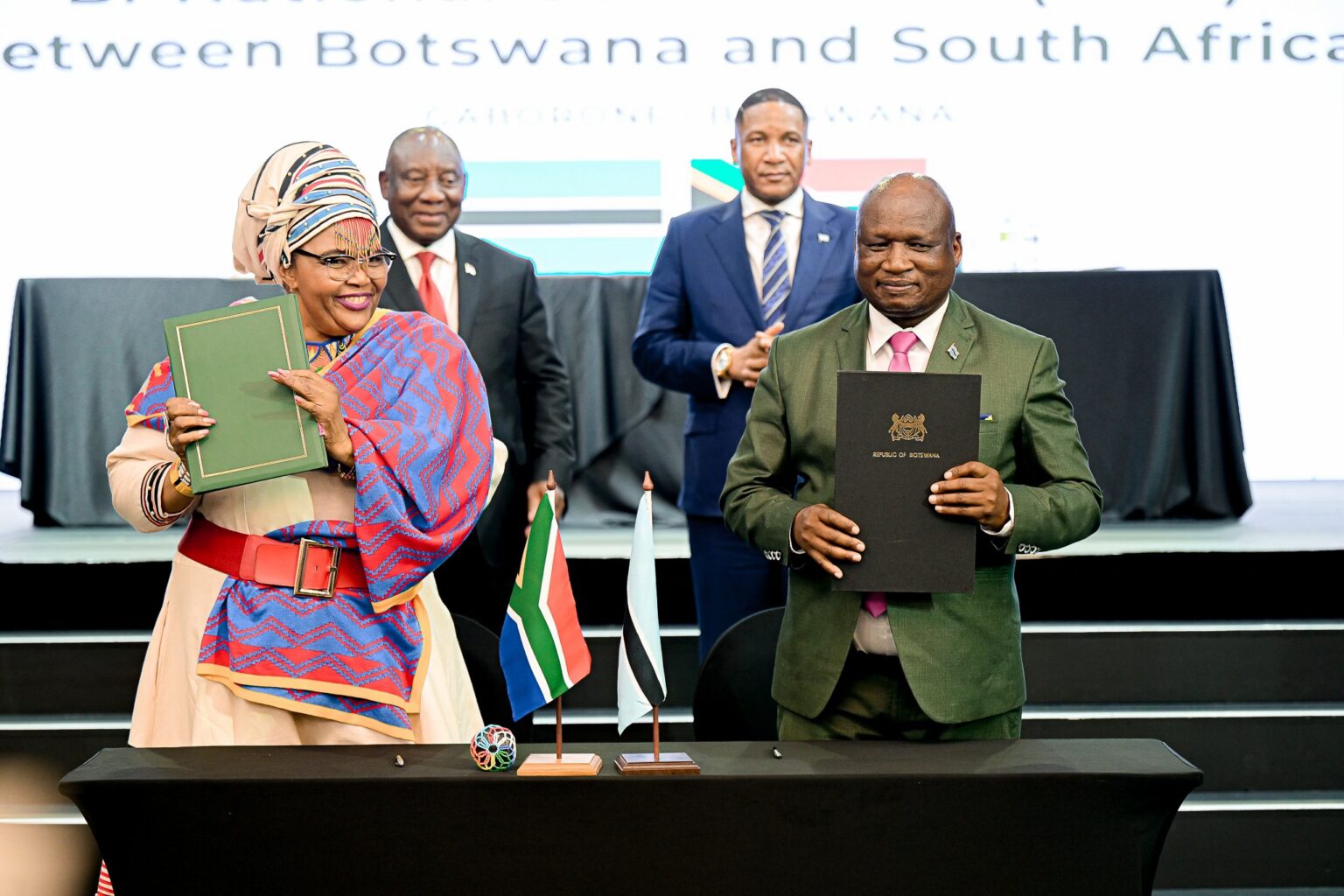
The sixth Bi-National Commission between Botswana and South Africa marked another important step in strengthening cooperation between the two neighboring countries. The high-level meeting brought together leaders and government officials committed to deepening diplomatic, economic and social ties. During the commission, both nations signed four significant agreements that are expected to improve collaboration in several strategic sectors. These agreements focused on water management, aviation safety, energy cooperation and correctional services. The outcomes of the meeting reflected a shared commitment to practical partnerships that can improve development and stability in the region.
The agreements signed during the commission highlighted the importance of coordinated action on issues that affect both countries. One of the agreements focused on the joint management of water quality and aquatic invasive species in the Upper Limpopo River Basin. This issue is critical because the river basin serves communities, industries and agricultural activities in both countries. Managing water quality together can help protect ecosystems while ensuring access to clean water resources for future generations. The agreement also addresses the growing threat posed by invasive aquatic species, which can damage biodiversity, reduce water quality and disrupt economic activities linked to the river system.
Another agreement signed during the commission focused on the coordination of aeronautical search and rescue services between Botswana and South Africa. Aviation safety remains a priority for countries that depend on regional and international air travel for trade, tourism and business connectivity. Through this cooperation, the two nations aim to improve emergency response systems and strengthen communication during aviation incidents. Better coordination can help reduce response times during emergencies and improve the chances of successful rescue operations. The agreement also reflects a broader effort to align regional aviation standards and improve public confidence in air transport systems across Southern Africa.
Energy cooperation also featured prominently among the signed agreements, demonstrating the growing importance of regional collaboration in addressing energy challenges. Botswana and South Africa continue to face increasing energy demands driven by economic growth, industrial expansion and population increases. By working together in the energy sector, the two countries hope to improve energy security and explore opportunities for sustainable development. Cooperation could include knowledge sharing, infrastructure development and investment in energy projects that benefit both nations. Stronger energy partnerships can also support industrial growth and help reduce the impact of electricity shortages on businesses and households.
The fourth agreement focused on cooperation in the field of correctional and prison services. This partnership aims to strengthen institutional capacity and improve the management of correctional facilities in both countries. Governments across the region continue to face challenges related to prison overcrowding, rehabilitation programs and security management. Through cooperation, Botswana and South Africa can exchange expertise and best practices to improve correctional systems. The agreement also reflects the broader goal of promoting justice, rehabilitation and human rights within correctional institutions.
Duma Boko emphasized the importance of the Bi-National Commission as a vital mechanism for advancing relations between Botswana and South Africa. He described the commission as a practical platform for transforming political goodwill into meaningful cooperation that delivers results for citizens. According to President Boko, the partnership between the two countries is built on mutual trust, sustained dialogue and a shared vision for regional progress. His remarks highlighted the value of consistent engagement between neighboring nations in addressing common challenges. The statement also reinforced Botswana’s commitment to maintaining strong diplomatic and economic relations with South Africa.
For his part, Cyril Ramaphosa reaffirmed the strength of bilateral relations between South Africa and Botswana. He noted that the Bi-National Commission provides a strong foundation for the effective implementation of the agreements reached during the meeting. President Ramaphosa stressed the importance of turning discussions into concrete actions that benefit both countries in the months ahead. His comments reflected confidence in the growing partnership between the two nations and the potential for further cooperation in additional sectors. The South African leader also acknowledged the importance of maintaining stable and productive regional relationships in a rapidly changing global environment.
The sixth Bi-National Commission demonstrated the willingness of Botswana and South Africa to work closely on issues that directly impact their citizens and economies. The agreements signed during the meeting are expected to strengthen regional cooperation while promoting sustainable development, safety and institutional improvement. Both governments appear focused on creating long-term partnerships that extend beyond diplomatic discussions into practical implementation. As Botswana and South Africa continue to deepen their collaboration, the commission remains an important platform for building trust and advancing shared regional goals. The outcomes of the meeting also send a strong message about the value of unity, cooperation and strategic planning in Southern Africa’s future development.