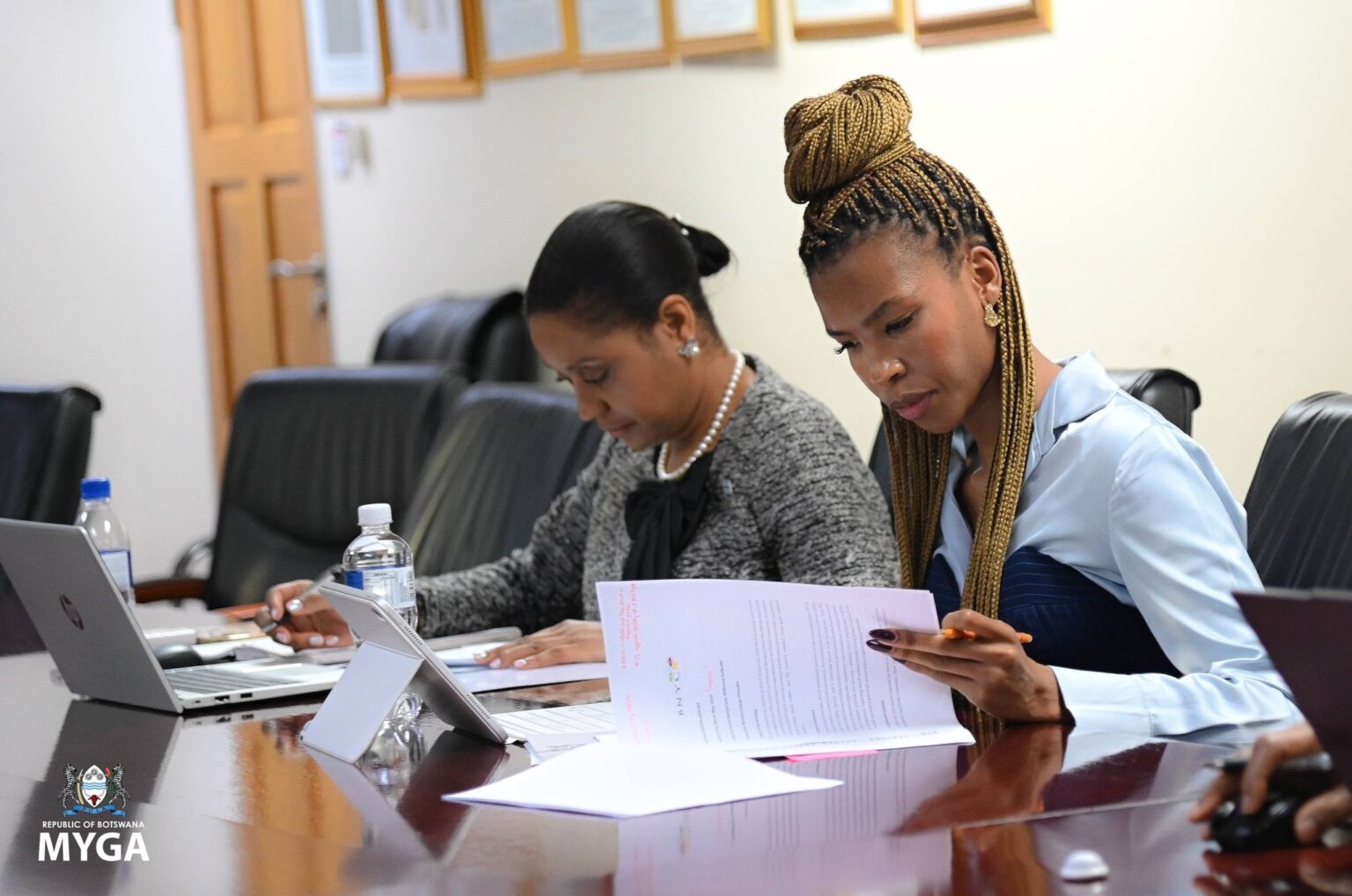
The Botswana National Youth Council (BNYC) has taken a significant step in strengthening youth representation and institutional performance after paying a courtesy call to the Ministry of Youth and Gender Affairs. The meeting focused on presenting key achievements, ongoing challenges and strategic priorities aimed at improving youth development structures in Botswana. The engagement reflects growing efforts to align youth-led institutions with national governance and development frameworks. It also highlights the increasing demand for accountability, efficiency and inclusivity in youth-focused programmes. The discussions come at a time when youth participation in decision making is becoming a central issue in national policy. The meeting set the tone for deeper reforms aimed at strengthening coordination between government and youth structures.
Minister Lesego Chombo commended the Botswana National Youth Council for its continued efforts despite limited resources and operational constraints. She urged the council to adopt more innovative approaches in delivering services and maximizing the use of available resources. Her remarks focused strongly on the need for improved governance practices within youth institutions. She emphasized transparency in operations to ensure accountability to young people who depend on these structures. She also called for stronger coordination between stakeholders to avoid duplication of efforts and improve impact. Her message reinforced the government’s expectation for more effective and results driven youth engagement systems.
A central part of the discussion focused on improving institutional reporting and strengthening decision making processes. The minister highlighted the importance of inclusive governance where young people are actively involved in shaping policies that affect them. She stressed that accountability mechanisms must be strengthened to build public trust in youth structures. Her comments also pointed to the need for stronger partnerships between government, civil society and youth led organisations. The emphasis was placed on ensuring that youth development programmes are not only well designed but also properly implemented and monitored. This approach is expected to improve the overall efficiency of youth focused initiatives in the country.
BNYC board member Mr Timothy outlined ongoing efforts to reposition the council as a stronger voice for youth development in Botswana. He explained that the council is working to strengthen youth inclusion through sustainable funding models that reduce dependence on limited grants. He also highlighted improvements in governance frameworks aimed at making the organisation more efficient and transparent. A key focus area remains the expansion of strategic partnerships with both public and private sector stakeholders. He further noted the importance of early youth participation in policy development processes, including national budgeting discussions. According to him, this approach ensures that youth priorities are reflected in key national decisions from the beginning.
Mr Timothy also emphasized that meaningful youth participation must go beyond consultation and move toward active decision making roles. He pointed out that structured engagement with government institutions can help address long standing gaps in representation. The council’s strategy includes strengthening advocacy efforts to ensure youth voices are consistently included in national planning. He added that improving funding mechanisms remains critical for long term sustainability. These reforms are designed to build a more responsive and resilient youth governance system. The focus is on ensuring that young people are not only beneficiaries of development but active contributors to it.
Director of the Youth Department, Nkoloi Nkoloi, indicated that the Ministry will undertake a review of the BNYC structure as part of broader institutional strengthening efforts. He explained that the review will guide a transition process aimed at improving operational efficiency. The goal is to enhance resource mobilisation and strengthen service delivery across youth programmes. He noted that structural adjustments may be necessary to align the council with current development priorities. His remarks signaled a commitment to ensuring that youth institutions are better equipped to respond to emerging challenges. The process is expected to create a more effective framework for supporting youth development initiatives.
The engagement between BNYC and the Ministry reflects a broader national effort to strengthen youth governance systems in Botswana. The focus on transparency, inclusion and strategic reform highlights the importance of building institutions that can respond effectively to young people’s needs. The planned structural review and ongoing advocacy efforts point toward a more coordinated approach to youth development. These discussions also underline the importance of sustainable funding and stronger partnerships in achieving long term impact. As reforms progress, the expectation is that youth participation in national decision making will become more structured and meaningful. The meeting marks a step toward building a more inclusive and accountable youth development ecosystem.