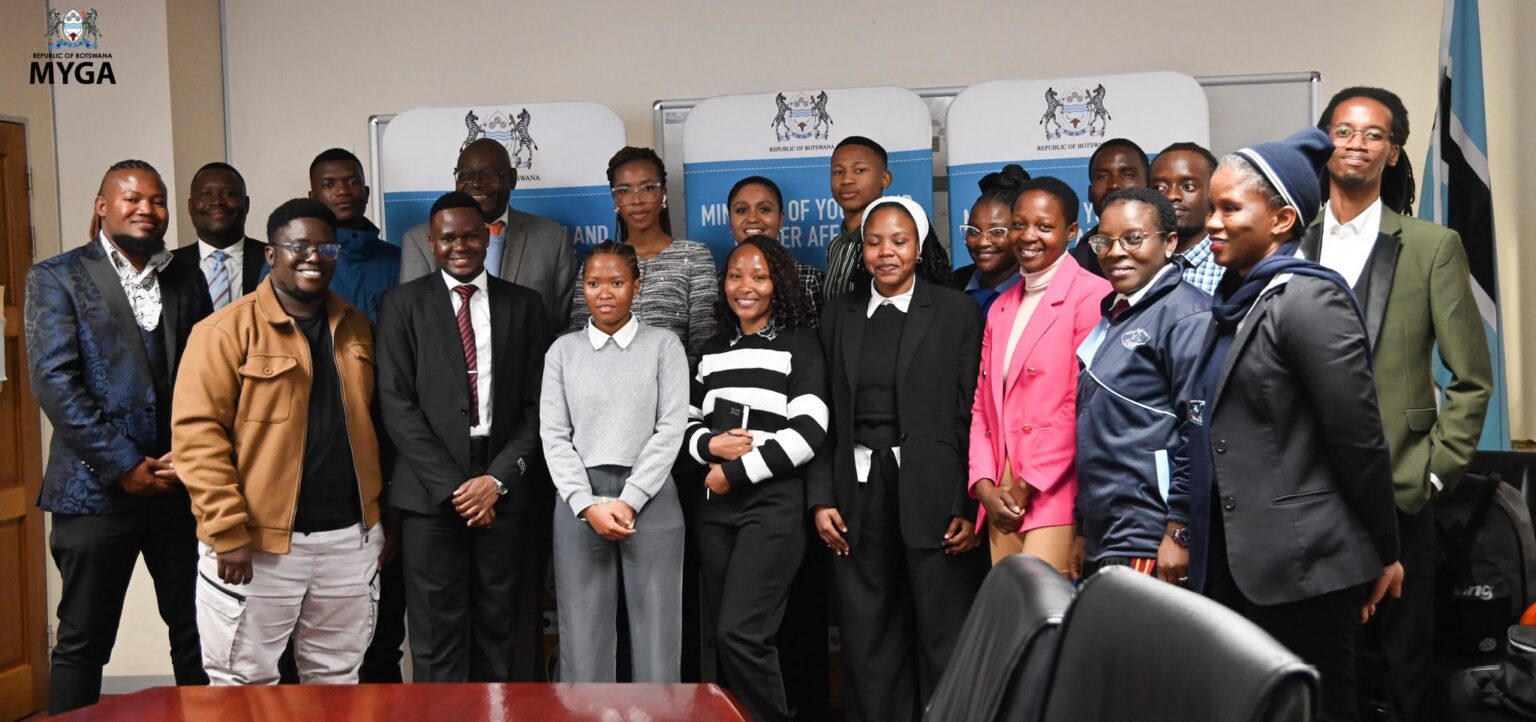
Yesterday morning, Minister of Youth and Gender Affairs Hon. Lesego Chombo officially opened the validation workshop for the National Youth Employment Strategy. The session brought together at least 80 young people alongside key stakeholders from different sectors. Some participants attended in person while others joined through digital platforms, reflecting a hybrid approach to national engagement. The Minister described the workshop as a critical step in addressing Botswana’s youth unemployment challenge. She stressed that youth participation in policy development is essential for practical and lasting solutions.
Hon. Chombo explained that the National Youth Employment Strategy is closely aligned with major national development frameworks. These include the Revised National Youth Policy, National Development Plan 12, and the Botswana Economic Transformation Programme. She noted that alignment ensures policy consistency across government programmes and improves implementation efficiency. The Minister added that coordinated planning helps avoid duplication of efforts while strengthening impact. She also emphasized that youth-focused policies must remain central to national development priorities.
The Minister highlighted the scale of the challenge facing young people in Botswana. She stated that youth unemployment currently stands at 38.2 percent, while 41.2 percent of young people are not in education, employment, or training. These figures point to deep structural challenges within the labour market. She warned that without urgent and coordinated interventions, the situation could worsen over time. Hon. Chombo also noted that the strategy aims to prepare young people for opportunities emerging from technological advancement and the global transition to a green economy.
Hon. Chombo further stressed that solving youth unemployment requires more than economic interventions alone. She pointed out that effective governance plays a central role in ensuring successful outcomes. The strategy proposes strengthening labour market information systems to improve data-driven decision-making. It also focuses on improving accountability mechanisms to ensure commitments translate into measurable results. In addition, the framework promotes stronger coordination across government departments and private sector actors to improve employment outcomes for young people.
Lead Consultant at Joint Minds Consult, Prof. Happy Siphambe, presented a comprehensive framework during the workshop. His approach focuses on aligning economic growth with job creation while equipping young people with relevant skills. He emphasized that economic transformation and diversification are essential for sustainable employment creation. Prof. Siphambe noted that education systems and vocational training must be closely linked to labour market needs. He added that this alignment is key to improving employability and preparing youth for evolving industries.
The consultant also identified high potential sectors that could drive future employment growth. He highlighted agribusiness, including beef, dairy, and horticulture value chains, as major opportunities for youth participation. Prof. Siphambe stressed the importance of modernizing agriculture through technology and innovation. He explained that this transformation could make the sector more attractive, productive, and commercially viable for young people. He further noted that innovation in agriculture can create new business opportunities and strengthen rural economies.
The workshop concluded with a shared emphasis on collaboration and long-term planning. Stakeholders agreed that youth unemployment requires sustained commitment from government, private sector, and development partners. The National Youth Employment Strategy was positioned as a key tool for driving coordinated action and measurable progress. Participants underscored the importance of translating policy into real opportunities for young people across Botswana. The engagement reflected a strong national focus on empowering youth and building a more inclusive and resilient economy.