
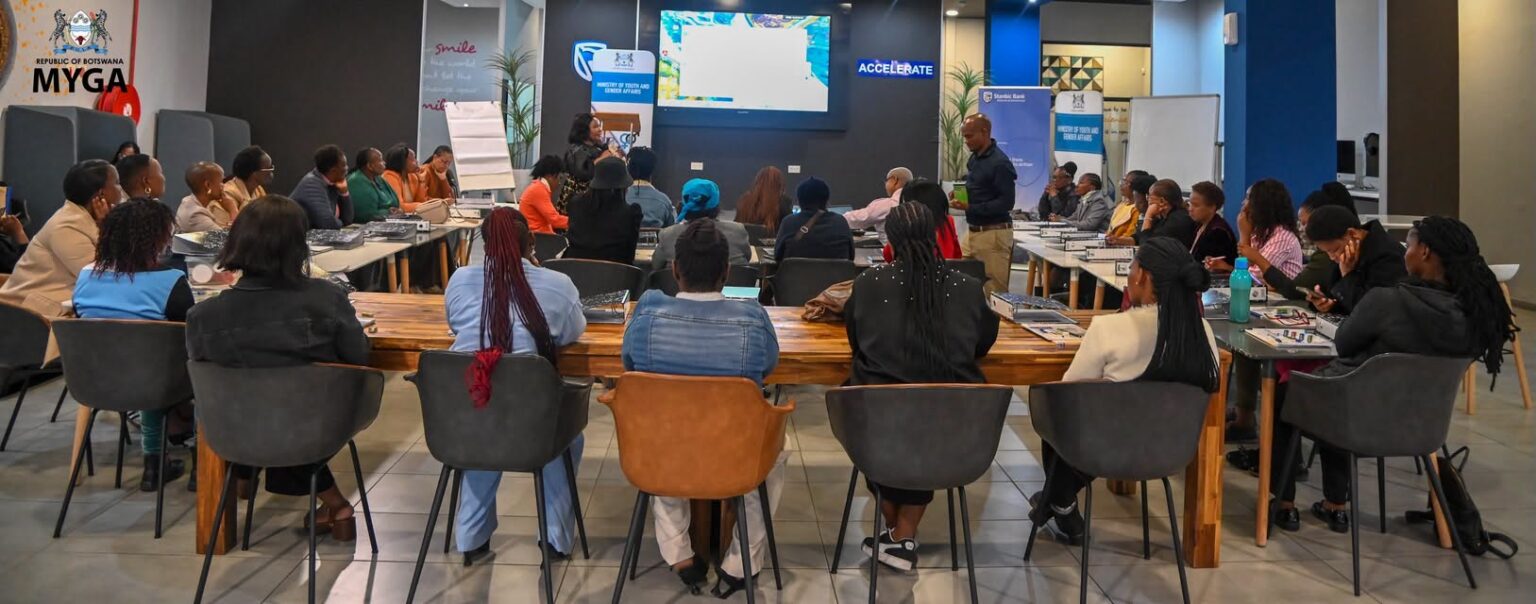
The EntreprenHer Programme, in partnership with De Beers Group, UN Women and Stanbic Bank Botswana, has brought together women entrepreneurs for a five-day business training workshop designed to strengthen their ability to manage and grow sustainable businesses. The programme focuses on practical business skills that participants can apply directly to their enterprises. It aims to help women entrepreneurs improve how they plan, operate, market and manage their businesses. The training also creates an opportunity for participants to learn from one another, build professional networks and share experiences from their respective sectors. Through a combination of business training, follow-up support and mentorship, the initiative seeks to equip participants with knowledge that can contribute to stronger and more resilient businesses.
In her welcoming remarks, EntreprenHer Coordinator Mrs Lydia Mafoko Ditsa highlighted the importance of supporting women entrepreneurs as they establish, strengthen and grow their businesses. She introduced De Beers Group as the sponsor of the programme and noted that the initiative is implemented in Botswana by the Ministry of Youth and Gender Affairs (MYGA). Her remarks placed emphasis on the role of structured business support in helping entrepreneurs develop the practical capabilities needed to manage their enterprises more effectively. For many business owners, having a viable product or service is only one part of building a successful enterprise. Entrepreneurs also need knowledge of financial management, marketing, stock control, planning, purchasing, record keeping and people management to support day-to-day operations and long-term growth.
The five-day workshop is designed to give participants practical lessons that address important areas of business management. Rather than focusing only on theory, the training package is intended to help entrepreneurs understand how business concepts can be applied to their own enterprises. Participants will work through various business modules and gain knowledge that can support better decision-making and more organised business operations. The programme also encourages entrepreneurs working in similar sectors to connect with one another, creating opportunities for networking, collaboration and knowledge sharing. These interactions can allow participants to exchange experiences, identify common challenges and consider practical approaches to improving their businesses.
The training package is supported by six business manuals that cover key areas of enterprise management, including marketing, costing, buying, stock control, record keeping, business planning, people and productivity. These areas are closely connected to the daily responsibilities of business owners and can influence how effectively an enterprise operates. Marketing knowledge can help entrepreneurs communicate the value of their products and services to customers, while costing skills can support better understanding of business expenses and pricing decisions. Proper buying and stock control practices can help businesses manage their resources more effectively, while accurate record keeping can give owners useful information about their operations. Business planning, people management and productivity also provide important foundations for entrepreneurs seeking to organise their businesses and pursue sustainable growth.
Marketing is another important part of the training because entrepreneurs need effective ways to reach existing and potential customers. Participants will gain practical knowledge on how to market their products and services and how to use this knowledge to support business growth. Understanding customers, communicating clearly and presenting products or services effectively can help business owners make more informed marketing decisions. At the same time, marketing needs to connect with other areas of business management, including costing, stock availability and record keeping. The programme therefore takes a broader approach by giving participants knowledge across several functions that contribute to overall business performance.
The programme also places importance on follow-up support and mentorship after the training. This element can help participants move from learning new concepts to applying those concepts within their businesses. Entrepreneurs often face practical challenges when they attempt to introduce new systems or change existing ways of working, making continued guidance useful after a workshop ends. Through follow-up support and mentorship, participants are expected to receive assistance as they work to apply the knowledge and skills gained during the five-day programme. This approach also supports the development of actionable plans that can guide participants as they work towards strengthening their enterprises.
Stanbic Bank Botswana is supporting the initiative by providing financial support and technical expertise to enhance programme delivery. Its involvement adds another dimension to the training by contributing to efforts aimed at empowering entrepreneurs as they build sustainable and resilient businesses. Financial knowledge and access to appropriate business support can be important considerations for entrepreneurs seeking to manage their enterprises effectively. The partnership with Stanbic Bank Botswana, together with the involvement of De Beers Group, UN Women and MYGA, brings together different forms of support around the programme’s focus on women entrepreneurs. The initiative is therefore structured around training, technical support, mentorship and opportunities for entrepreneurs to build connections with others in business.
The networking component of the EntreprenHer Programme also provides participants with an opportunity to learn from entrepreneurs facing similar business realities. Business owners can gain useful insights by discussing challenges, approaches and experiences with people working in related sectors. Collaboration can also create opportunities for entrepreneurs to identify areas where they can support one another or exchange knowledge. Such engagement is particularly relevant during a structured programme where participants are already focused on improving their business practices. The workshop therefore serves not only as a training platform but also as a space where women entrepreneurs can strengthen professional relationships.
At the end of the workshop, participants are expected to have gained practical tools and knowledge that they can use in their businesses. The focus on actionable plans is intended to encourage entrepreneurs to translate the lessons from the training into specific steps within their enterprises. These plans can help participants identify areas that require improvement and determine how they intend to apply the knowledge gained during the programme. The combination of manuals, practical training, mentorship and follow-up support provides participants with several forms of assistance as they work towards improving their businesses. This practical approach keeps the emphasis on using business knowledge to strengthen everyday operations and support longer-term development.
The EntreprenHer Programme represents a structured effort to support women entrepreneurs through practical business education and ongoing guidance. Its partnership with De Beers Group, UN Women, Stanbic Bank Botswana and the Ministry of Youth and Gender Affairs brings together support for training, technical expertise, networking and mentorship. The five-day workshop gives participants an opportunity to strengthen their knowledge in areas such as marketing, costing, buying, stock control, record keeping, business planning, people management and productivity. By developing actionable plans and applying the lessons within their businesses, participants can work towards improving their business management capabilities and building more sustainable enterprises. The programme’s focus on practical skills, continued support and collaboration provides participating women entrepreneurs with a structured opportunity to strengthen their businesses and pursue future growth.