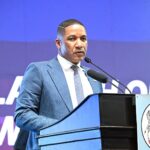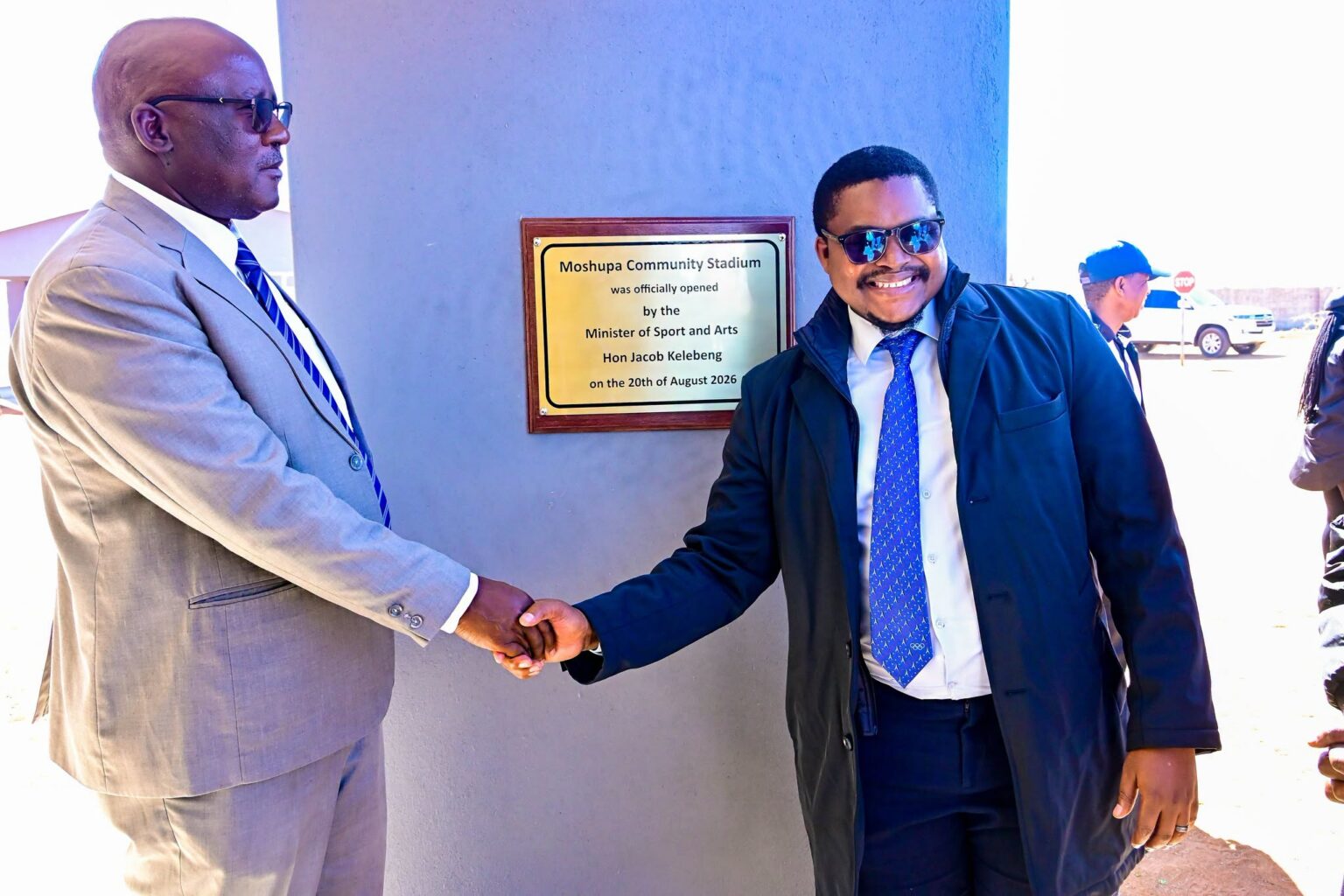
The official opening of Moshupa Community Stadium marks an important milestone in Botswana’s continued investment in sports infrastructure and community development. Speaking at the event, Hon. Jacob Kelebeng highlighted the Government’s clear strategic intention to provide safe, competitive and conducive playing fields for communities across the country. The newly opened facility brings modern sporting infrastructure closer to residents of Moshupa while creating a dedicated environment where athletes can train, compete and develop their skills. The project also demonstrates how national sports policies can be translated into practical facilities that directly benefit local communities. More importantly, the Moshupa Community Stadium creates new opportunities for young people to pursue sporting ambitions while strengthening the role of sport in social and economic development.
The Moshupa Community Stadium is a Government of Botswana initiative that was conceptualised during the 2016/17 financial year and completed during the 2019/20 financial year. Its completion represents a significant achievement under the Ministry’s broader strategy to expand access to quality sporting infrastructure throughout the country. Moshupa Community Stadium is one of ten pioneering facilities conceived under the Ministry’s strategic plan and is the first facility under the programme to be completed. A further ten community stadiums have been earmarked for construction during National Development Plan 12, demonstrating the Government’s intention to continue expanding sports infrastructure beyond the country’s major urban centres. The development therefore has significance not only for Moshupa but also for Botswana’s wider efforts to create more inclusive opportunities for sporting participation.
The 20-hectare Moshupa Sports Complex provides a range of facilities designed to support different sporting activities and community needs. The complex features a boundary wall, an artificial-turf football pitch, netball courts and tennis courts, giving athletes access to dedicated spaces for both training and competition. The facility also includes restrooms and a kiosk, providing basic amenities for players, spectators and visitors attending sporting activities. The inclusion of an artificial-turf football pitch is particularly important because it provides a modern playing surface that can support regular use and organised competitions. Together, these facilities create a welcoming sporting environment that can serve youth teams, sport academies, mainstream leagues and members of the wider community.
The Minister’s remarks placed particular emphasis on the role that the stadium can play in nurturing sporting talent within Moshupa and surrounding communities. Providing youth teams and sport academies with a modern home gives young athletes an opportunity to train in an organised environment and develop their abilities closer to where they live. Access to suitable facilities can also encourage more young people to participate in sport and discover talents that may otherwise remain undeveloped. For established players and mainstream leagues, the stadium provides an additional venue for organised competitions and sporting events. By creating these opportunities at community level, the facility can help build a stronger pathway for athletes who aspire to progress from local participation to higher levels of competition.
The investment also reflects the broader social value of sport in Botswana. Sporting facilities can bring people together around shared activities while encouraging young people to spend their time in constructive and healthy environments. Community stadiums can also become gathering points for tournaments, school competitions, training programmes and other events that encourage interaction among residents. The availability of safe and accessible playing fields can support the development of discipline, teamwork, commitment and determination among young athletes. These qualities can extend beyond the playing field and contribute to the personal development of young people as they prepare for education, employment and other responsibilities.
The Moshupa Community Stadium represents a substantial Government investment, with the project costing more than P17 million. Such an investment demonstrates the importance placed on improving sports infrastructure and creating facilities that can support communities over the long term. The economic benefits could extend beyond the athletes who use the stadium because sporting events can attract players, coaches, officials, spectators and visitors from outside Moshupa. Increased movement into the area can create additional demand for accommodation, food, transport, retail products and other services. Local businesses therefore have an opportunity to benefit from a more active sporting calendar and from events that bring visitors into the community.
Deputy Council Chairperson Mr Motlhatlosi Kelobang welcomed the development and highlighted its potential to uplift the Moshupa community. His call for games of an international standard to be hosted at the stadium points to the possibility of using the facility as more than a local training and competition venue. Hosting major sporting events could increase the visibility of Moshupa while bringing visitors and spending into the area. International and national competitions could also expose local athletes to stronger competition and provide young players with opportunities to watch and learn from experienced competitors. For the community, a regular programme of high-level sporting events could create new commercial opportunities while strengthening Moshupa’s position as a destination for sport.
Former Minister and Member of Parliament for Moshupa Constituency, Mr Karabo Gare, described the occasion as more than the opening of a stadium, presenting it as an opportunity to open doors for the people of Moshupa. His message to young people was particularly significant because the facility gives the community a resource that can support sporting ambitions for years to come. He noted that not every village has access to infrastructure of this standard and encouraged young people to recognise and make full use of the opportunity. The stadium can provide a foundation for training, competition and talent development, but its impact will depend on how consistently the community uses the facility. Young athletes, coaches, schools, clubs and sports organisations can all play a role in ensuring that the stadium becomes an active centre of sporting development.
Gare also called on the community to take ownership of the facility and ensure that it is properly maintained. Maintaining public sports infrastructure is essential if the stadium is to continue serving athletes and residents for generations. Regular care of the artificial turf, courts, restrooms, boundary wall and other facilities can protect the Government’s investment and help keep the venue safe and functional. Community ownership can also encourage users to respect the facility and take responsibility for protecting it from damage or misuse. His comments reinforce the idea that the success of the Moshupa Community Stadium will depend not only on its construction but also on responsible management and sustained community participation.
The former Minister also commended the Minister of Sport and Arts for ensuring that projects such as the Moshupa Community Stadium are completed within specified timeframes. Timely completion is important for Government infrastructure because delays can increase costs and postpone the benefits intended for communities. The successful delivery of the project provides an example of how planned public investment can result in tangible infrastructure that residents can use. It also highlights the importance of effective project management, accountability and coordination in the implementation of national development programmes. As Botswana plans further community stadiums under National Development Plan 12, lessons from the Moshupa project could help support the timely and effective delivery of future facilities.
The opening also carried a strong message about the responsibility of young people to make the most of the opportunities available to them. Young athletes were encouraged to embrace discipline, determination and hard work while using the new facility to develop their sporting abilities. Access to a modern stadium does not automatically produce successful athletes, but it can provide an important platform for those who are willing to train consistently and pursue their goals. Parents were also encouraged to take an active role in supporting and nurturing young sporting talent within the community. When athletes, families, coaches, schools and community organisations work together, sporting facilities can become effective platforms for long-term youth development.
The Moshupa Community Stadium can also contribute to a broader vision of community development by connecting sport with economic activity and social participation. A busy sporting calendar can create opportunities for local vendors, hospitality businesses, transport providers and other service providers. Regular tournaments can bring people together while creating a stronger sense of community around shared sporting interests. Schools and local clubs can use the facilities to develop structured programmes that encourage participation among children and young people. Over time, the stadium could become an important community asset that supports sport, recreation, youth development and local economic activity.
The official opening of Moshupa Community Stadium is therefore more than the completion of a Government infrastructure project. It represents the delivery of a strategic vision aimed at providing communities with safe and quality sporting environments where athletes can develop and compete. The facility gives Moshupa access to an artificial-turf football pitch, netball and tennis courts and supporting amenities while creating opportunities for local competitions and larger sporting events. Its more than P17 million investment also carries the potential to support economic activity by attracting visitors and creating new opportunities for local businesses. With responsible management, active community participation and continued support for young athletes, Moshupa Community Stadium can become a lasting asset that contributes to the social, sporting and economic development of the community for generations to come.