The Parliament of Botswana, in collaboration with the Friedrich Ebert Stiftung (FES) and the Botswana Centre for Public Integrity (BCPI), has launched the “Bridging the Gap between Parliament and Civil Society” project, a key initiative aimed at strengthening democratic governance through enhanced collaboration, dialogue, and mutual accountability.
Delivering welcome remarks at the launch, the Clerk of the National Assembly, Dr. Gabriel G. G. Malebang, described the project as a significant step toward promoting inclusive and participatory parliamentary processes, while deepening engagement between Parliament and citizens. Supported by the European Union, the initiative also marks the beginning of activities commemorating 60 years of Parliamentary Democracy in Botswana, reaffirming Parliament’s commitment to transparency, responsiveness, and effective public participation in governance.
Dr. Malebang emphasised that the project is not merely a programme but a platform for transformation, designed to foster meaningful partnerships between Parliament, civil society, and development partners. He highlighted that in an evolving governance landscape, no institution can operate in isolation, underscoring the importance of collaboration in ensuring that parliamentary processes remain inclusive, transparent, and responsive to the needs of the people.
When introducing the project during the launch, FES Botswana Resident Representative Mr. Thilo Schöne described it as an ambitious effort to “bring together what belongs together”, Parliament and its citizens by bridging the divide between the work of law-making and the civic responsibility of citizen engagement. He noted that the initiative was co-created through close collaboration between Parliament, civil society organisations, the European Union, and implementing partners, and is designed to strengthen parliamentary committee work through impact-oriented training, joint consultations, and inclusive platforms for dialogue. Schöne added that the project will provide a structured and sustained space for citizens and Members of Parliament to engage constructively, enabling ideas, concerns, and advocacy to be translated into meaningful policy outcomes while fostering mutual understanding and trust.
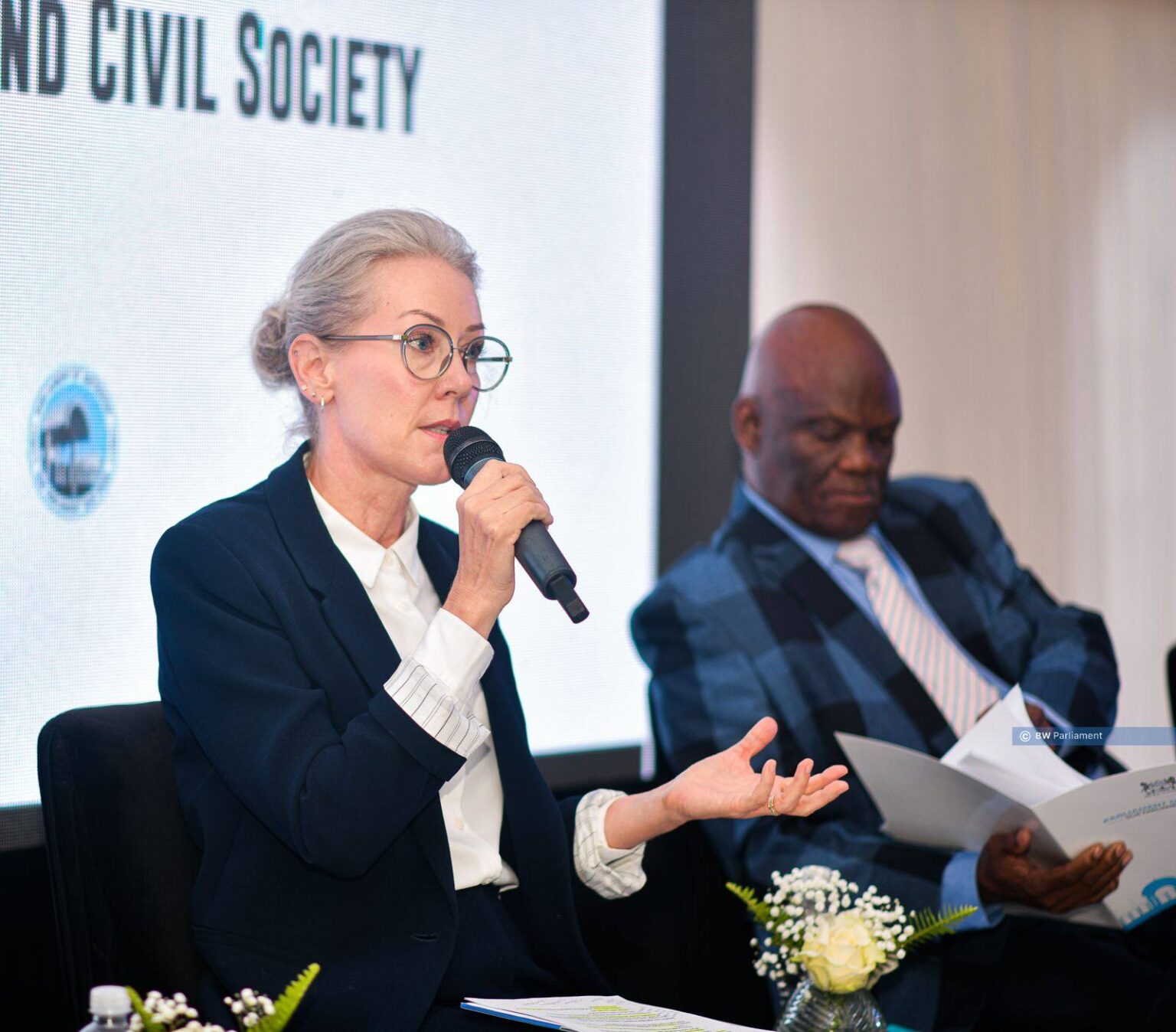
The launch also featured a High-Level Panel Discussion on the theme “60 Years of Parliamentary Democracy and its Relationship with the Citizenry.” The panel comprised the Speaker of the National Assembly, Honourable Dithapelo L. Keorapetse; former Speaker, Dr. Margaret N. Nasha; former Leader of Opposition, Mr. Otsweletse Moupo; Director of the Botswana Centre for Public Integrity, Ms. Vivien Nwako; and the European Union Ambassador to Botswana and SADC, H.E. Petra Pereyra. The session was moderated by Ms. Roberta Akanyang.
Reflecting on the evolution of Parliament, Honourable Keorapetse highlighted significant milestones, including the growth in membership from 35 Members in the first Parliament to 69 Members in the current Parliament, as well as developments in institutional staffing and increased gender representation, including the historic appointment of the first female Speaker.
He further noted that Parliament has become more accessible and responsive, particularly through the influence of social media, which has brought parliamentary processes closer to citizens in real time.
Contributing to the discussion, former Leader of Opposition, Mr. Otsweletse Moupo emphasised the critical role of the Opposition as an alternative voice, noting that it presents alternative policy platforms and rigorously interrogates government programmes. He added that civil society organisations play a complementary role by bringing forward issues affecting citizens and engaging with political actors to contribute ideas and perspectives. Ms. Vivien Nwako, on her part, underscored the importance of making such engagements more structured, highlighting the need for deliberate and organised platforms that enable consistent and meaningful interaction between Parliament and civil society.
For her part, former Speaker Dr. Margaret N. Nasha reflected on the composition of the first Parliament, noting that it was largely made up of teachers who shared a strong sense of camaraderie. She observed that Cabinet in the past was predominantly male, and recalled periods when the voices of marginalized groups including women were largely absent from decision-making spaces. Dr. Nasha emphasised that, due to their limited numbers, these groups often struggled to be heard, and highlighted that the underrepresentation of women in particular has had broader socio-economic implications. She further noted that the emergence of civil society organisations and trade unionism was, at the time, met with suspicion, particularly as many of their pioneers were associated with the opposition. As a result, they were often viewed through a political lens and, in some instances, labelled as communists.
In closing remarks, the Executive Director of the Botswana Centre for Public Integrity underscored that the “Bridging the Gap” project represents a timely effort to renew the relationship between Parliament and citizens, noting that democracy must continuously evolve to remain responsive to all. She highlighted that the initiative, co-financed by the European Union and the Friedrich-Ebert-Stiftung, seeks to establish structured and sustained platforms for engagement, moving beyond ad hoc consultations to more deliberate and purposeful collaboration.
Emphasising the complementary roles of Parliament, civil society, and development partners, she noted that the project will enable evidence-based dialogue, strengthen public participation, and empower citizens to contribute meaningfully to decision-making processes, thereby advancing a more inclusive and participatory democracy in Botswana.End