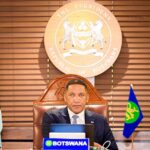

The 41st HATAB Annual Conference officially opened this morning at Maun Lodge in Maun, where the Minister of Environment and Tourism, Hon. Wynter Mmolotsi, delivered a key address outlining government priorities for the tourism sector. The event brought together industry stakeholders, policymakers, and tourism operators to discuss the future direction of one of Botswana’s most important economic sectors. The Minister’s remarks focused on strengthening data-driven decision-making, expanding tourism infrastructure, and creating sustainable employment opportunities. His address reflected a broader national strategy aimed at repositioning tourism as a central pillar of economic recovery and long-term growth. The conference setting in Maun, a gateway to the Okavango Delta, underscored the importance of tourism to both local livelihoods and national development.
A major highlight of the Minister’s speech was the announcement that Botswana will undertake an update to the Tourism Satellite Account in July. This update is expected to provide a more accurate and internationally aligned assessment of the tourism sector’s true contribution to the national economy. It will also include a detailed analysis of how the COVID-19 pandemic affected tourism performance between 2020 and 2024. The revised data will help government and private sector stakeholders understand shifts in visitor numbers, revenue flows, and employment trends during and after the pandemic period. By improving the quality of tourism statistics, Botswana aims to strengthen its ability to plan strategically and respond effectively to global industry changes.
The Tourism Satellite Account is considered a critical tool for measuring the economic value of tourism beyond surface-level indicators. It captures direct and indirect contributions, including spending by visitors, supply chain impacts, and employment generated across related industries. The Minister emphasized that this update aligns with the government’s commitment to evidence-based planning and policy reform. Reliable data is essential for making informed decisions about investment, infrastructure development, and marketing strategies. Without accurate measurement, it becomes difficult to fully understand the sector’s role in national economic performance. This initiative is expected to improve transparency and support more targeted interventions in the tourism industry.
In addition to improving data systems, the Minister outlined ambitious plans to expand tourism-related infrastructure and development programs. He highlighted the establishment of National Tourism Development Areas as a key strategy for unlocking new economic opportunities. These designated areas are expected to attract investment, improve accessibility, and promote balanced regional development. The government also plans to enhance museums and heritage projects as part of a broader effort to diversify tourism offerings. By strengthening cultural and heritage tourism, Botswana aims to attract a wider range of visitors while preserving its historical identity and traditions.
Employment creation was another central theme in the Minister’s address, with a clear target set for the coming years. Through tourism expansion initiatives, the government aims to create an additional 5,000 jobs by the year 2030. These jobs are expected to span various sectors including hospitality, conservation, tour operations, cultural services, and infrastructure development. The Minister emphasized that tourism remains one of the most effective sectors for job creation due to its labor-intensive nature and wide value chain. By investing in both physical infrastructure and human capacity, the government hopes to ensure that economic benefits reach communities across the country.
Stakeholder engagement was also a key focus of the conference, with industry players encouraged to actively participate in shaping the future of the sector. The Minister acknowledged the role of private operators, community trusts, and conservation groups in sustaining Botswana’s tourism reputation. He stressed that collaboration between government and industry is essential for achieving long-term growth and competitiveness. The conference provided a platform for dialogue on challenges such as infrastructure gaps, market competition, and environmental sustainability. These discussions are expected to inform future policy adjustments and operational improvements within the sector.
Maun, as the host location for the conference, holds strategic importance in Botswana’s tourism landscape. It serves as a major entry point to the Okavango Delta, one of the world’s most renowned natural attractions. The choice of venue highlights the government’s recognition of Maun’s role in supporting tourism-driven economic activity. Local businesses, accommodation providers, and transport operators in the area are directly linked to the success of the industry. Strengthening tourism in Maun is therefore seen as a way to boost regional development and improve livelihoods for surrounding communities.
The opening of the 41st HATAB Annual Conference marks a significant moment for reflection and planning within Botswana’s tourism sector. With new data initiatives, infrastructure development plans, and job creation targets, the government is signaling a clear commitment to strengthening the industry’s foundation. The focus on evidence-based decision-making and strategic investment suggests a shift toward more structured and sustainable growth. As discussions continue during the conference, stakeholders are expected to explore practical solutions to existing challenges and identify opportunities for innovation. The outcomes of this engagement will play a key role in shaping the future trajectory of tourism in Botswana.
The Minister’s address at the HATAB Annual Conference set a strong tone for the future of Botswana’s tourism sector. The planned update of the Tourism Satellite Account will provide critical insights into the sector’s economic impact, while new development initiatives aim to expand infrastructure and create thousands of jobs. The emphasis on data, collaboration, and long-term planning reflects a strategic approach to industry growth. As Botswana continues to recover from the effects of the COVID-19 pandemic, these measures position tourism as a key driver of economic resilience and diversification. The conference has reinforced the importance of coordinated action in building a stronger, more inclusive, and sustainable tourism economy.